

Ownmates Post

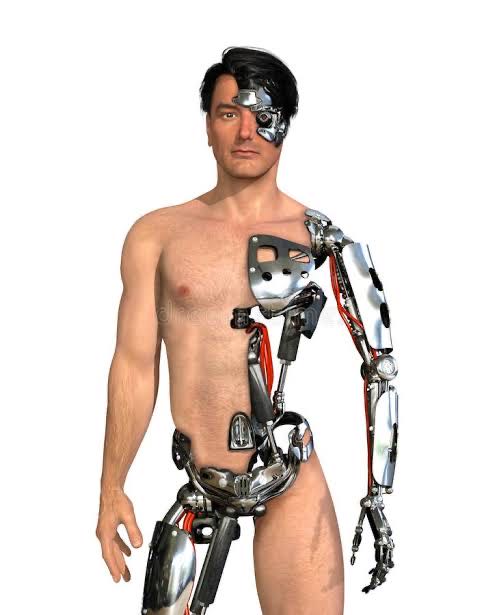
🤖 What is an AI Cyborg?
“Cyborg” stands for Cybernetic Organism — a combination of a human and a machine.
An AI Cyborg is a human enhanced with Artificial Intelligence — either through implants, AI-controlled devices, or brain-computer interfaces — giving them enhanced physical or mental abilities.
🧠 Examples of AI Cyborgs
1. Neuralink (Elon Musk’s Project)
• A brain chip that connects your mind directly to a computer using AI.
• Purpose: Help paralyzed patients move again or restore senses.
2. AI-Enhanced Prosthetics
• Artificial limbs that use AI to detect nerve signals or muscle movement.
• The AI “learns” the user’s movements for more natural control.
3. Brain-Computer Interfaces (BCI)
• Direct communication between the brain and an external device.
• AI interprets brain signals to control machines or even type messages.
⚠️ Dangers and Risks
Risk Description
🧠 Loss of control If hacked, AI could manipulate thoughts or actions
🕵️♂️ Privacy concerns Brain data could be tracked or misused
💰 Inequality Only wealthy people might afford such enhancements
🤖 Ethical questions What does it mean to be human when machines are part of you?
📜 Is AI Cyborg Tech Real?
• Partially yes.
Things like smart prosthetics, hearing implants, and basic brain interfaces already exist.
• Fully advanced AI Cyborgs, like in sci-fi, are still in development or experimental stages.
🎥 AI Cyborgs in Sci-Fi
• Iron Man (Tony Stark) – Uses AI-powered suits.
• RoboCop – A half-human, half-robot police officer.
• Ghost in the Shell – Humans with cyber brains and robotic bodies.
• Cyborg (DC Comics) – Has AI and mechanical body parts.
🔍 Summary
AI Cyborgs are a fusion of human intelligence and machine intelligence. They can:
• Enhance our physical and mental abilities
• Help people with disabilities
• Push the boundaries of what’s possible
But they also raise serious questions about:
• Control
• Privacy
• Human identity
“AI Cyborgs could transform the world — but whether it’s for better or worse depends on how we use them.”


Comments
No comments yet.