

Ownmates Post

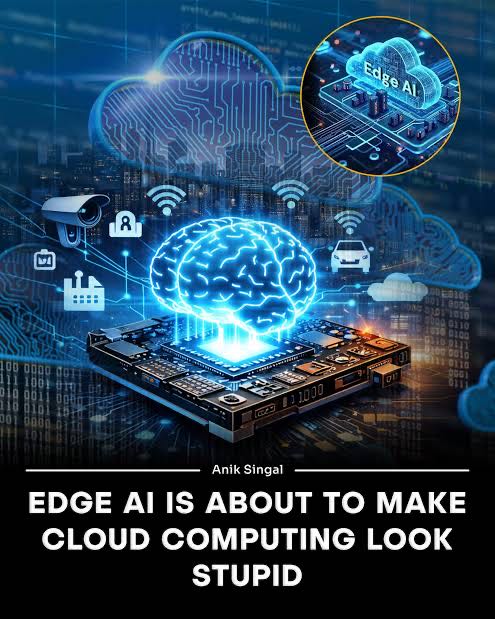
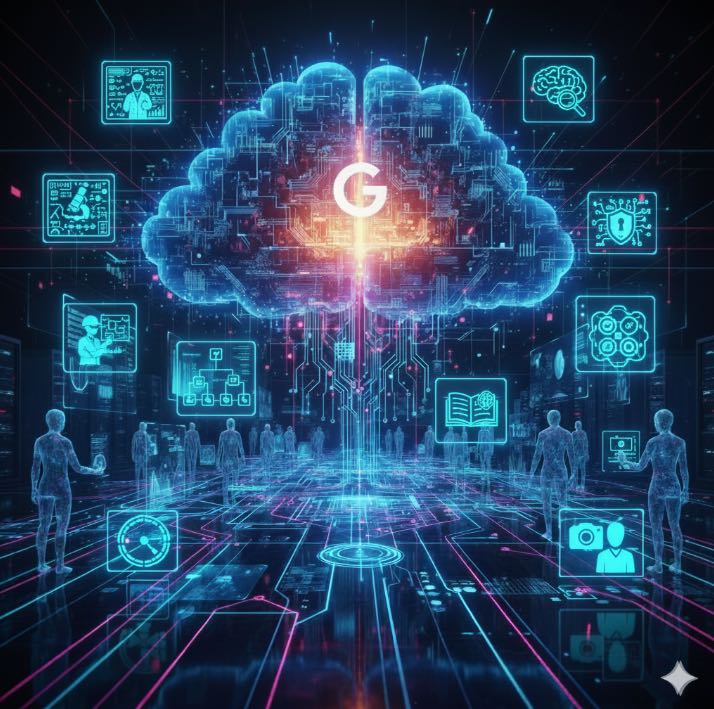
Thomas Kurian is excited about AI Cloud because, in the coming years, almost every company will need massive computing power, data storage, and high-speed servers to run AI systems — and cloud platforms provide all of that.
Main Advantages of AI Cloud
* Faster AI Development
Companies can train and use AI models without building expensive data centers themselves.
* Lower Cost
Renting cloud infrastructure is often cheaper than creating and maintaining private infrastructure.
* Scalability
If demand increases, companies can instantly access more servers and GPUs.
* Data AI Together
Businesses can store data in the cloud and directly run AI analytics and automation on it.
* Business Benefits
AI Cloud helps companies improve:
* customer service
* automation
* faster coding
* smarter search
* prediction systems
That is why companies like Google Cloud, Microsoft Azure, and Amazon Web Services (AWS) are investing billions of dollars into AI Cloud infrastructure.
⸻
At the same time, large-scale AI systems can face serious risks. If major failures occur, “collapse-like” situations are possible — especially when many systems depend on each other. This does not necessarily mean the end of technology, but it can lead to large outages, wrong decisions, and economic damage.
Possible Risks
* Cloud Outages
If major AI cloud servers fail, thousands of apps and services may stop working.
* Wrong AI Decisions
Errors in banking, healthcare, trading, or autonomous systems could cause major harm.
* Data Corruption
Bad training data or cyberattacks may lead AI systems to generate incorrect outputs.
* Over-Automation Risk
Without enough human oversight, small mistakes can spread rapidly.
* Energy and Infrastructure Dependency
AI data centers depend heavily on electricity, semiconductors, and supply chains.
* Excessive Dependence
If the world becomes dependent on a few AI cloud companies, outages or attacks could have global impact.
* Data Privacy Concerns
AI systems collect massive amounts of user data, increasing risks of surveillance and misuse.
* Impact on Jobs
Automation may reduce many traditional jobs, especially repetitive office and factory work.
* Bias and Unfair Decisions
Biased training data can lead to unfair outcomes in hiring, policing, or finance.
* Black Box Problem
Many advanced AI models are difficult to fully understand or explain.
* Fake Content and Manipulation
AI can be used to spread deepfakes, misinformation, and propaganda at scale.
* High Energy Consumption
Large AI data centers consume enormous amounts of electricity and water.
* Power Concentration
A few tech companies controlling AI infrastructure could gain excessive economic and political influence.
* Security Risks
AI systems may be used for hacking, model poisoning, or autonomous cyberattacks.
* Weakening Human Skills
People may become overly dependent on AI for thinking, creativity, and decision-making.
* Fear of Uncontrolled Superintelligence
Some scientists and technology experts worry that extremely advanced AI could eventually move beyond human control.
⸻
“The more digital civilization becomes, the more dangerous it may also become for humanity. The difference is that AI operates around profit and expansion — shaping the future according to economic incentives.”


Comments
No comments yet.