

Ownmates Post

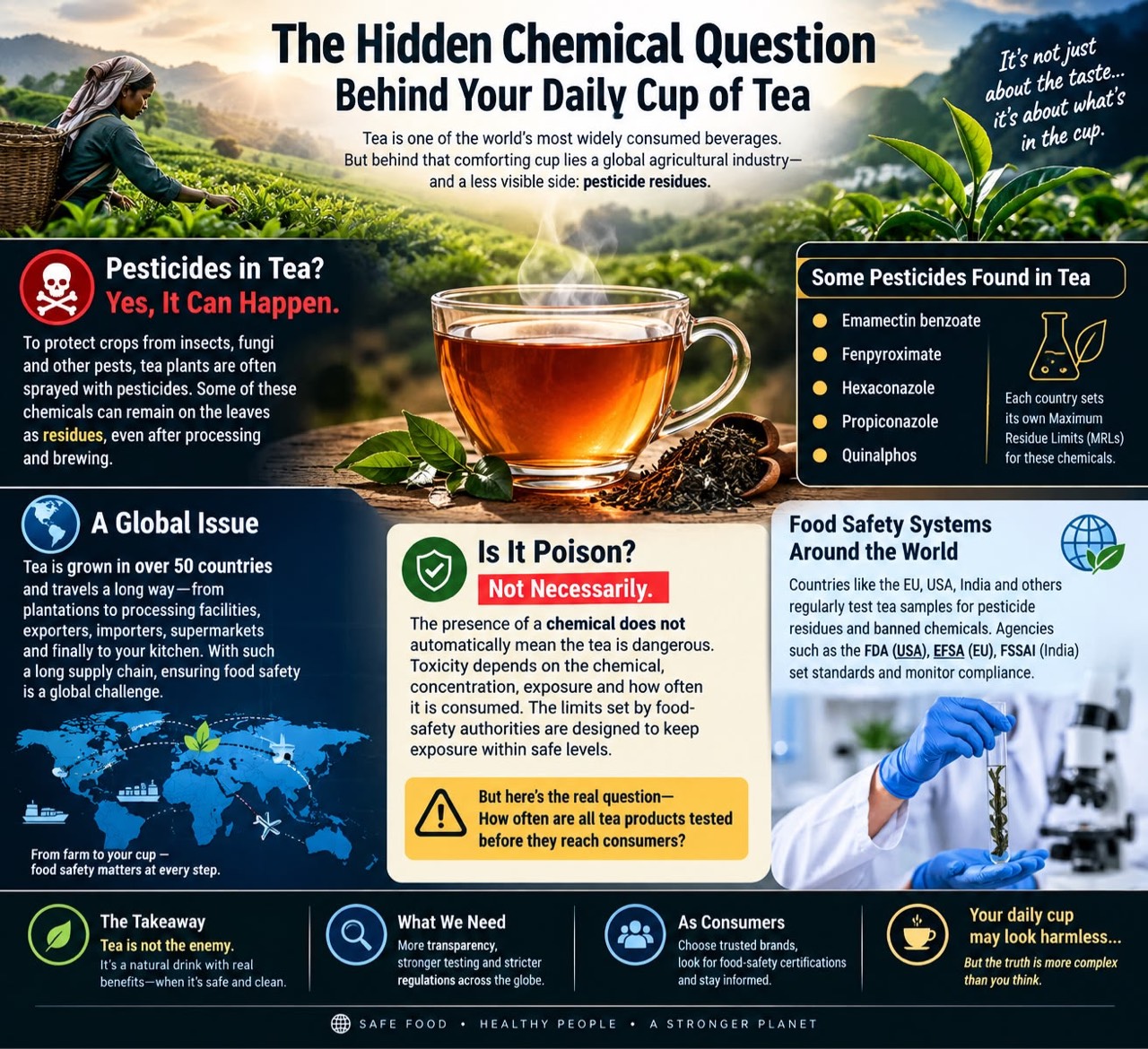
☕ The Hidden Chemical Question Behind Your Daily Cup of Tea
Tea is one of the world’s most widely consumed beverages. Millions of people begin their morning with a cup of tea, believing it is simply a natural drink made from leaves.
But behind those leaves is a global agricultural industry—and like many crops, tea can be exposed to pesticides used to control insects, fungi and other pests.
The real concern is not that every cup of tea contains “poison.” It doesn’t. The concern is chemical residues and whether they remain within the safety limits established by food-safety authorities.
Different countries and international food-safety systems monitor pesticide residues in agricultural products. Maximum Residue Limits (MRLs) are established for many pesticides to control the amount that can legally remain on food.
Some pesticides associated with tea production and testing include chemicals such as emamectin benzoate, fenpyroximate, hexaconazole, propiconazole and quinalphos. The specific chemicals permitted and their legal limits can differ between countries.
And there is another uncomfortable question:
How often are all tea products tested before they reach consumers?
Tea travels through a global supply chain—from plantations and processing facilities to exporters, importers, supermarkets and finally our kitchen.
That is why food-safety monitoring matters.
A chemical residue being detected does not automatically mean that the tea is dangerous. Toxicity depends on the chemical, concentration, exposure and duration. Regulatory limits are designed to keep dietary exposure within acceptable safety levels.
So the real story isn’t:
“Tea is poison.”
The real story is more important:
“What is actually inside the food and drinks we consume every day—and how effectively are they being monitored?”
Your daily cup of tea may look completely harmless.
But behind that simple cup lies a complex global system of agriculture, chemicals, testing, regulation and food safety.
The safest approach is not panic. It is transparency, testing and informed consumption.


Comments
Main bhi bahut chai piti hun 😀