

Ownmates Post
.jpeg)
What If Earth Had the Same Gravity as Mars?
Exploring the Effects of Low Gravity on Humans, Animals, Plants, Oceans, and the Environment
Introduction
Gravity is one of the most important forces that makes life on Earth possible. It keeps humans, animals, oceans, and the atmosphere connected to our planet. Earth’s gravity also influences how living organisms move, grow, and maintain their body structures.
But what would happen if Earth’s gravity suddenly became as weak as that of Mars?
Mars has a surface gravitational acceleration of approximately 3.71 m/s², while Earth’s average surface gravity is about 9.81 m/s². This means that Martian gravity is only about 38% of Earth’s gravity.
If Earth had the same surface gravity as Mars while maintaining the same radius, the effects on life and the environment could be significant. Human movement, animal behavior, plant growth, atmospheric structure, ocean pressure, and space exploration could all change.
However, the actual consequences would depend on how Earth’s gravity changed and whether its atmosphere, temperature, magnetic field, and other environmental conditions remained the same.
1. Effects on the Human Body
If Earth’s gravity decreased to the Martian level, people would experience a substantial reduction in their body weight.
For example, a person with a mass of 70 kilograms would still have a mass of 70 kilograms, but the gravitational force acting on their body would decrease.
On Earth, this person weighs approximately 686 newtons. Under Martian gravity, their weight would decrease to approximately 260 newtons.
In everyday terms, the person would feel much lighter.
Potential Changes in Human Movement
Lower gravity could make several physical activities easier:
* Walking and climbing might require less force to support body weight.* Jumping could become easier, allowing people to reach greater heights.* Carrying heavy objects could require less force to lift them vertically.* Falling objects would accelerate more slowly, assuming air resistance and other conditions remained comparable.* The forces acting on bones and joints during many movements would decrease.
However, reduced gravity would not automatically make humans stronger or faster. Movement also depends on muscle strength, balance, friction, and the body’s ability to generate force.
Long-Term Health Effects
One major concern would be the long-term effects of living under reduced gravity.
Research on astronauts shows that prolonged exposure to microgravity can contribute to bone loss, muscle weakening, and changes in cardiovascular function.
Martian gravity is much stronger than the near-zero gravity experienced aboard orbiting spacecraft. Therefore, the effects of living permanently at 0.38 g on Earth are not fully understood.
It remains uncertain whether humans could maintain normal bone density, muscle strength, and cardiovascular health over many years without additional exercise or other interventions.
2. How High Could Humans Jump?
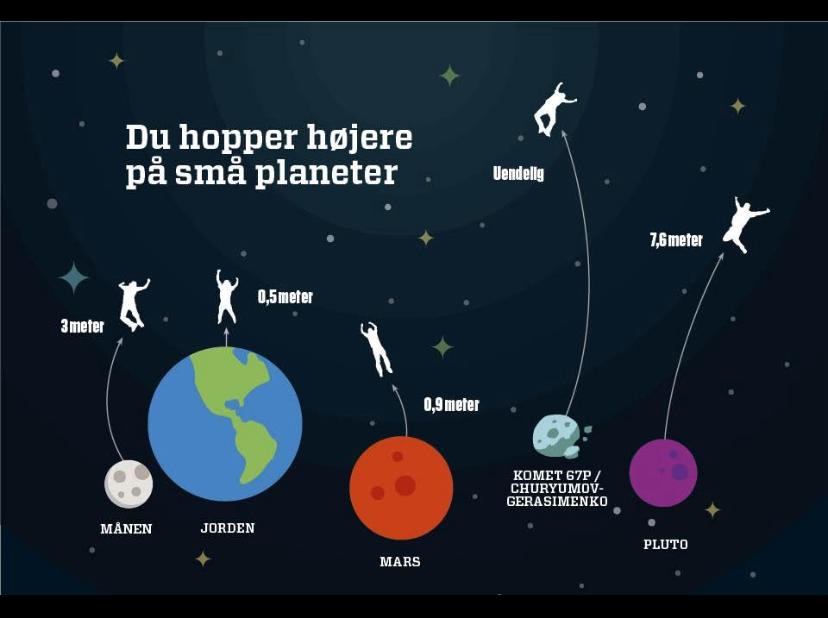
Lower gravity could significantly increase jumping height.
Suppose a person can jump 50 centimeters vertically on Earth. If they generated the same upward takeoff speed under Martian gravity, their theoretical jumping height would increase to approximately 1.32 meters.
This is about 2.65 times the original height.
The relationship can be expressed as:
h = v² / 2g
Where:
* h is the maximum height reached.* v is the upward takeoff speed.* g is gravitational acceleration.
Because jumping height is inversely proportional to gravity when takeoff speed remains constant, lower gravity allows a person to rise higher.
However, real jumping performance would depend on muscle power, balance, body mechanics, and the ability to generate an effective takeoff speed.
3. Effects on Birds and Animals
Gravity plays an important role in animal movement, body structure, and energy consumption.
If Earth’s gravity became similar to Mars, many animals would experience less gravitational loading on their bodies.
Birds
Birds might require less lift to support their body weight during flight, potentially reducing some of the energy needed to remain airborne.
However, flight performance also depends on atmospheric density, wing shape, muscle power, and air resistance. Reduced gravity alone would not guarantee that every bird could fly faster or farther.
Large Animals
Animals such as elephants, horses, and giraffes would experience lower gravitational forces acting on their bodies.
Their legs and joints would need to support less weight, potentially reducing certain mechanical stresses.
Some large animals might find particular movements easier, although their running speed and agility would still depend on muscle strength and body structure.
Evolutionary Changes
Over many generations, natural selection could favor changes in body proportions, movement patterns, and skeletal structures.
Nevertheless, the direction of these changes cannot be predicted precisely. Evolution would depend on each species’ environment, survival pressures, and reproductive success.
4. Effects on Trees and Plants
Gravity influences how plants orient their roots and shoots. This biological response is known as gravitropism.
If Earth’s gravity became weaker, plants could experience changes in their growth responses and mechanical requirements.
Potential Effects on Plant Growth
* Tree trunks and branches would experience lower gravitational loading.* Some plants might be able to support structures that would be more difficult to maintain under stronger gravity.* Root orientation and shoot growth responses could change.* Water movement and nutrient transport within plants could be affected indirectly by changes in gravitational forces.
Lower gravity might allow some plant species to develop different shapes or grow taller under suitable conditions.
However, it would not automatically produce enormous trees.
Plant height is also limited by water transport, structural strength, nutrient availability, wind, and genetic characteristics. These factors would continue to influence plant growth.
5. Effects on Earth’s Atmosphere
The atmosphere is held around Earth by gravity. Reducing gravity would change the way atmospheric gases are distributed vertically and could affect long-term atmospheric retention.
For a simplified comparison, assume that Earth’s radius remains unchanged and its surface gravity decreases to 3.71 m/s².
If atmospheric temperature and gas composition also remain the same, the atmospheric scale height would increase.
The atmospheric scale height describes how quickly atmospheric pressure decreases with altitude.
It is approximately inversely proportional to gravitational acceleration when temperature and the mean molecular mass of the gas remain constant.
Under these simplified assumptions, Earth’s atmospheric scale height would become approximately 2.65 times its present value.
This would not mean that the atmosphere itself became 2.65 times more massive. Instead, the same atmospheric gases would be distributed differently with altitude.
Could Earth Lose Its Atmosphere?
A reduction in gravity would make it easier for some atmospheric particles to escape, particularly lighter gases under suitable conditions.
However, the rate of atmospheric loss would depend on temperature, atmospheric composition, solar radiation, magnetic conditions, and the mechanisms responsible for escape.
Earth would not automatically lose its entire atmosphere simply because surface gravity decreased.
6. Effects on Oceans and Water Pressure
Gravity affects the pressure exerted by water at different depths.
For a fluid of approximately constant density, the pressure increase with depth can be described by:
ΔP = ρgh
Where:
* ΔP is the pressure increase.* ρ is the fluid’s density.* g is gravitational acceleration.* h is depth.
If gravity decreased while water density and depth remained the same, the pressure increase would be smaller.
At the same ocean depth, the additional pressure caused by the water above would be approximately 38% of its present value under Martian gravity.
This could influence deep-sea environments and the mechanical stresses experienced by underwater structures.
However, ocean levels, currents, and coastlines would not necessarily remain unchanged. Their behavior would also depend on Earth’s mass distribution, rotation, topography, and atmospheric conditions.
7. Effects on Mountains and Geological Structures
Gravity influences the stability of mountains, cliffs, and other geological structures.
Under weaker gravity, the gravitational forces acting on rocks and landforms would decrease.
Some large geological structures could potentially remain mechanically stable at greater heights than they could under stronger gravity.
However, the maximum height of a mountain is not determined by gravity alone. Rock strength, tectonic activity, erosion, temperature, and crustal structure are also important.
If Earth’s gravity decreased because its mass changed, the planet’s internal pressure and geological behavior could change as well.
Therefore, it would be difficult to predict the resulting landscape without specifying exactly how the planet had changed.
8. Could Space Exploration Become Easier?
Earth’s present escape velocity is approximately 11.2 kilometers per second.
Escape velocity is the theoretical speed required for an object to escape a planet’s gravitational field without further propulsion, ignoring atmospheric drag and other complications.
It is given by:
vₑ = √(2GM/R)
Where:
* vₑ is escape velocity.* G is the universal gravitational constant.* M is planetary mass.* R is the distance from the planet’s center.
If Earth’s radius remained unchanged and its surface gravity decreased to 3.71 m/s², its escape velocity would be approximately 6.9 kilometers per second.
This would reduce the ideal speed required to escape Earth’s gravitational field.
Consequently, launching spacecraft could become easier in some respects, potentially reducing certain propulsion requirements.
However, actual rocket performance would still depend on atmospheric drag, engine efficiency, spacecraft mass, orbital destination, and the required trajectory.
9. Would Life Become Better or Worse?
Lower gravity would create both advantages and challenges.
Area Potential EffectHuman movement Jumping and supporting body weight could become easierHuman health Long-term bone, muscle, and cardiovascular effects would require investigationBirds Supporting body weight during flight could become easierLarge animals Lower gravitational loading on bones and jointsPlants Changes in growth orientation and structural requirementsAtmosphere Greater atmospheric scale height under comparable temperature conditionsOceans Lower pressure increase at the same depthMountains Reduced gravitational loading on geological structuresSpace exploration Lower escape velocity and potentially reduced propulsion requirements
The overall outcome would depend on how these changes interacted with Earth’s existing environmental systems.
10. Could Humans Live Normally Under Martian Gravity?
Humans might be able to live under Martian-level gravity, but living permanently in such an environment would introduce important biological uncertainties.
People could experience changes in walking, jumping, balance, and physical activity. Over longer periods, their bones, muscles, and cardiovascular systems might also adapt in ways that are not yet fully understood.
Maintaining good health could require carefully designed exercise programs and continued medical research.
The effects on pregnancy, childhood development, aging, and multiple generations would require particular attention.
Because Earth has never naturally provided a planet-wide environment with Martian gravity, scientists cannot yet predict all the long-term consequences with confidence.
Conclusion
If Earth had the same surface gravity as Mars, life would not necessarily disappear. Humans, animals, and plants could potentially continue to exist, but their physical behavior and environmental conditions would change.
People might jump higher and experience less weight. Animals could face different movement demands, while plants might respond differently to gravity. The atmosphere would become more vertically extended under comparable conditions, ocean pressure would increase more slowly with depth, and the planet’s escape velocity would decrease.
However, gravity is only one part of the system that makes Earth habitable. Atmospheric pressure, liquid water, temperature, sunlight, nutrients, and planetary stability are also essential.
The most important lesson is that weaker gravity would not automatically make Earth a better place to live. It would create a different physical environment, bringing potential advantages alongside serious biological and environmental challenges.


Comments
No comments yet.