

Ownmates Post

.jpeg)
.jpeg)
.jpeg)
⚛️ Quantum AI and the Future of Earth: Extreme Cooling, Energy Consumption, and Potential Impacts on Biological Life
🌍 Could the growth of quantum computing create new challenges for nature, the environment, and living organisms?
The world is rapidly moving toward Artificial Intelligence (AI). At the same time, scientists are developing quantum computing, a technology that could play an important role in medicine, materials science, chemical research, and scientific discovery.
However, the development of this technology raises important questions: How much energy will quantum computers require? How many resources will their cooling systems consume? And if quantum computing expands on a large scale, what could be its potential impact on nature and biological life?
Understanding these questions is essential to ensuring that technological progress does not come at the expense of environmental protection.
1. ❄️ Why Do Quantum Computers Need Temperatures Near Absolute Zero?
Some quantum computers use a technology called superconducting qubits. These machines require extremely low temperatures to help their quantum chips operate correctly and reduce unwanted thermal disturbances.
Such chips are often cooled to approximately 10–20 millikelvin (mK), which is around −273.14°C.
For comparison:
* Normal room temperature: Approximately 20–25°C.* Household deep freezer: Approximately −18°C.* Some superconducting quantum chips: Approximately −273.14°C.
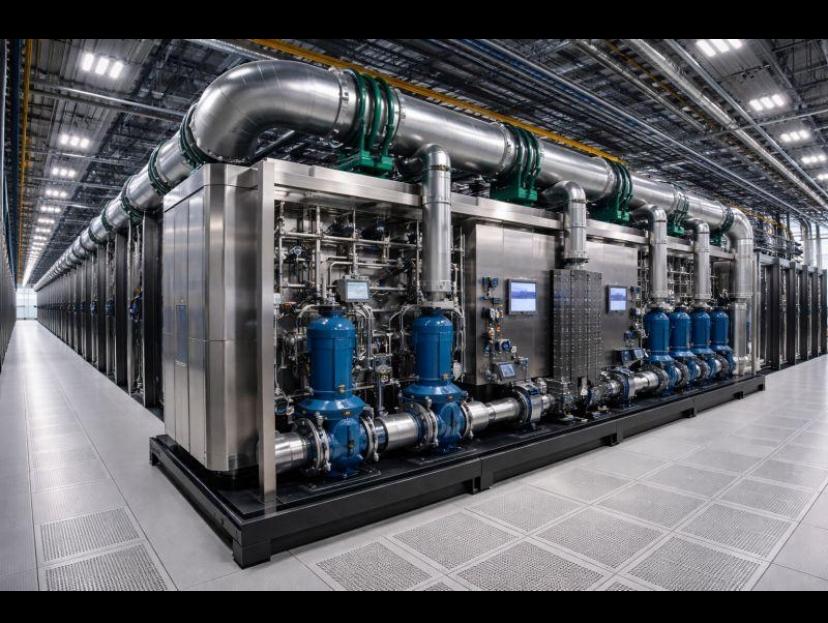
Achieving these temperatures requires specialized equipment, including dilution refrigerators, vacuum chambers, and multistage cooling systems.
However, the entire computer room does not need to be cooled to −273°C. Only the quantum chip and certain connected components are maintained at extremely low temperatures inside specialized equipment. The surrounding room can remain at normal temperatures.
It is also important to understand that not all quantum computers require such extreme cooling. Different quantum computing technologies have different operating requirements.
2. ⚡ Electricity Consumption and the Risk of Global Warming
Keeping a quantum chip extremely cold is a major engineering challenge. The cryogenic machines, vacuum pumps, control electronics, and other supporting equipment require electricity.
If the number of quantum computers increases in the future and large data centers are built to support them, total electricity demand could also rise.
When this electricity comes from coal or natural gas, its generation can release greenhouse gases.
Potential consequences include:
* Increased carbon emissions.* Greater dependence on fossil fuels for electricity generation.* Higher energy demand from industrial facilities and data centers.* Heat released into the surrounding environment by cooling systems.
However, it would be premature to conclude that quantum computers will become a major cause of global warming. Their actual environmental impact will depend on their energy consumption, applications, and the scale of their deployment.
The important question is not simply how powerful a machine is, but also how much energy and how many natural resources are required to achieve that computing power.
3. 💧 Cooling Systems and Water Consumption
Quantum computers do not necessarily require water to cool their chips directly. Some systems rely primarily on specialized refrigeration technologies and helium isotopes.
However, large computing facilities may use air conditioning, cooling towers, and other supporting systems.
These systems can consume water. Water may also be required for electricity generation and the manufacturing of electronic equipment.
If such facilities are established in water-scarce regions, they could place additional pressure on local water resources.
Therefore, planning future quantum data centers should involve more than computing capacity. Water availability, cooling technology, and local environmental conditions must also be considered.
4. ⛏️ Mining, Electronic Waste, and the Loss of Natural Resources
Quantum computers are not made of chips alone. They also require control electronics, specialized wiring, refrigeration equipment, and other technological components.
Manufacturing these components requires various metals, semiconductor materials, and industrial resources.
Their production can create several environmental challenges.
Loss of natural habitats: Mining and industrial activities can put pressure on forests and other natural areas.
Pollution: Certain industrial processes can contaminate air, soil, and water.
Electronic waste: If old equipment is not properly recycled, some of its components can become harmful to the environment.
These challenges are not unique to quantum computing. Conventional computers, AI servers, and other electronic devices also depend on similar resources.
5. 🧬 Could Quantum Computers Harm Biological Life?
An important distinction must be understood here.
A quantum chip may operate at an extremely low temperature, but this does not mean that nearby humans, animals, plants, or microorganisms are exposed to that temperature.
The chip is housed inside specially designed equipment. Its extreme cold does not simply spread into the surrounding environment.
Effects on Humans and Animals
Under normal operating conditions, the extremely low temperature of a quantum computer is not expected to directly harm nearby humans or animals.
However, indirect effects such as pollution from electricity generation, pressure on water resources, and improper industrial waste management could affect local communities and ecosystems.
Effects on Plants and Microorganisms
There is no established evidence that the extreme cold inside a quantum chip directly harms plants or microorganisms living in nearby soil, air, or water.
However, if a computing facility places pressure on local water supplies or releases polluted waste improperly, it could affect plants, aquatic organisms, and their habitats.
Therefore, the main biological concern is not the chip’s temperature itself, but the facility’s overall environmental footprint.
6. 🧬 Could Quantum AI Cause DNA Mutations?
Changes in DNA are called mutations. They can occur naturally through errors during DNA replication and can also result from certain chemicals, ionizing radiation, and other factors.
There is no established scientific evidence that simply operating a quantum computer or maintaining its chip at an extremely low temperature causes DNA mutations in nearby organisms.
Quantum computing is not inherently a process that produces radiation expected to damage the DNA of surrounding living organisms.
Therefore, presenting quantum computers as a direct cause of biological mutations would not be scientifically justified.
7. 🌡️ Could Quantum Data Centers Increase Local Temperatures?
Computing equipment consumes electricity, and much of the energy it uses eventually becomes heat released into the surrounding environment.
Large data centers can therefore release significant amounts of heat locally.
If many large computing facilities are established in one region, managing their cooling systems and waste heat becomes important.
However, it would not be reasonable to conclude that a single quantum computer could raise the temperature of an entire city or the planet. Assessing global climate impacts requires examining total energy consumption, electricity generation, and greenhouse gas emissions.
8. 🌱 Could Quantum Computing Also Help Protect the Environment?
The potential benefits of this technology must also be considered.
In the future, quantum computers may help researchers investigate certain complex scientific problems, including:
* Developing new battery and energy-storage materials.* Studying chemical reactions and new materials.* Supporting research into more efficient fertilizer production.* Improving the design of certain industrial processes.
If these applications help reduce energy consumption or enable cleaner technologies, they could provide environmental benefits.
However, the extent of these benefits remains uncertain and will depend on the practical problems quantum computers can successfully solve. It would be incorrect to assume that quantum computers will outperform conventional computers or use less energy for every scientific task.
⸻
9. ⚠️ Important Questions for the Future
If quantum computing and AI expand significantly in the coming years, governments, scientists, and technology companies should consider several important questions:
1. How much electricity does a quantum computer require, including its cooling and supporting systems?2. How much water is needed to operate its cooling infrastructure and data center?3. How many natural resources are consumed during equipment manufacturing?4. How are old components and electronic waste recycled?5. Can waste heat from cooling systems be reused for other purposes?6. Can renewable electricity reduce the technology’s carbon emissions?7. Do the practical scientific benefits justify the environmental costs?
Answering these questions can help society balance technological progress with environmental protection.
🔬 Conclusion: Technological Progress Must Go Hand in Hand with Environmental Protection
Quantum AI could become an important technology of the future. It may open new possibilities for scientific research and help solve certain complex problems. However, its development must also be evaluated in terms of energy consumption, water use, natural resources, and electronic waste.
It is essential to understand that cooling a quantum chip to approximately −273°C does not mean that the entire machine, its surroundings, or the Earth will reach that temperature. Similarly, presenting extreme cold itself as a direct threat to biological life or global warming would not be scientifically justified.
The real challenge is to ensure that future computing technologies use energy responsibly, avoid unnecessary pressure on water and mineral resources, and adopt measures to reduce pollution and carbon emissions.
Technological progress will be truly beneficial when it improves human life while also contributing to the protection of Earth’s natural balance and biodiversity. 🌍🌱⚛️


Comments
No comments yet.