

Ownmates Post
.jpeg)
.jpeg)
Antarctica in 1912: Was There a Lost Ancient Civilization?
Exploring Historical Expeditions, Ancient Landscapes, and the Mystery of the Frozen Continent
Introduction
Antarctica is the coldest, windiest, and most remote continent on Earth. Today, it is largely covered by a massive ice sheet. However, some people have wondered whether an ancient human civilization once existed there before the continent became covered in ice.
The year 1912 is particularly interesting because several explorers were investigating Antarctica during this period. Their expeditions revealed important information about its geography, climate, and natural environment.
But was there really an ancient civilization in Antarctica in 1912, or is this idea based on misunderstandings and unsupported claims?
To answer this question, we must examine historical records and scientific evidence.
1. What Was Happening in Antarctica in 1912?
In the early twentieth century, Antarctica was the focus of major geographical and scientific expeditions.
Three important expeditions were associated with this period:
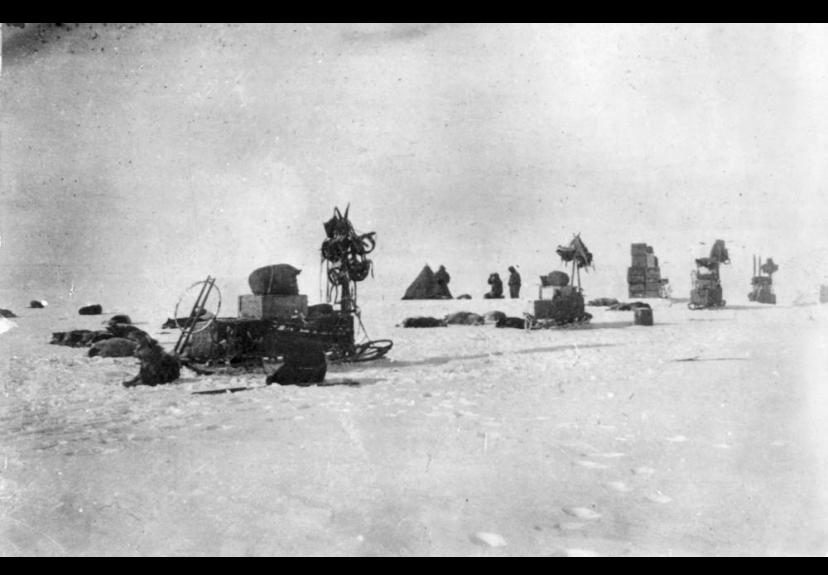
Roald Amundsen’s Expedition: The Norwegian explorer Roald Amundsen became the first person to reach the geographic South Pole on December 14, 1911. His achievement was one of the greatest milestones in the history of polar exploration.
Robert Falcon Scott’s Expedition: The British explorer Robert Falcon Scott and his team reached the South Pole in January 1912. Tragically, Scott and four companions died during their return journey.
Douglas Mawson’s Expedition: The Australasian Antarctic Expedition, led by Douglas Mawson, operated between 1911 and 1914. Its members studied Antarctica’s geography, geology, meteorology, and wildlife.
These expeditions documented an extremely challenging environment. They also demonstrated that Antarctica was a continent requiring extensive scientific investigation.
However, none of these expeditions produced verified evidence of an ancient human civilization.
2. Was Antarctica Once a Green Continent?
Yes. Antarctica had a very different climate millions of years ago.
During earlier geological periods, parts of the continent supported forests and diverse plant life. Fossils discovered in Antarctica provide evidence of ancient vegetation and animals.
Antarctica was also once part of the southern supercontinent Gondwana, which included landmasses that eventually became South America, Africa, Australia, and other regions.
As Earth’s continents changed position and the global climate evolved, Antarctica became increasingly isolated near the South Pole. Large-scale Antarctic glaciation began approximately 34 million years ago, although the development and extent of its ice sheets have varied over geological time.
This ancient environment is scientifically fascinating.
However, evidence of prehistoric forests does not mean that an advanced human civilization existed there. The Antarctic ice sheet began developing tens of millions of years before modern humans appeared.
3. Are There Ancient Cities Hidden Beneath Antarctic Ice?
Antarctica contains extraordinary geological features beneath its ice.
Scientists have identified mountain ranges, deep valleys, ancient river systems, and subglacial lakes. Some of these landscapes have remained hidden beneath ice for millions of years.
Radar surveys, satellite observations, and other scientific techniques help researchers investigate these features without removing the entire ice sheet.
Because these landscapes are hidden from ordinary view, they sometimes inspire speculation about lost cities and forgotten civilizations.
Nevertheless, there is currently no verified archaeological evidence of ancient cities, monumental buildings, or an advanced human civilization beneath Antarctic ice.
A mountain that resembles a building in a photograph is not sufficient evidence of a human-made structure. Such claims require detailed investigation and independent verification.
4. The Mystery of the Piri Reis Map
One frequently discussed topic in theories about Antarctica is the Piri Reis map of 1513.
The map was created by Ottoman admiral and cartographer Piri Reis. Some modern commentators claim that portions of it depict Antarctica before its supposed official discovery.
However, historians and cartographic researchers dispute interpretations that identify the map’s southern features as an accurate representation of Antarctica.
The map’s geographical details, historical context, and relationship to other early maps must be considered before drawing conclusions.
There is no established scientific evidence that the Piri Reis map proves an ancient civilization lived in Antarctica.
Historical maps are important sources, but their unusual shapes and uncertain geographical interpretations should not automatically be treated as evidence of lost civilizations.
5. Why Do People Believe in a Lost Antarctic Civilization?
Several factors help explain the popularity of this idea.
First, Antarctica is difficult to explore. Its enormous ice sheet conceals much of its underlying landscape.
Second, ancient civilizations remain fascinating. Discoveries such as the pyramids of Egypt and archaeological sites in the Americas demonstrate that human societies developed complex architecture and technology in different parts of the world.
Third, historical maps can be difficult to interpret. Unfamiliar coastlines and inaccurate geographical representations sometimes lead to speculative conclusions.
Finally, social media spreads dramatic stories quickly. Images of mountains, ice formations, and old maps may be presented as proof of ancient cities without reliable archaeological evidence.
Curiosity about these possibilities is understandable. However, an interesting theory is not the same as a scientifically demonstrated fact.
6. What Would Scientists Need to Prove an Ancient Civilization Existed?
To establish that a human civilization existed in Antarctica, researchers would need reliable physical evidence.
This could include:
* Human-made structures with identifiable architectural features.* Archaeological artifacts associated with human activity.* Human remains or other biological evidence, where scientifically and ethically appropriate.* Materials that can be dated using reliable scientific methods.* Independent studies confirming that the findings are genuine and correctly interpreted.
Scientists would also need to determine the age of the evidence and establish that it originated from human activity rather than natural geological processes.
No accepted body of archaeological evidence currently establishes the existence of an ancient human civilization in Antarctica.
7. Could Humans Have Lived in Antarctica Before It Became Frozen?
This question requires an important distinction between geological time and human history.
Antarctica once had a much warmer environment and supported forests and other ecosystems. However, much of that environment existed millions of years before humans evolved.
Modern humans, Homo sapiens, emerged approximately 300,000 years ago in Africa.
By that time, Antarctica had already developed extensive ice sheets, although the ice and climate changed over time.
There is no credible evidence that an ancient human civilization inhabited the Antarctic continent before its glaciation.
It is also important to distinguish Antarctica from other regions of the Southern Hemisphere where ancient human societies developed.
8. What Does Antarctica Look Like Beneath the Ice?
Antarctica is not simply a flat continent buried under snow.
Beneath its ice sheet lies a complex landscape containing mountain ranges, basins, valleys, and geological formations. Scientists have also discovered subglacial lakes containing water isolated beneath the ice.
Some parts of the underlying landscape preserve clues about ancient environments, including periods when Antarctica was warmer.
Studying these features helps scientists understand continental movement, past climates, the behavior of ice sheets, and future sea-level changes.
These discoveries are remarkable even without the existence of a lost civilization.
The real scientific story of Antarctica is already extraordinary.
Conclusion
The year 1912 was an important period in Antarctic exploration. Expeditions led by Roald Amundsen, Robert Falcon Scott, and Douglas Mawson expanded humanity’s understanding of the continent.
Scientific research also confirms that Antarctica had a much warmer environment millions of years ago, when forests and other forms of life existed there.
However, there is no credible archaeological evidence that an ancient human civilization existed in Antarctica in 1912 or that an advanced civilization is hidden beneath its ice today.
The distinction between established facts and speculation is essential.
Antarctica continues to hold many scientific mysteries, especially beneath its enormous ice sheet. Future research may reveal new information about Earth’s geological and climatic history.
The greatest mystery of Antarctica is not a proven lost civilization, but the extraordinary natural history that remains hidden beneath its ice.


Comments
No comments yet.