

Ownmates Post

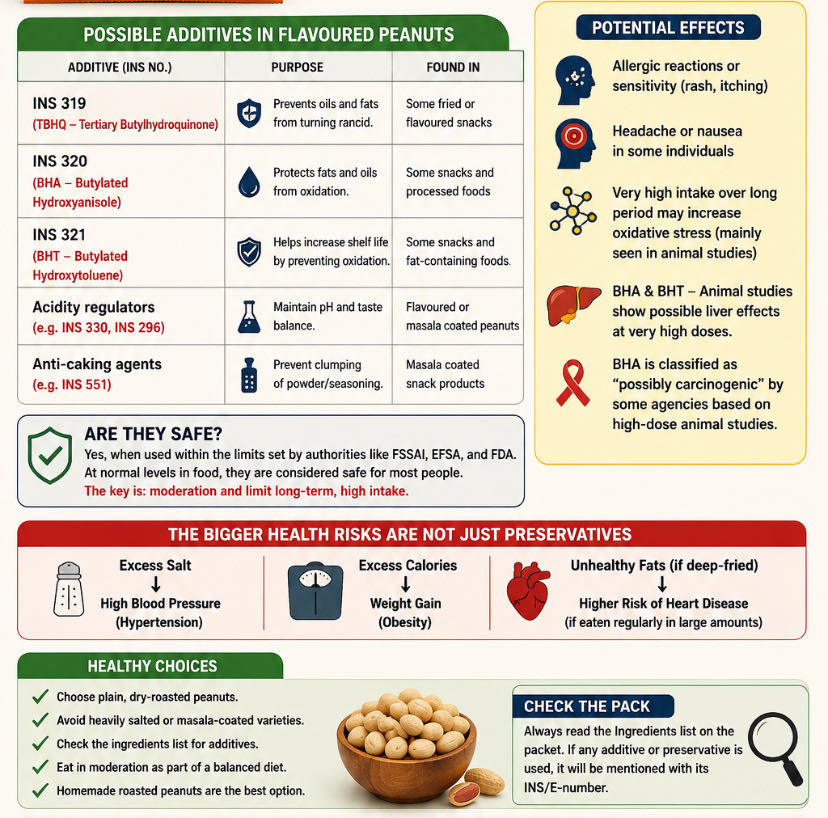
TBHQ (INS 319), BHA (INS 320), and BHT (INS 321) do not directly cause disease when they are used within the safety limits set by food safety authorities such as FSSAI, EFSA, and the FDA.
However, very high intake over a long period may be associated with potential risks, including:
* Allergic reactions or skin rashes in sensitive individuals
* Headaches or nausea in some people
* Animal studies have shown possible effects on the liver and other organs at very high doses, but these effects have not been clearly demonstrated in humans consuming normal dietary amounts.
* BHA has been classified by some agencies as “possibly carcinogenic” based mainly on high-dose animal studies. There is no clear evidence that the amounts typically used in foods cause cancer in humans.
To reduce your exposure:
* Limit your intake of processed and packaged snacks.
* Choose plain or dry-roasted peanuts with minimal ingredients.
* Eat a balanced diet instead of consuming processed snacks regularly.


Comments
No comments yet.