

Ownmates Post

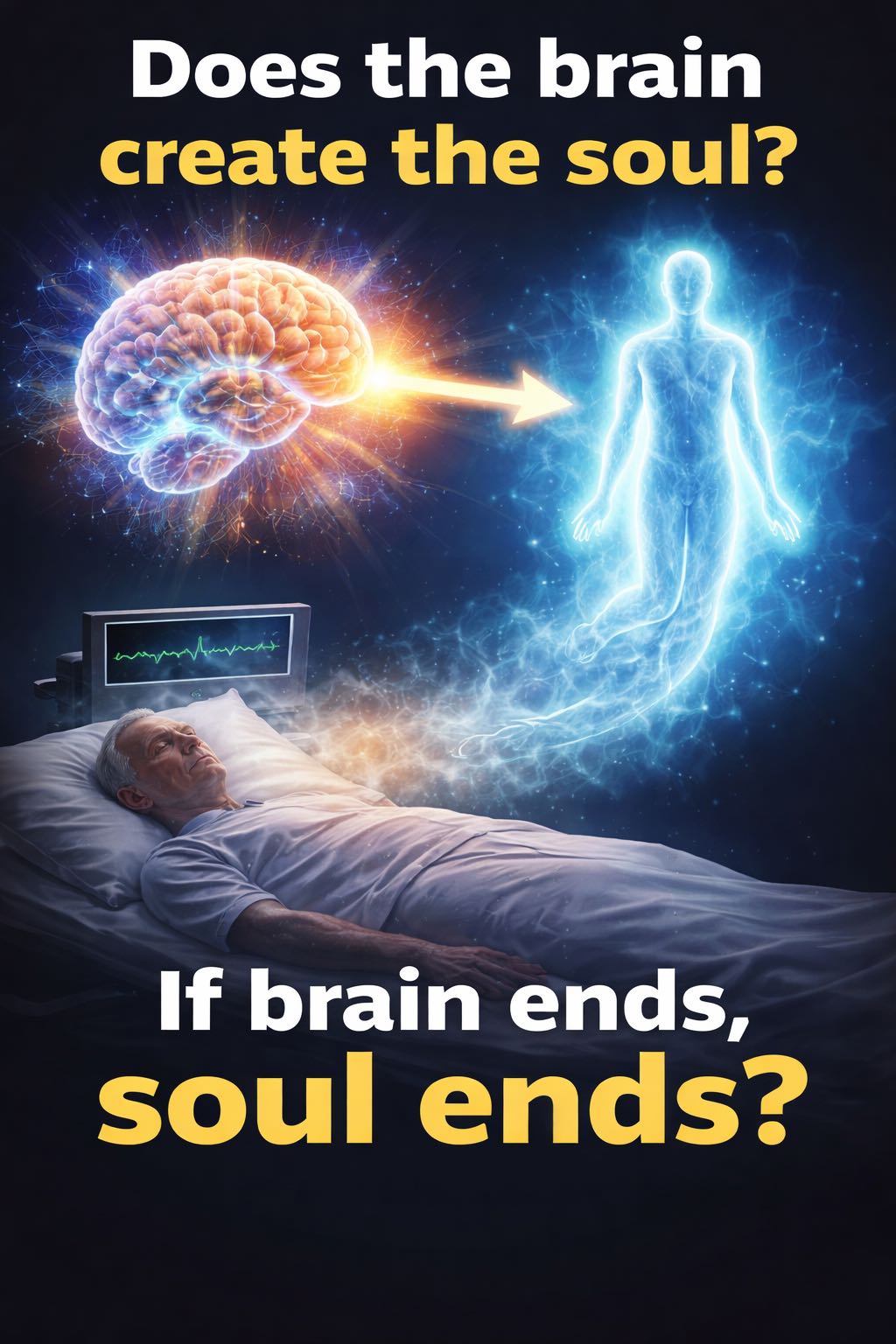
Scientists have studied topics related to the idea of a “soul,” but not the soul itself as a directly measurable entity. So far, there is no solid scientific evidence proving that the soul exists as something separate from the body.
1. Scientific Perspective
Science relies on things that can be observed, measured, and repeated.
The concept of a “soul” is mostly philosophical and religious, which makes it difficult to test scientifically.
2. What have scientists actually studied?
(a) Near-Death Experiences (NDE)
People who come close to death sometimes report:
• Leaving their body
• Seeing a bright light
• Reliving past memories
Research by Raymond Moody documented many such cases.
👉 However, scientists explain these as effects of:
• Lack of oxygen in the brain
• Chemical changes
• Neurological activity
(b) Out-of-Body Experiences (OBE)
Some people feel like they are observing themselves from outside their body.
👉 Experiments show that this can be artificially created by stimulating certain parts of the brain, suggesting it’s a brain-based phenomenon.
(c) The “21 grams” experiment
A doctor named Duncan MacDougall claimed that the human body loses 21 grams at death (which he associated with the soul).
👉 But this experiment:
• Had a very small sample size
• Was scientifically flawed
👉 It is not accepted by modern science.
3. What does modern neuroscience say?
Modern science suggests that:
• Thoughts, memory, and sense of “self” come from the brain
• When brain activity stops, these experiences also stop
4. Conclusion
👉 There is no proven scientific evidence that the soul exists as a separate entity.
👉 But this does not prove that the soul doesn’t exist—it simply means science hasn’t been able to verify it.
It means:
👉 “Does this mean that your brain creates the image of the soul, and when the brain ends, the soul also ends!”


Comments
No comments yet.