

Ownmates Post
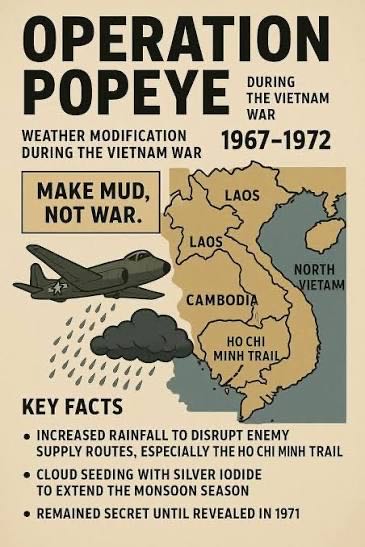
Operation Popeye (also known as Project Popeye) was a highly classified U.S. military weather modification program conducted during the Vietnam War from 1967 to 1972.6
Key Details
• Objective: Extend the monsoon season over the Ho Chi Minh Trail (in Laos, Cambodia, and North Vietnam) by cloud seeding to increase rainfall. The goal was to soften roads, cause landslides, wash out river crossings, and disrupt North Vietnamese supply lines and troop movements.7
• Method: Aircraft (primarily from the 54th Weather Reconnaissance Squadron) released silver iodide and lead iodide flares into clouds to stimulate precipitation. Over ~2,600 sorties were flown, releasing tens of thousands of flares.10
• Timeline: Test phase in 1966; operational phase began March 20, 1967, and continued through the rainy seasons until 1972. It reportedly extended the monsoon by 30–45 days in targeted areas on average.11
• Secrecy and Exposure: It was kept secret for years, with the U.S. government (including denials to Congress) downplaying or hiding it. Revelations came via the Pentagon Papers, journalist Jack Anderson, and a 1972 New York Times report. It was later declassified.6
This was one of the first known examples of weather warfare (or militarized geoengineering). It led to international discussions and eventually influenced treaties like the Environmental Modification Convention (ENMOD) aimed at banning hostile use of environmental modification techniques.11


Comments
No comments yet.