

Ownmates Post

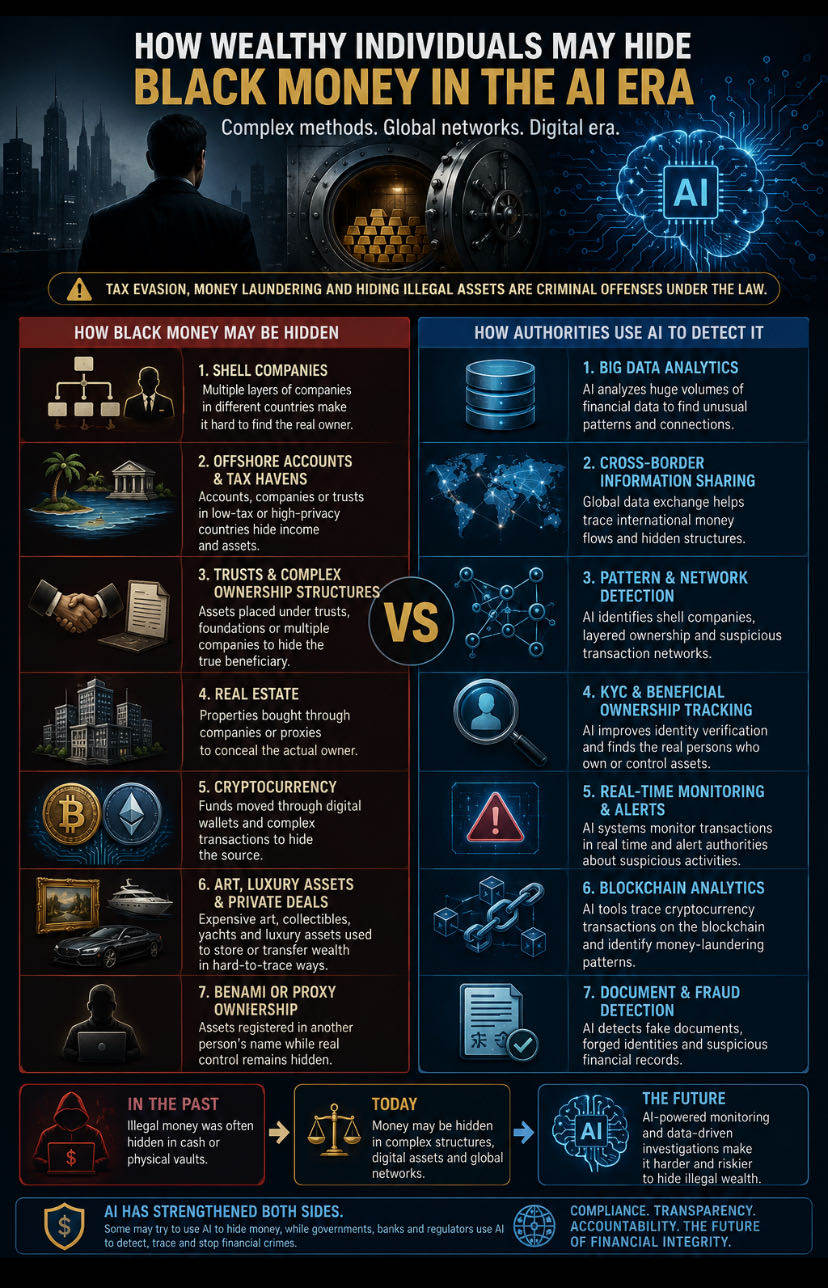
How Wealthy Individuals May Hide Black Money in the AI Era
In the AI era, wealthy individuals may no longer rely only on cash or physical safes to hide black money. They may use complex companies, international financial structures, and digital assets to conceal the ownership or source of wealth. However, it is important to note that tax evasion, money laundering, and hiding illegal assets can be criminal offenses under the law.
Common methods that financial investigators focus on include:
* Shell Companies (Paper Companies): Multiple layers of companies may be created across different countries to make it difficult to identify the real owner or controller.
* Offshore Accounts and Tax Havens: Some individuals keep companies, trusts, or bank accounts in countries with lower taxes or greater financial privacy. Not every offshore account is illegal, but hiding income or assets from authorities can be unlawful.
* Trusts and Complex Ownership Structures: Assets may be placed under trusts, foundations, or multiple companies to hide the true person who controls or benefits from them.
* Real Estate: Expensive properties may sometimes be purchased through companies or representatives to conceal the actual owner.
* Cryptocurrency: Some individuals may attempt to hide the source of funds through digital wallets and complex transactions. However, many blockchain transactions are recorded, and authorities use blockchain analytics to investigate suspicious activities.
* Art, Luxury Assets, and Private Deals: Expensive artwork, rare collectibles, yachts, and other luxury assets may sometimes be used to transfer or store wealth in difficult-to-trace ways.
* Benami or Proxy Ownership: Assets may be registered in another person’s name while the actual control remains with someone else.
AI Era Context (High-Level Overview)
The use of AI and related technologies by authorities, financial regulators, banks, and compliance systems is increasing worldwide for:
* Detecting patterns in large volumes of financial transaction data
* Cross-border information sharing and analysis
* Identifying unusual activities, shell structures, or suspicious money flows
* Improving KYC (Know Your Customer), beneficial ownership tracking, and real-time monitoring
These tools make long-term concealment of illegal wealth more difficult and risky, regardless of how wealthy or powerful an individual may be. At the same time, sophisticated actors and complex international jurisdictions continue to create enforcement challenges, which is why global frameworks such as CRS, FATCA-style regulations, beneficial ownership registries, and anti-money laundering rules continue to evolve.
AI has strengthened both sides. Some individuals may attempt to use AI to create complex financial structures, fake documents, or hide transaction patterns. Meanwhile, governments and banks are also using AI to detect suspicious activities, fake companies, unusual money movements, and money-laundering networks.
In simple words: In the past, illegal money was often hidden in cash or physical vaults. Today, attempts may involve layers of companies, trusts, properties, and digital networks. However, AI-powered monitoring and data-driven investigations are also making it easier to detect and trace suspicious financial activities.


Comments
No comments yet.