

Ownmates Post


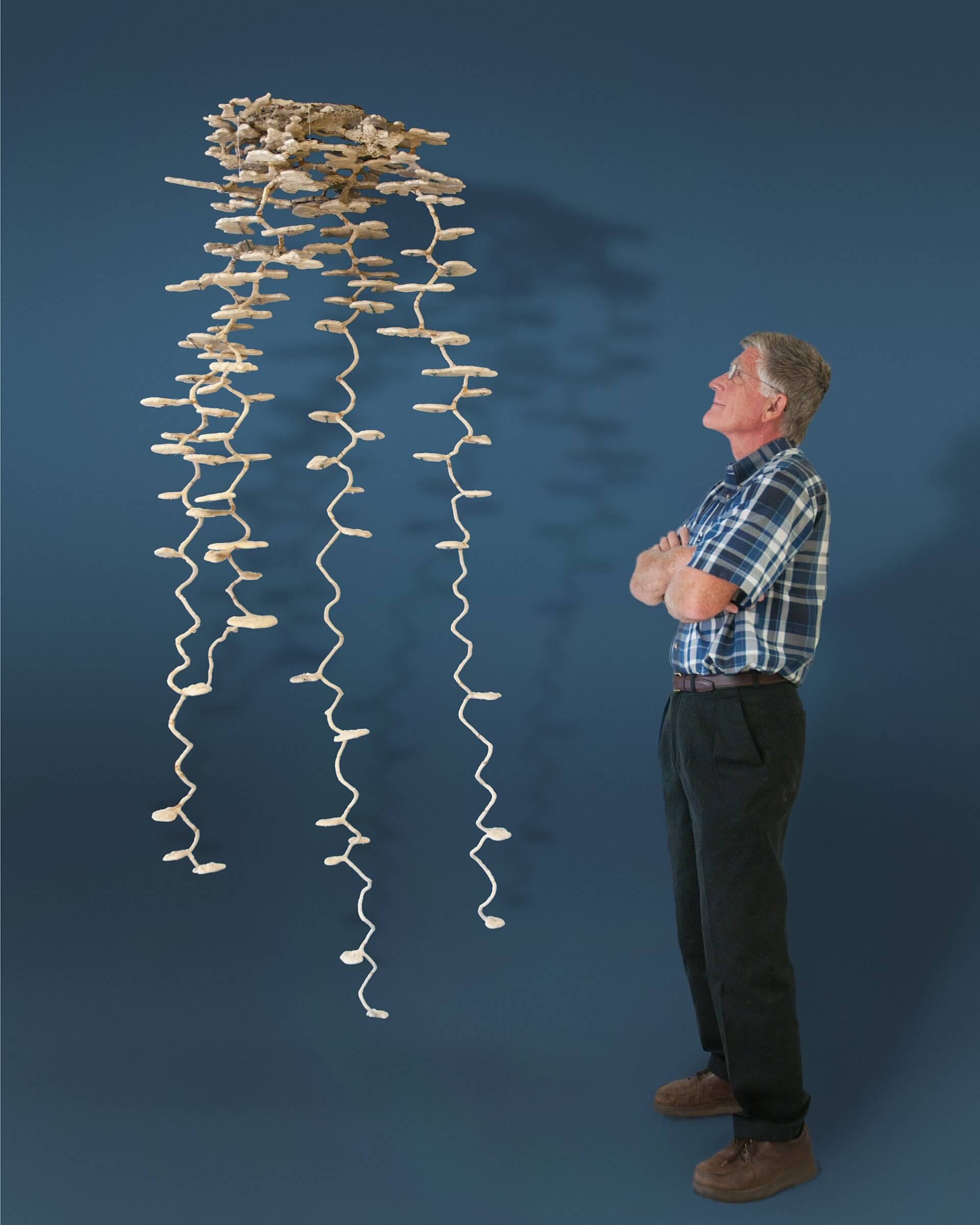
Dr. Walter R. Tschinkel: The Scientist Who Studied Underground Ant Cities 🐜
Dr. Walter R. Tschinkel is a renowned American biologist, entomologist, and myrmecologist—a scientist who studies ants. He is widely known for his research on ant behavior, social organization, and the remarkable architecture of underground ant nests.
He served as a Professor of Biological Science at Florida State University (FSU) and became a Professor Emeritus after retirement.
Exploring the Hidden World Beneath the Ground
Ant nests are usually hidden underground, making it difficult to observe their complete structure. Dr. Tschinkel used special scientific techniques to study these underground colonies.
In some experiments, researchers filled abandoned or carefully selected ant nests with materials such as plaster, wax, or liquid metal. After the material hardened, the surrounding soil was removed. This created a three-dimensional model, or cast, of the nest’s tunnels and chambers.
These studies revealed that ant nests can contain:
* 🐜 Long underground tunnels
* 🏗️ Multiple chambers and connected passages
* 🌡️ Structures that may help regulate temperature and airflow
* 🥚 Areas used for brood, including eggs and developing young
* 📐 Different levels and complex architectural patterns
Was Cement Used?
Many viral videos describe the experiment as “pouring cement into an ant nest.” However, Dr. Tschinkel’s scientific research involved several different casting materials, including plaster, wax, and liquid metal. The purpose was to understand the hidden architecture of underground ant colonies.
The well-known metal-casting demonstrations are often associated with molten aluminum, but these methods should not be confused with ordinary cement construction.
Research on Fire Ants 🔥🐜
Dr. Tschinkel conducted extensive research on fire ants, especially their colony structure, behavior, life cycle, social organization, and nest architecture.
His work helped scientists understand how thousands of ants can cooperate to build large and complex underground structures without a single ant acting as an overall architect.
Ant Architecture 📘
Dr. Tschinkel wrote the book:
Ant Architecture: The Wonder, Beauty, and Science of Underground Nests
The book explores how ants build underground nests, how scientists study these hidden structures, and how nest architecture relates to the lives and behavior of ant colonies.
Major Scientific Contributions
Dr. Tschinkel’s research helped show that:
* Ants are highly organized social insects.
* Underground nests can be large and structurally complex.
* Nest design may influence temperature, airflow, and colony activity.
* Thousands of ants can create complex structures through collective behavior.
* Ant nests are examples of remarkable natural engineering.
Conclusion
Dr. Walter R. Tschinkel helped reveal that an ordinary-looking ant mound may hide an intricate underground world. His research showed that ants are not only social insects but also highly effective natural engineers and builders.
“Ant architecture is one of nature’s most remarkable examples of collective engineering.” 🐜🏗️🌍


Comments
No comments yet.