

Ownmates Post

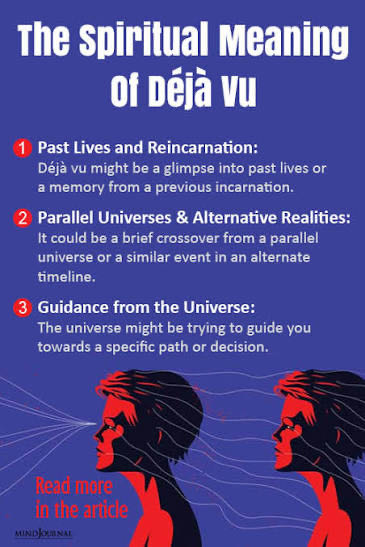
Déjà vu is a French term that means “already seen.” It’s the strange feeling that a current situation feels very familiar, even though you know it’s happening for the first time.
Scientists explain déjà vu in a few main ways:
1️⃣ Memory processing glitch
Your brain handles memory in two parts:
• Familiarity (a feeling that something is known)
• Recollection (actually remembering details)
In déjà vu, the familiarity signal turns on without the actual memory, so your brain mistakenly feels like the experience has happened before.
2️⃣ Role of the temporal lobe
The temporal lobe of the brain is important for memory. A small, brief misfiring there can create the false sensation that the present moment is a memory.
3️⃣ Delayed processing theory
Sometimes the brain processes the same information twice:
• Once very quickly or subconsciously
• Then again normally
The second processing feels familiar, creating déjà vu.
4️⃣ Stress and fatigue
Déjà vu happens more often when you’re tired, stressed, or sleep-deprived, because the brain’s timing and attention systems are less precise.
5️⃣ Why it’s more common in young people
People aged 15–25 experience déjà vu more often because their brains are highly active and constantly forming new neural connections.
⸻
🧠 Is déjà vu dangerous?
Usually, no. It’s a normal and harmless experience.
However, if it happens very frequently, lasts a long time, or is accompanied by confusion, seizures, or fainting, medical advice should be sought.


Comments
Nice post!
Love this 🔥
Did you cook this yourself?