

Ownmates Post

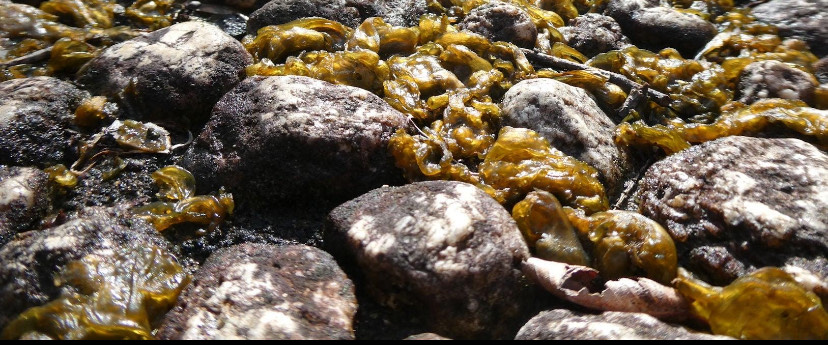
Cyanobacteria: How Does Life Begin on Bare Rocks?
How Can Life Develop on Rocks Without Soil?
Not every part of Earth has fertile soil. High mountains, deserts, and bare rock surfaces may have little or no soil, yet life can still exist there.
Microscopic organisms such as cyanobacteria can survive in these harsh environments. They contribute to the natural processes that may eventually allow mosses, grasses, and other plants to grow.
1. What Are Cyanobacteria?
Cyanobacteria are microscopic organisms that perform photosynthesis. They were once called blue-green algae, but scientifically, they are bacteria, not algae.
Their main characteristics include:
* They use sunlight to make their own food.
* They release oxygen during photosynthesis.
* Many species can survive on rocks without fertile soil.
* Some species can convert atmospheric nitrogen into compounds that other organisms can use.
Cyanobacteria are among the oldest known groups of organisms capable of oxygen-producing photosynthesis.
2. How Do Cyanobacteria Survive on Rocks?
Cyanobacteria do not always need fertile soil to survive. Many species can grow directly on rock surfaces when suitable conditions are available.
Water: Rain, dew, and moisture from the atmosphere help them remain active.
Sunlight: They use sunlight to produce food through photosynthesis.
Carbon dioxide: They absorb carbon dioxide (CO₂) and use it to produce organic matter.
Minerals and nutrients: Minerals released from rocks, along with nutrients carried by dust and water, can support their growth.
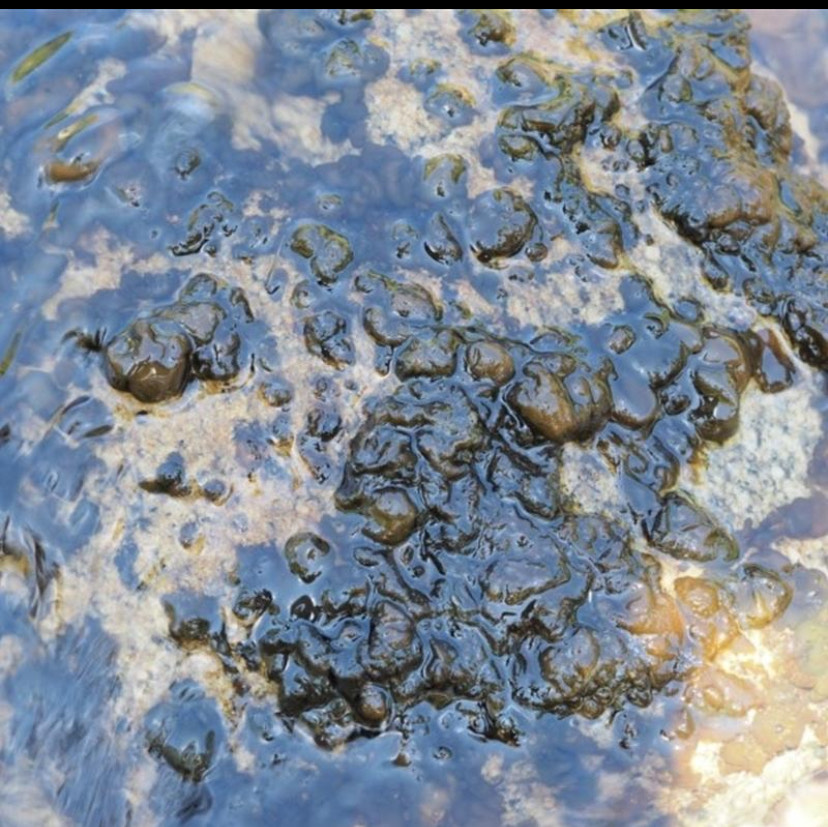
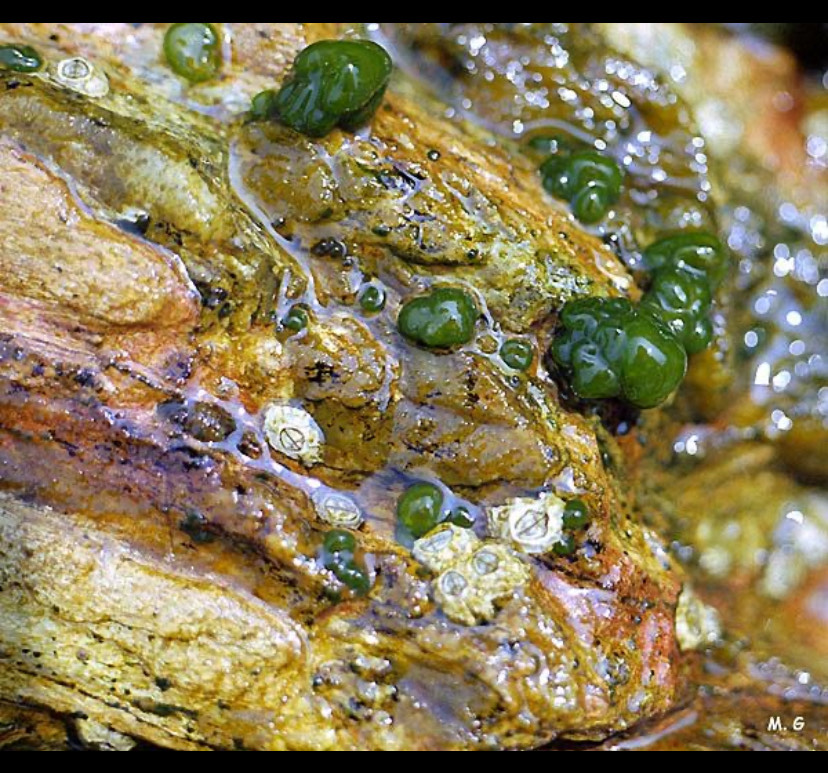
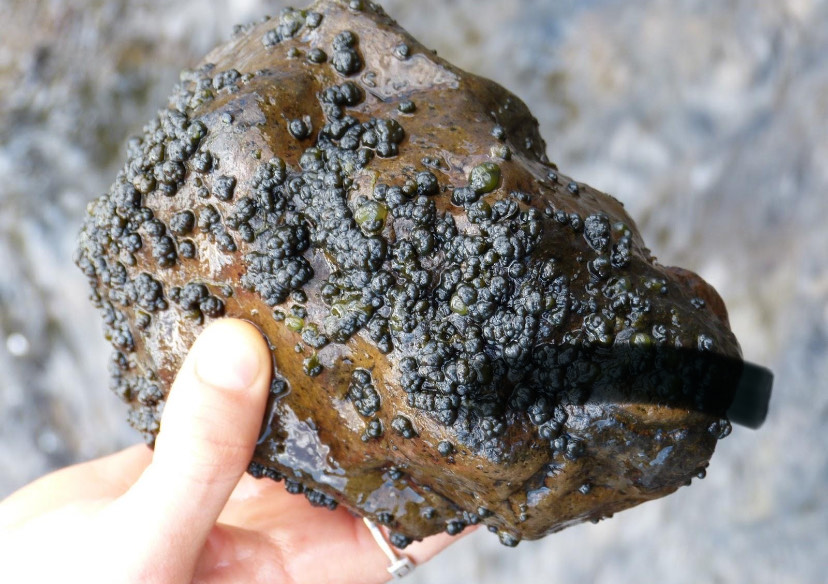
Some cyanobacteria form thin green, blue-black, or dark layers on rock surfaces. However, not every green or black layer on a rock consists of cyanobacteria. It may also contain algae, lichens, or other microorganisms.
3. Can Cyanobacteria Eventually Turn into Grass or Plants?
No. Cyanobacteria do not gradually transform into grass or other plants. They are bacteria and belong to a different biological group.
However, they can contribute to the natural processes that allow life to develop on bare rocks.
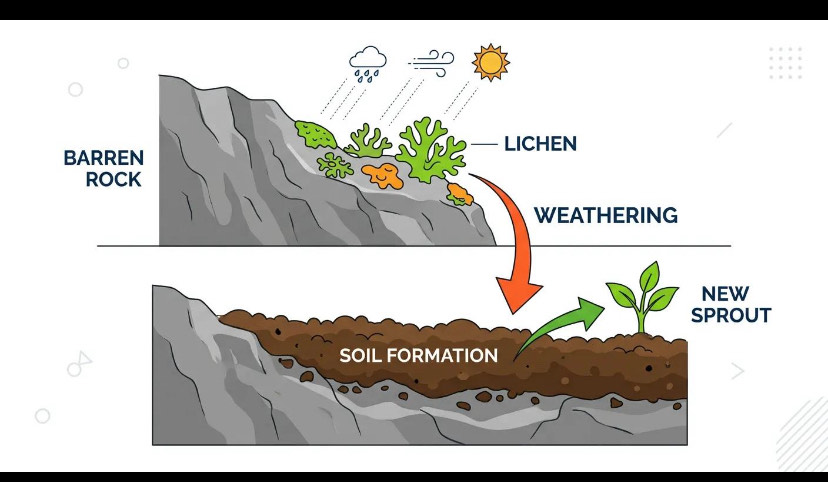
This process can be understood in the following stages.
Stage 1: Microorganisms Colonize Bare Rocks
Cyanobacteria and other microorganisms can establish themselves on rock surfaces.
When sufficient moisture and sunlight are available, they become active and grow. Some microorganisms also contribute to the accumulation of organic matter on the rock surface.
This can help create conditions for other organisms to establish themselves.
Stage 2: Lichens and Other Organisms Develop
Lichens are organisms formed by a close association between a fungus and a photosynthetic partner, usually an alga or a cyanobacterium.
Many lichens can grow directly on rocks.
Some lichens contribute to rock weathering through chemical reactions and physical processes. This can help release small mineral particles from the rock.
Over time, dust, mineral particles, and organic matter may accumulate on the surface.
Stage 3: Soil Formation Begins
Several natural processes gradually break down rocks.
These include:
* Rainwater and flowing water.
* Changes in temperature.
* Wind and physical erosion.
* Chemical reactions involving water and minerals.
* The activities of microorganisms and other living organisms.
As rocks break down, small mineral particles are released. These particles can mix with dust and organic matter produced by living organisms.
Under suitable conditions, these materials contribute to soil formation.
Important: Cyanobacteria alone cannot turn every bare rock into fertile soil. Soil formation also depends on minerals, water, climate, time, and other environmental processes.
Stage 4: Mosses and Small Plants Begin to Grow
When enough moisture, mineral particles, and suitable nutrients become available, mosses may begin to grow in cracks or on surfaces where conditions are favorable.
As more soil and organic matter accumulate, grasses and other plants may eventually establish themselves.
However, this does not happen everywhere. Extremely dry, cold, or otherwise harsh environments may prevent plants from growing, even over long periods.
4. How Did Cyanobacteria Help Increase Oxygen on Earth?
Cyanobacteria have played an important role in the history of life on Earth.
Scientists believe that oxygen-producing photosynthesis, carried out by ancient microorganisms including cyanobacteria, was crucial to the rise of oxygen in Earth’s atmosphere.
Around 2.4 billion years ago, Earth experienced a major environmental transition known as the Great Oxidation Event.
During this period, oxygen began accumulating in the atmosphere on a significant scale.
This transformation changed Earth’s environment and helped shape the evolution of life.
5. How Long Does It Take for Soil to Form on Bare Rocks?
There is no fixed time for soil to develop from bare rock.
The process depends on several factors:
* The type of rock.
* The amount of rainfall and moisture.
* Local temperatures and climate.
* The amount of dust and mineral particles carried by the wind.
* The activity of microorganisms, lichens, and other organisms.
Thin biological layers and small deposits of material may develop relatively quickly in favorable conditions.
However, developing substantial soil from bare rock can take decades, centuries, thousands of years, or even longer, depending on the environment.
Conclusion
Cyanobacteria do not directly become grass or plants. Instead, they can help establish the conditions under which life develops on bare rock surfaces.
Working alongside lichens, other microorganisms, water, wind, and natural weathering processes, they contribute to the gradual development of environments where soil formation and plant growth may become possible.
A place that appears to contain nothing but bare rock today may eventually support mosses, grasses, and other plants if environmental conditions allow and enough time passes.


Comments
No comments yet.