

Ownmates Post
Bionic Eye: How It Works, What It Is Made Of, and the Role of AI
Introduction
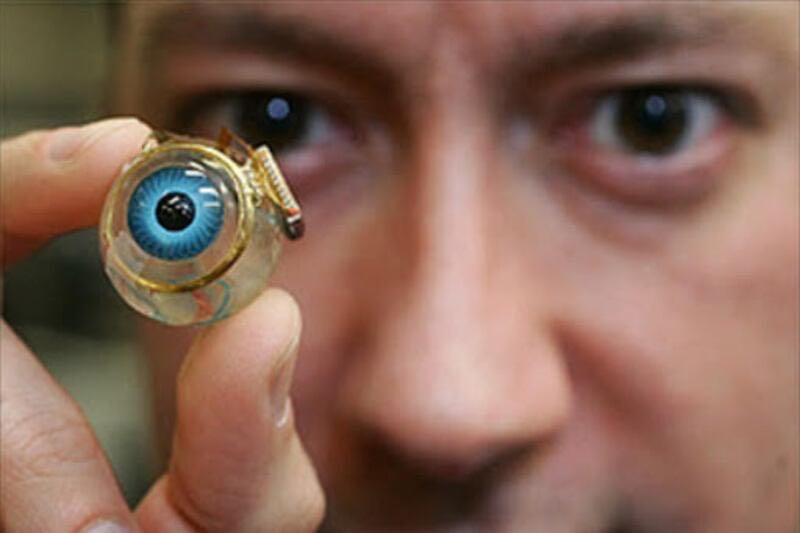
A bionic eye, also known as a visual prosthesis, is an advanced medical technology designed to restore partial vision to people who are blind or have severe vision loss. Unlike a normal human eye, a bionic eye does not recreate natural vision. Instead, it captures visual information, processes it electronically, and delivers electrical signals to the retina, optic nerve, or visual cortex, allowing the brain to perceive light, shapes, movement, and large objects.
Scientists and engineers are continuously improving this technology with better electronics, artificial intelligence (AI), and more advanced implants.
⸻
How a Bionic Eye Works
A typical bionic eye system consists of several connected components:
1. Camera
2. Image Processing Unit
3. Wireless Communication System
4. Implanted Electrode Array (Threads or Microelectrodes)
5. Brain or Retina
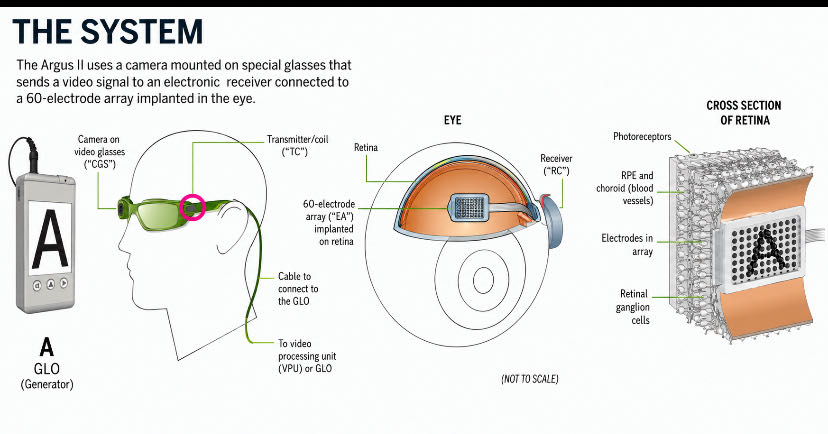
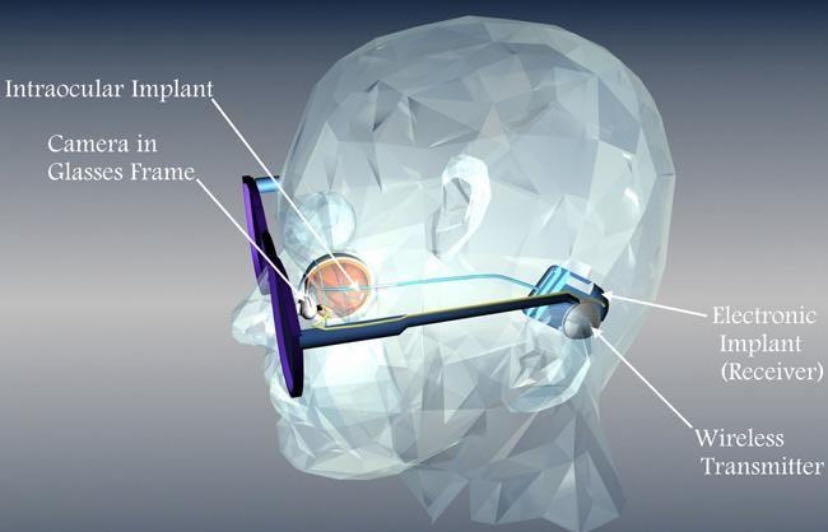
The camera captures the surrounding environment. A processor converts the images into electrical signals. These signals are transmitted wirelessly to an implanted electrode array, which stimulates nerve cells so the brain can interpret visual information.
⸻
Camera Used in a Bionic Eye
Most current bionic eye systems use a miniature CMOS (Complementary Metal-Oxide Semiconductor) digital camera mounted on a pair of smart glasses.
The camera is typically:
* Lightweight
* Low power
* High speed
* Designed for continuous video capture
Depending on the system, the camera may provide:
* Standard-definition video
* High-definition video
* Wide-angle viewing
* High dynamic range imaging
Unlike a normal eye, the camera is usually mounted on glasses, not implanted inside the eye.
⸻
Image Processing
The captured video is sent to a wearable processor that simplifies the image into patterns that the implanted electrodes can use.
The processor may:
* Increase contrast
* Detect edges
* Reduce image noise
* Highlight important objects
* Convert images into stimulation patterns
⸻
Is Artificial Intelligence (AI) Used?
Older bionic eye systems generally relied on conventional image processing.
Modern research systems increasingly use AI to improve useful vision.
AI can:
* Detect people
* Recognize faces (where supported)
* Identify doors and staircases
* Detect obstacles
* Read printed text
* Recognize everyday objects
* Improve contrast automatically
* Prioritize important visual information
Instead of sending every detail, AI can emphasize the most useful parts of a scene, making navigation easier.
⸻
Electrode Threads
One of the most important parts of a bionic eye is the implanted electrode array.
Depending on the design, these electrodes may be placed:
* On the retina
* Under the retina
* Around the optic nerve
* Inside the visual cortex of the brain
These electrodes are extremely small and stimulate neurons using tiny electrical pulses.
⸻
Materials Used in the Threads
The flexible thread itself is usually made from biocompatible polymers rather than metal.
Common substrate materials include:
* Polyimide
* Parylene-C
* Silicone
These materials are flexible, lightweight, and safe for long-term implantation.
⸻
Metals Used in the Electrodes
The conductive parts of the implant commonly use highly biocompatible metals.
Platinum (Pt)
* Most commonly used electrode material
* Excellent corrosion resistance
* Stable electrical performance
Iridium Oxide (IrOx)
* Often coated onto electrodes
* Increases charge capacity
* Improves electrical stimulation
Platinum–Iridium Alloy
* Stronger than pure platinum
* Common in advanced implants
* Long-lasting performance
Gold (Au)
* Used in conductive traces
* Excellent electrical conductivity
* Resistant to corrosion
Titanium (Ti)
* Frequently used for the implant housing
* Strong, lightweight, and highly biocompatible
⸻
Wireless Communication
Most bionic eye systems use wireless communication between the external glasses and the implanted electronics.
This eliminates the need for wires passing through the skin and reduces infection risk.
⸻
Current Capabilities
Today’s bionic eye technology can help some users:
* Detect light
* Recognize movement
* Distinguish large objects
* Navigate simple environments
* Identify doorways
* Detect obstacles
* Read large letters with training
* Improve independent mobility
However, current devices do not restore normal eyesight.
⸻
Current Limitations
Despite significant progress, several challenges remain:
* Low image resolution
* Limited color perception
* Narrow field of view
* Surgical complexity
* High cost
* Extensive rehabilitation and training required
Users often perceive flashes of light (called phosphenes) rather than detailed natural images.
⸻
Future Developments
Researchers are working to develop next-generation systems that may include:
* Thousands of electrodes instead of hundreds
* Higher-resolution artificial vision
* Better AI-powered scene understanding
* Smaller implants
* More natural image perception
* Improved wireless power systems
* Longer-lasting implants
* Brain–computer interface integration
These advances could significantly improve the quality of artificial vision over the coming years.
⸻
Conclusion
The bionic eye represents one of the most exciting achievements in biomedical engineering. By combining miniature cameras, flexible biocompatible materials, platinum-based electrodes, wireless communication, and increasingly powerful AI algorithms, researchers are creating systems that can restore meaningful visual perception to people with severe blindness. Although current devices cannot replicate natural human vision, rapid progress in electronics, neuroscience, and artificial intelligence continues to move the technology toward safer, smarter, and more capable visual prostheses.


Comments
No comments yet.