

Ownmates Post

Arctic and Antarctica: The Amazing Worlds of Earth’s Two Poles
The two polar regions of Earth — the Arctic (North Pole region) and Antarctica (South Pole region) — are among the coldest and most mysterious places on the planet. Although both are covered with ice and experience extreme cold, their geography, land structure, climate, and human life are very different.
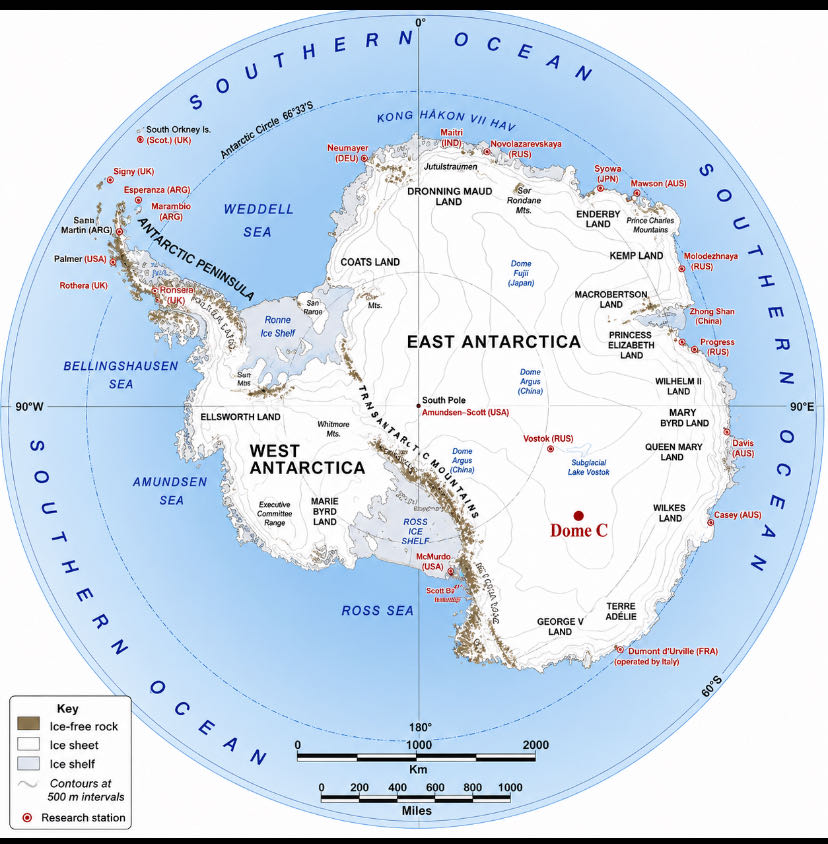
Antarctica: The Ice-Covered Continent
Antarctica is the fifth-largest continent on Earth. Its total area is approximately 14.2 million km² (1.42 crore square kilometers).
For comparison:
* 🌎 North America: approximately 24.7 million km²
* 🧊 Antarctica: approximately 14.2 million km²
Therefore, North America is about 1.7 times larger than Antarctica. Antarctica is about 57% the size of North America.
Antarctica is a true continent with solid rocky land beneath its ice. Around 98% of its surface is covered by a massive ice sheet. The average thickness of the ice is about 2 kilometers.
Arctic: The Frozen Ocean Around the North Pole
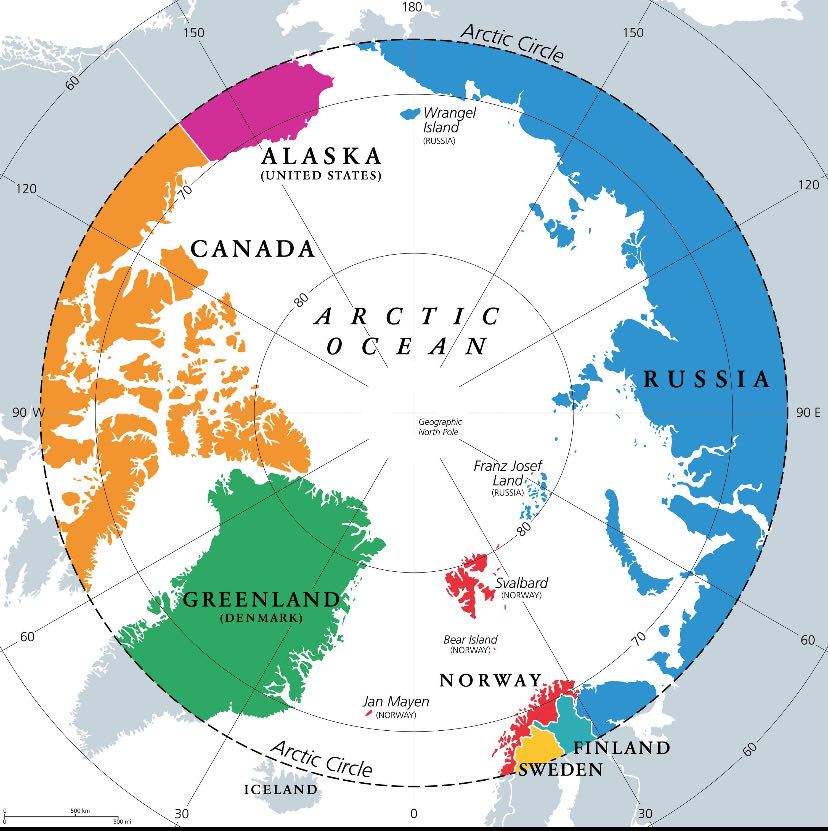
The region around the North Pole is called the Arctic region. It covers an area of approximately 14.5 million km².
Unlike Antarctica, the Arctic is not a continent. The exact North Pole is located in the Arctic Ocean, where sea ice floats on top of the ocean.
At the North Pole:
* There is no large continent or rocky landmass.
* Beneath the ice is ocean water.
* The ocean depth can reach around 4,000 meters.
However, the wider Arctic region contains land areas, including:
* 🇬🇱 Greenland
* 🇨🇦 Arctic islands of Canada
* 🇷🇺 Northern Russia
* 🇺🇸 Alaska (USA)
* 🇳🇴 Northern Norway
Major Differences Between Arctic and Antarctica
Feature Arctic Antarctica
Location North Pole region South Pole region
Type Frozen ocean surrounded by land Ice-covered continent
Area About 14.5 million km² About 14.2 million km²
Beneath ice Ocean water Rocky land
Permanent population About 4 million people No permanent population
Main activities Fishing, mining, oil and gas, tourism Scientific research
Human Life in the Arctic
The Arctic region has a population of around 4 million people. It is shared by several countries and is home to many Indigenous communities.
Major inhabited areas include:
* 🇷🇺 Arctic Russia
* 🇨🇦 Northern Canada
* 🇬🇱 Greenland
* 🇺🇸 Alaska (USA)
* 🇳🇴 Northern Norway
* 🇸🇪 Northern Sweden and 🇫🇮 Northern Finland
Important Indigenous peoples of the Arctic include:
* Inuit — Canada, Greenland, and Alaska
* Sámi — Norway, Sweden, Finland, and Russia
* Nenets and Chukchi — Russia
People in the Arctic are involved in fishing, hunting, reindeer herding, mining, oil and gas industries, tourism, and modern services.
Life in Antarctica
Antarctica has no permanent human population. Only scientists and researchers from different countries stay there temporarily at research stations.
Scientists study:
* Climate change
* Ice sheets
* Ocean systems
* Earth’s ancient climate history
Conclusion
Although the Arctic and Antarctica are both frozen polar regions, they are completely different. The Arctic is a frozen ocean surrounded by continents, while Antarctica is a vast ice-covered continent with rocky land beneath it. The Arctic supports millions of people, whereas Antarctica is mainly a place for scientific research.


Comments
No comments yet.