

Ownmates Post

Can AI and Cloud Seeding Solve the World’s Groundwater Crisis?
Groundwater is one of the most important sources of freshwater on Earth. However, not every region has abundant or easily accessible groundwater. In some countries, groundwater is extremely limited, located deep underground, naturally saline, or unsuitable for drinking.
Countries and regions such as Egypt, Saudi Arabia, the United Arab Emirates, Qatar, Kuwait, Bahrain, and many small coral islands face serious challenges related to freshwater availability. This does not necessarily mean that there is absolutely no water beneath the ground. In many cases, groundwater exists but is ancient, extremely deep, slowly replenished, or contaminated with salt.
Why Is Groundwater So Limited?
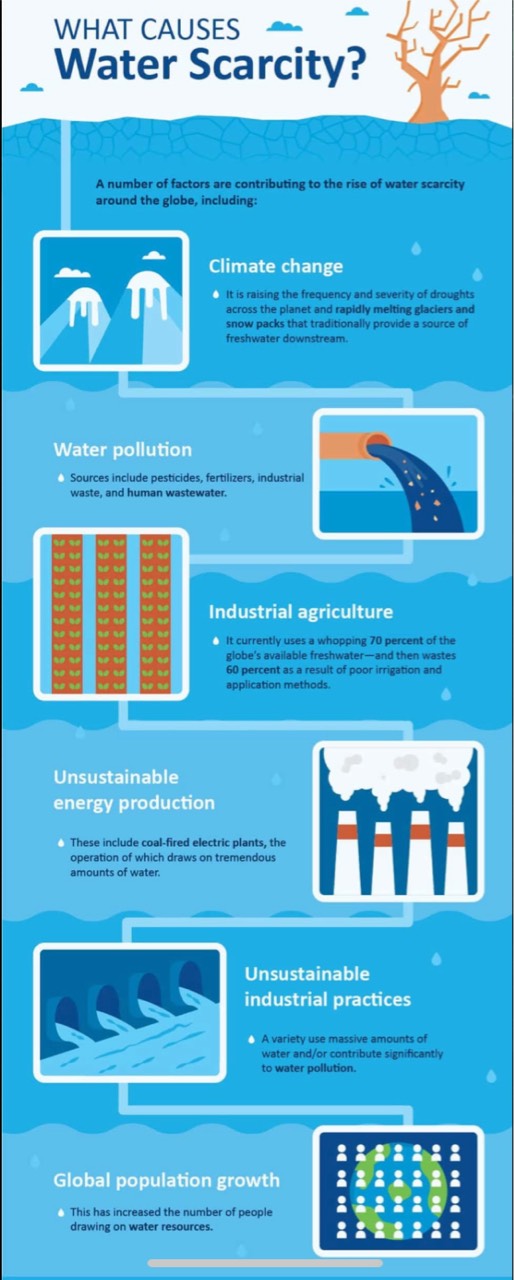
Several natural and human factors contribute to groundwater scarcity.
1. Low Rainfall
Desert regions receive very little rainfall. As a result, only a small amount of water naturally infiltrates the ground and replenishes underground aquifers.
2. Extreme Heat and Evaporation
High temperatures can cause rapid evaporation. In extremely dry environments, much of the available surface water may disappear before it can contribute significantly to groundwater recharge.
3. Geological Conditions
The type of rocks and sediments beneath the surface determines how much water can be stored underground. Some geological formations can hold enormous quantities of groundwater, while others have very limited storage capacity.
4. Saltwater Intrusion
Coastal regions face another major problem. Excessive pumping of groundwater can lower freshwater levels and allow seawater to move into underground aquifers, making the water increasingly salty.
5. Excessive Groundwater Extraction
When humans remove groundwater faster than nature can replace it, groundwater levels decline. This can eventually make wells deeper, more expensive, and less productive.
6. Limited Surface Water
Regions with few rivers, lakes, wetlands, or seasonal streams may also have fewer natural opportunities for groundwater recharge.
7. Pollution
Groundwater can exist in large quantities but still be unsuitable for human consumption because of sewage, industrial chemicals, agricultural pollution, or naturally occurring minerals and salts.
Can AI Help?
Artificial intelligence is becoming an important tool in modern water management.
AI can analyze enormous amounts of information from weather stations, satellites, groundwater sensors, rainfall records, soil data, and climate models.
It can help authorities identify:
* Areas at risk of drought
* Locations where groundwater levels are falling
* Potential groundwater recharge zones
* Future rainfall patterns
* Water demand
* Reservoir and irrigation requirements
AI cannot create water, but it can help humans use existing water resources much more efficiently.
Can Cloud Seeding Increase Water Supplies?
Cloud seeding is another technology being explored by several countries.
In cloud seeding, suitable existing clouds are treated with particles that can encourage the formation of precipitation under appropriate atmospheric conditions.
However, cloud seeding has an important limitation:
It cannot create clouds from a clear sky.
There must already be suitable clouds and sufficient atmospheric moisture. Therefore, cloud seeding is not a magical solution for extremely dry deserts.
From Rainfall to Groundwater
Increasing precipitation alone does not automatically solve groundwater depletion.
For rainfall to become groundwater, water needs to infiltrate the soil and reach underground aquifers.
This is why future water-management systems could combine:
AI weather forecasting → targeted rainfall enhancement → rainwater harvesting → recharge ponds → recharge wells → aquifer replenishment
Such an integrated approach could potentially make better use of every drop of available water.
Other Technologies Are Also Important
The future of water security will probably depend on a combination of technologies rather than a single solution.
Desalination
Seawater can be converted into freshwater using desalination technologies. This is particularly important for countries with abundant seawater but limited freshwater resources.
Wastewater Recycling
Treated wastewater can be reused for agriculture, industry, landscaping, and—in advanced systems—drinking-water supplies.
Rainwater Harvesting
Rainwater can be collected and stored rather than allowing it to rapidly run off into the sea or drainage systems.
Groundwater Recharge
Specially designed recharge basins, ponds and wells can help move suitable water into underground aquifers.
The Future of Water Security
The world is moving toward a more technology-driven approach to water management.
AI can predict.
Cloud seeding may enhance precipitation under suitable conditions.
Desalination can produce freshwater from seawater.
Recycling can reduce freshwater demand.
Recharge systems can help replenish aquifers.
But none of these technologies can completely overcome the physical limits of nature.
The real solution will likely be an integrated system in which technology, conservation, efficient agriculture, wastewater recycling, desalination, rainwater harvesting and groundwater management work together.
Conclusion
There are very few places where it is accurate to say that “there is absolutely no groundwater.” The bigger problem is that groundwater may be too deep, too salty, too polluted, too limited, or replenished too slowly to meet human demand.
AI and cloud seeding could become valuable tools in the future, but they should be viewed as part of a larger water-security strategy—not as a replacement for natural freshwater resources.
The future of water may not depend on finding a new source, but on learning how to predict, capture, recycle and manage every drop more intelligently.


Comments
No comments yet.