

Ownmates Post

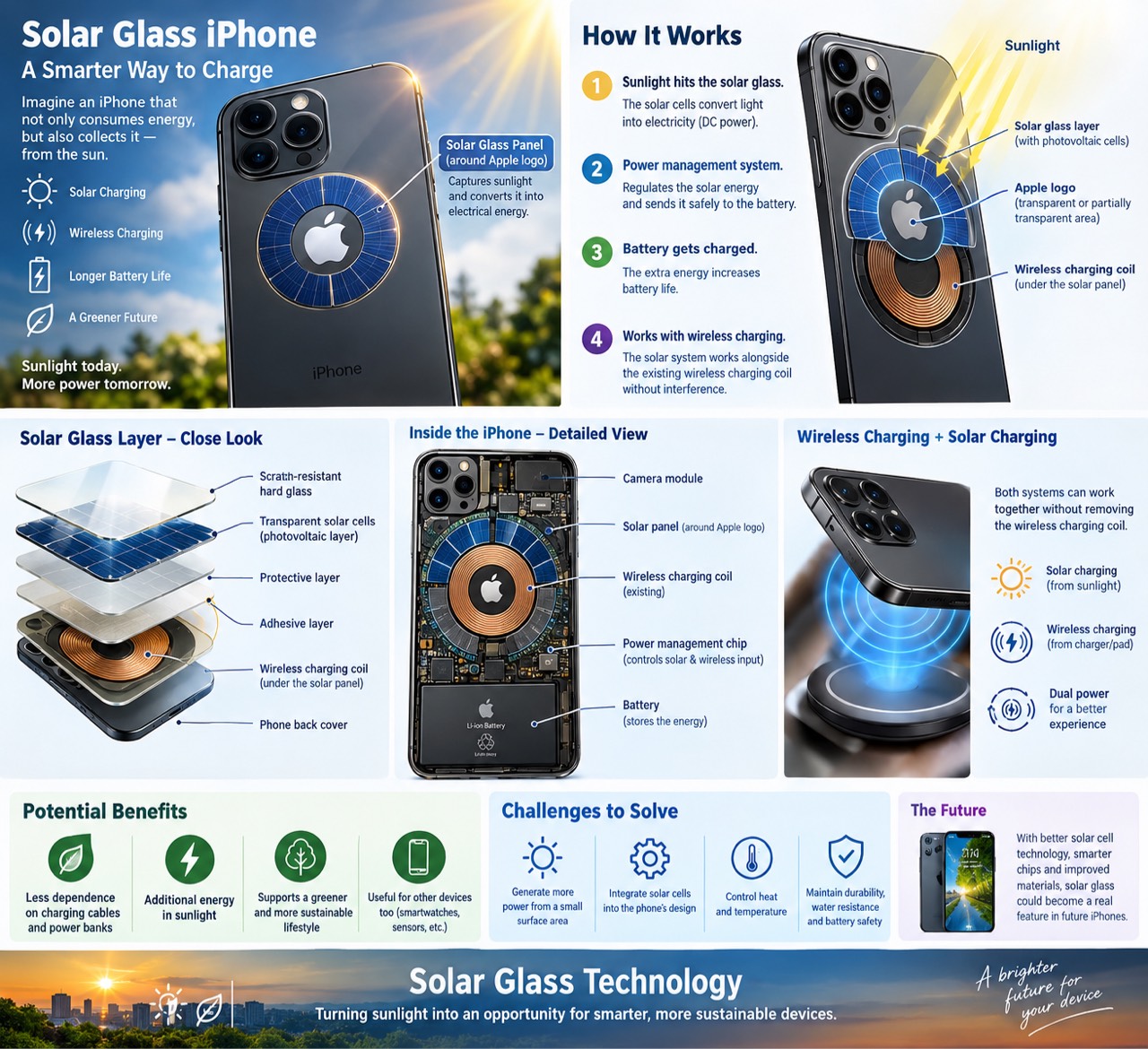
Solar Glass iPhone: A New Future for Smartphone Charging ☀️📱
Can an Apple Logo Area Generate Electricity from Sunlight?
Imagine carrying your iPhone outdoors and allowing sunlight to provide extra energy to its battery. You might not need to depend entirely on charging cables or power banks.
This idea introduces a promising technological concept: Solar Glass Charging Technology, which could use solar cells integrated into the back of a smartphone to convert sunlight into electricity.
1. Solar Glass Around the Apple Logo
Under this concept, a small, durable solar glass panel could be installed around the Apple logo on the back of an iPhone.
Instead of serving only as a decorative feature, this area could become part of a photovoltaic system.
When sunlight reaches the solar cells, they convert light into electrical energy. A specially designed electronic circuit could then regulate this electricity and use it to help charge the phone’s battery.
This is a proposed design concept, not a feature currently offered by Apple.
2. Combining Solar Power with Wireless Charging
One of the most interesting aspects of this idea is that solar charging could potentially work alongside existing wireless charging technology without removing the wireless charging coil.
Engineers could design a system in which solar cells occupy suitable areas around the charging coil.
The design would need to prevent electromagnetic interference, minimize heat generation, and maintain wireless charging efficiency.
This could allow a future smartphone to receive energy from two different sources:
* ☀️ Solar charging: Electricity generated from sunlight.
* 🔋 Wireless or wired charging: Electricity supplied by a conventional charger.
Both systems could work together if the hardware and charging electronics were designed appropriately.
3. Strong and Durable Solar Glass
Future smartphones could combine protective glass with photovoltaic materials to create a surface that produces electricity while maintaining an attractive appearance.
Developing this technology would require improvements in glass durability, solar-cell efficiency, transparency, and temperature control.
If successful, this approach could transform the back of a smartphone from a passive design feature into a surface that also generates energy.
4. Potential Environmental Benefits
A small solar panel on a smartphone would produce much less electricity than a full-sized solar panel. However, under suitable sunlight, it could provide additional energy and potentially reduce the need for conventional charging in certain situations.
Future improvements in solar-cell efficiency could make this technology more useful.
Similar concepts could also be explored for smartwatches, wireless sensors, and other small electronic devices.
The actual environmental benefits would depend on how much electricity these devices generate and the resources required to manufacture them.
5. Can This Technology Become a Reality?
Turning this idea into a practical product would require engineers to address several challenges:
* Generating more electricity from a small surface.
* Integrating solar cells into the smartphone’s design.
* Protecting the battery with a safe charging circuit.
* Maintaining wireless charging performance.
* Preventing excessive heat.
* Preserving the phone’s durability and water resistance.
These challenges create opportunities for innovation and scientific research.
With improvements in photovoltaic materials, electronic components, and smartphone engineering, solar-assisted charging could become a useful additional feature in future mobile devices.
Conclusion: Turning a Smartphone’s Surface into an Energy Source
The Solar Glass iPhone concept explores a future in which smartphones could do more than consume electricity. They could also collect some energy from the sunlight around them.
Whether through a small solar panel around the Apple logo or solar cells integrated into a larger portion of the phone’s back, this concept offers an interesting direction for future research.
The goal of future smartphone technology should not only be to make devices more powerful, but also to make them more energy-efficient and environmentally responsible.
☀️ Solar Glass Technology: Turning sunlight into an opportunity for smarter, more sustainable devices.


Comments
No comments yet.