

Ownmates Post

Taj Mahal: Were Hindu Remains Ever Discovered? Separating Historical Claims from Evidence
The Taj Mahal in Agra, India, is one of the world’s most famous historical monuments. Built during the Mughal period under Emperor Shah Jahan, it is widely recognized as a mausoleum dedicated to his wife, Mumtaz Mahal.
However, questions about the monument’s history continue to circulate. Some people claim that the Taj Mahal was originally a Hindu temple known as Tejo Mahalaya. Others have questioned whether Hindu idols, human remains, or other archaeological evidence have ever been discovered inside the monument.
1. Were the Tombs Opened?
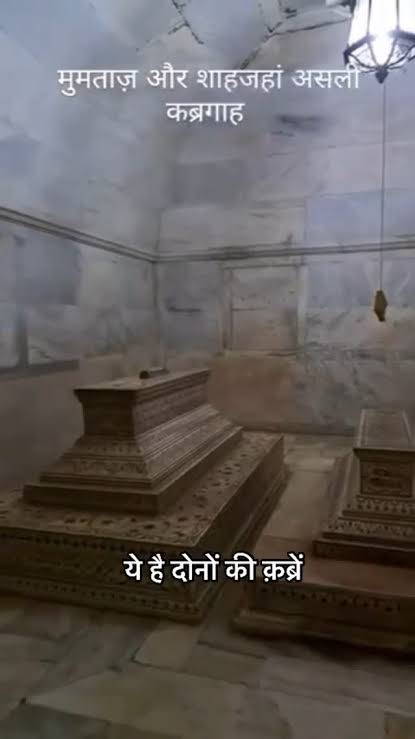
The Taj Mahal contains symbolic cenotaphs of Shah Jahan and Mumtaz Mahal in its main chamber. Their actual graves are located in a lower chamber.
Access to the lower chamber is restricted under normal circumstances. Special religious observances have occasionally allowed visitors to enter areas that are usually closed to the public.
However, opening a tomb chamber does not automatically mean that bodies or human remains have been removed or that new archaeological discoveries have been made.
2. Were Hindu Remains Discovered?
There is no widely accepted, verified archaeological evidence establishing that Hindu human remains were discovered inside the tombs of Shah Jahan and Mumtaz Mahal.
Claims about Hindu idols or objects being found inside the Taj Mahal must also be examined carefully. A viral video, social media post, or photograph without reliable documentation is not sufficient proof of an archaeological discovery.
To establish such a claim, researchers would need verifiable excavation records, scientific analysis, and confirmation from qualified archaeologists or relevant authorities.
3. The Tejo Mahalaya Controversy
Some groups argue that the Taj Mahal was originally a Hindu temple or palace called Tejo Mahalaya. This claim remains controversial and is not accepted as established history by mainstream historians.
The historical account supported by mainstream scholarship identifies the Taj Mahal as a Mughal mausoleum commissioned by Shah Jahan in the seventeenth century. Historical records also describe the acquisition of land for its construction.
Historical questions should be investigated through documentary evidence, architectural research, and archaeological findings rather than assumptions about religion.
4. Why Is Scientific Investigation Important?
India has a rich and complex history involving many dynasties, religions, and architectural traditions. Understanding this history requires careful research and the willingness to examine evidence from multiple sources.
If new human remains or religious objects were discovered at the Taj Mahal, their origin could not be determined simply by looking at them. Scientific dating, archaeological context, and expert examination would be necessary.
The same standards should apply regardless of whether a discovery supports a popular belief or challenges it.
Conclusion
The question of whether Hindu remains were discovered inside the Taj Mahal deserves an evidence-based answer.
At present, there is no widely accepted archaeological evidence confirming that Hindu human remains were found inside the tombs of Shah Jahan and Mumtaz Mahal. Claims about the monument’s alleged earlier identity should likewise be evaluated against reliable historical and archaeological records.
History should not be decided by rumours, political arguments, or religious assumptions. It should be investigated through evidence, scientific research, and transparent historical documentation.


Comments
No comments yet.