

Ownmates Post

Magnetic Space Habitats: A New Vision for Increasing the Mass of Mars 🚀🔴
Building a New Future Through Space Engineering
Humanity has always dreamed of exploring new worlds. In the future, advanced space technology could open new possibilities for transforming Mars and making it more suitable for human exploration.
One exciting concept is to develop a Magnetic Space Habitat equipped with advanced propulsion systems, robotic technology, and powerful energy sources. Such a system could support missions designed to study, transport, and redirect celestial objects, including comets and asteroids.
1. A Magnetic Habitat in Space 🧲
Imagine a large space habitat that serves as a scientific base for astronauts, robots, and advanced machines.
This habitat could support research, space-resource collection, and the development of technologies for controlling spacecraft and studying celestial objects.
Combined with advanced propulsion systems, it could become part of a future network designed to help humanity manage resources throughout the Solar System.
2. Guiding Comets Toward Mars ☄️
Comets contain frozen water, dust, and rocky materials. Asteroids can also contain water-bearing minerals and useful elements.
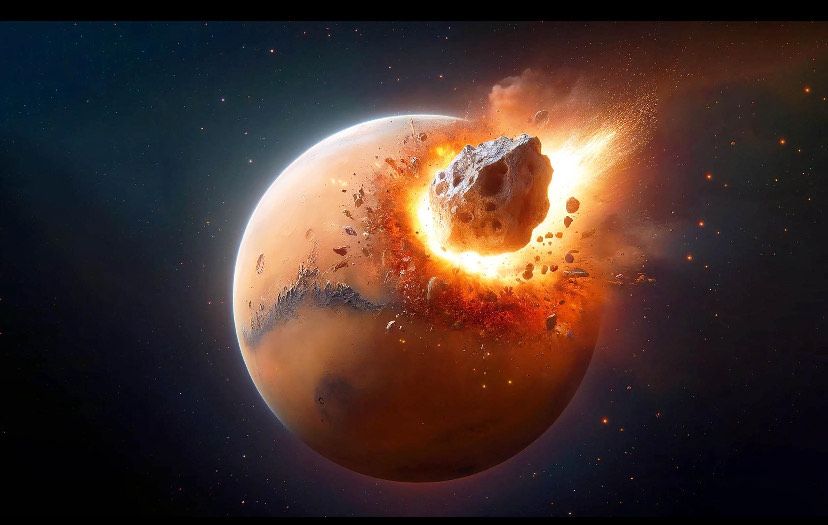
In the future, specialized robotic spacecraft might gradually change the orbits of selected celestial objects and transport some of their material toward Mars.
Advanced engines, precise navigation, and gravitational techniques could help scientists investigate safe ways to move these objects.
This would be a major engineering achievement, potentially expanding humanity’s ability to transport natural resources across space.
3. Increasing the Mass of Mars 🔴
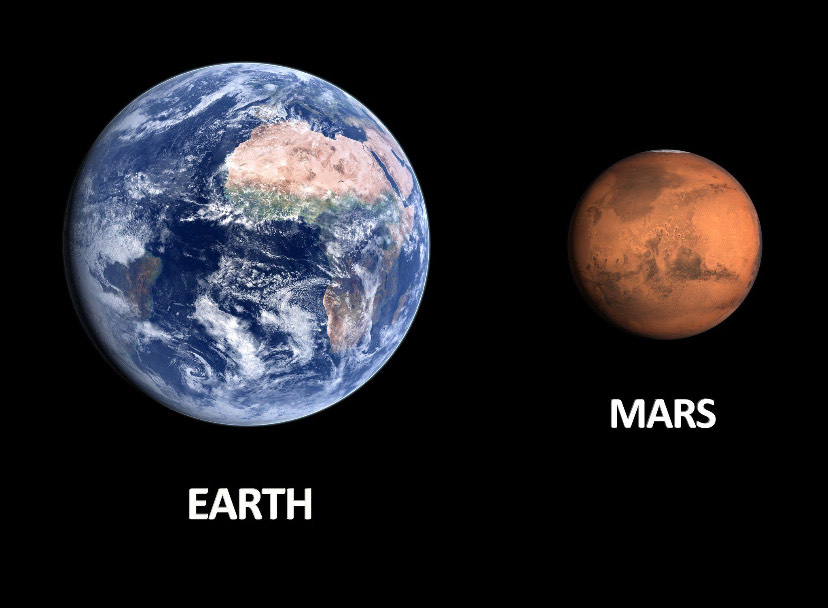
If material from comets or asteroids were successfully added to Mars, the planet’s total mass would increase.
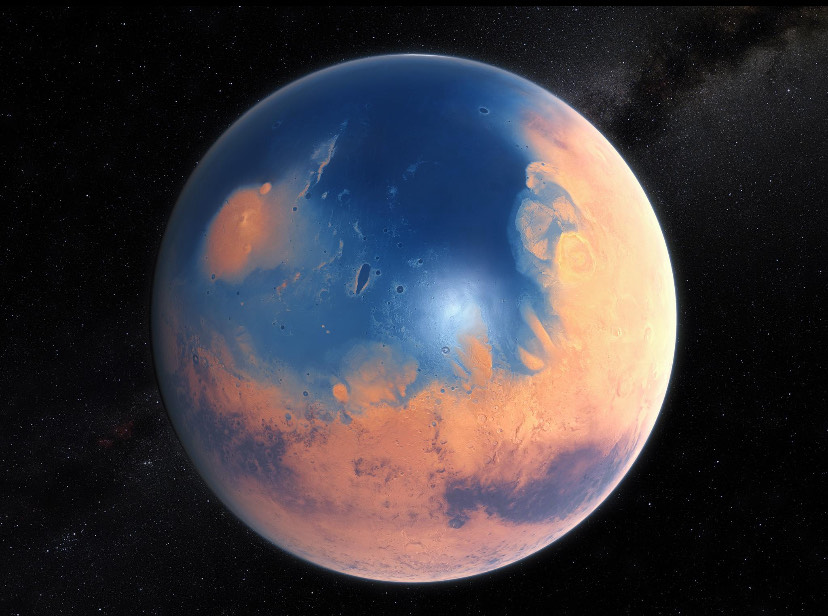
Over time, carefully planned resource-delivery missions could investigate ways to introduce additional water and other useful materials to the Martian environment.
Such missions could help scientists better understand how planetary mass, surface chemistry, water availability, and atmospheric conditions interact.
The goal would not simply be to make Mars bigger, but to explore whether its environment could become more supportive of future human settlements.
4. Moving Toward a More Habitable Mars 🌍
A future Mars-development program could combine several technologies:
* Magnetic systems: Research into radiation protection and space-based magnetic technologies.
* Advanced propulsion: More efficient transportation of equipment and resources.
* Robotics and artificial intelligence: Autonomous spacecraft for exploring and handling space resources.
* Water-resource management: Investigating ways to locate, transport, and preserve water.
* Atmospheric engineering: Research into improving Mars’s temperature and atmospheric conditions.
Together, these technologies could help humanity develop a more comprehensive approach to long-term Mars exploration.
5. A New Era of Planetary Engineering 🚀
Imagine a future in which robotic spacecraft explore distant comets, identify useful resources, and help scientists understand how celestial objects can be transported safely.
Magnetic Space Habitats could potentially serve as research stations, engineering bases, or resource-processing facilities within this larger vision.
Small-scale experiments could come first, followed by increasingly ambitious missions as scientific knowledge and engineering capabilities improve.
Every successful experiment could bring humanity closer to understanding how to build sustainable settlements beyond Earth.
Conclusion: From Scientific Imagination to Future Possibilities
Increasing the mass of Mars by adding material from comets or asteroids is physically possible in principle. Developing a safe and practical system to accomplish this, however, would require major advances in space engineering.
A Magnetic Space Habitat combined with advanced propulsion, robotics, and orbital-control technology could become part of humanity’s long-term vision for planetary engineering.
The future of Mars exploration may depend on our ability to turn ambitious ideas into carefully tested scientific solutions.
Humanity does not have to stop at exploring other worlds. Through research, innovation, and responsible engineering, we can continue investigating how to make life beyond Earth more sustainable.
The dream is to explore Mars today, understand it better tomorrow, and build new possibilities for future generations. 🌌


Comments
No comments yet.