

Ownmates Post

What Would Happen to Earth if Oxygen Broke Down and the Sun Became Hotter?
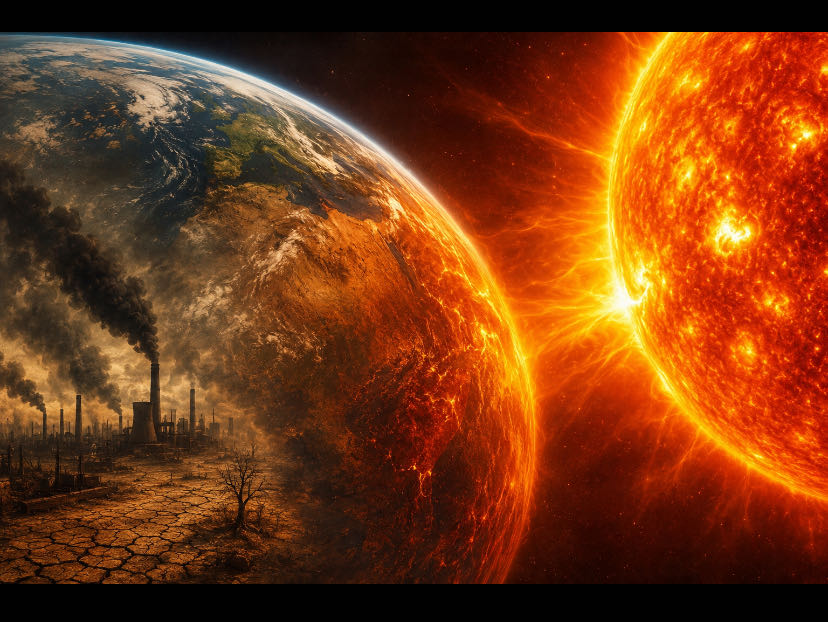
Life on Earth depends on a delicate balance between the atmosphere, water, and energy from the Sun. Oxygen is one of the most important gases for life, while the Sun is the primary source of energy for our planet. If atmospheric oxygen were to break down significantly and the Sun became much hotter, Earth would undergo dramatic changes that could threaten the survival of most life forms.
The Importance of Oxygen
Oxygen makes up about 21% of Earth’s atmosphere. Humans, animals, and many microorganisms rely on it for respiration. During respiration, cells use oxygen to convert food into energy. Without sufficient oxygen, complex life cannot survive.
A decrease in atmospheric oxygen would lead to breathing difficulties, reduced physical performance, and serious health problems. As oxygen levels continued to fall, larger animals and humans would struggle to survive.
What Happens if Oxygen Molecules Break Apart?
Oxygen normally exists as O₂, a molecule made of two oxygen atoms. In the upper atmosphere, ultraviolet radiation from the Sun can split some oxygen molecules into individual oxygen atoms. These atoms can then recombine to form ozone (O₃), which helps protect Earth from harmful ultraviolet radiation.
However, if oxygen molecules were destroyed on a massive scale without being replaced, the amount of breathable oxygen would decline dramatically.
Possible consequences include:
* Reduced oxygen available for respiration.
* Widespread extinction of animals and other oxygen-dependent organisms.
* Disruption of ecosystems and food chains.
* Declining biodiversity across the planet.
* Severe impacts on biological processes that depend on oxygen.
Effects of a Hotter Sun
The Sun naturally becomes brighter and hotter over very long periods of time. As its energy output increases, Earth’s average temperature would rise.
1. Rising Global Temperatures
Higher solar energy would warm the atmosphere, oceans, and land surfaces. Heat waves would become more intense and frequent.
2. Melting Ice Caps and Glaciers
Polar ice sheets and mountain glaciers would melt more rapidly. This would raise sea levels and increase flooding in coastal regions.
3. Water Shortages
Higher temperatures would increase evaporation rates. Lakes, rivers, and reservoirs could shrink, leading to severe water shortages in many areas.
4. Agricultural Collapse
Extreme heat and drought would damage crops and reduce food production. Many regions could experience famine and food insecurity.
5. More Wildfires
Hotter and drier conditions would make forests more vulnerable to large-scale wildfires, destroying habitats and releasing additional greenhouse gases.
Impact on Plants and Oxygen Production
Plants produce oxygen through photosynthesis by using sunlight, water, and carbon dioxide. If extreme heat damages forests and vegetation, oxygen production could decline.
This could create a dangerous feedback loop:
1. Temperatures rise.
2. Plants die or become less productive.
3. Oxygen production decreases.
4. Ecosystems become less stable.
5. Conditions for life worsen further.
Effects on the Oceans
The oceans play a major role in regulating Earth’s climate. As temperatures increase, ocean water expands and sea levels rise.
Over very long timescales:
* Ocean temperatures would continue to increase.
* Marine ecosystems could collapse.
* Coral reefs would disappear.
* Many fish and ocean species would become extinct.
* Increased evaporation could alter global weather patterns.
If the Sun became much hotter than it is today, Earth’s oceans could eventually begin to evaporate on a massive scale.
Consequences for Human Civilization
Human societies depend on stable climate conditions, reliable food supplies, and access to fresh water. A combination of oxygen loss and extreme warming would create enormous challenges.
Potential outcomes include:
* Global health crises.
* Mass migration from uninhabitable regions.
* Economic disruption.
* Food and water shortages.
* Increased conflict over resources.
* Population decline.
Although technology might help humans survive temporarily in controlled environments, maintaining large populations would become increasingly difficult.
The Very Distant Future
Scientists estimate that the Sun’s brightness gradually increases over billions of years. In the distant future, Earth may become too hot to support liquid water and complex life.
As temperatures continue to rise:
* Oceans may eventually disappear.
* The atmosphere could undergo major changes.
* Most existing life forms would become extinct.
* Earth could become a hot, dry, and largely lifeless world.
Conclusion
If oxygen were to break down significantly while the Sun became hotter, Earth would face severe environmental and biological consequences. Breathing would become difficult, ecosystems would collapse, temperatures would rise, oceans could shrink, and human civilization would struggle to survive. Although such extreme changes are not expected in the near future, they highlight how strongly life on Earth depends on the balance between the atmosphere and the Sun.


Comments
No comments yet.