

Ownmates Post
America’s New Age: The Intellectual Legacy of the Great Seal, Joachim of Fiore, and Novus Ordo Seclorum
Introduction
Certain symbols in American history carry meanings that extend far beyond politics, touching upon profound philosophical and spiritual ideas. Among the most significant is the Great Seal of the United States, bearing the Latin mottos E Pluribus Unum (Out of Many, One) and Novus Ordo Seclorum (A New Order of the Ages). These phrases have fascinated historians, philosophers, and political thinkers for centuries.
While many historians interpret these mottos simply as expressions of the aspirations of a newly formed nation, others argue that they reflect a much deeper inheritance drawn from centuries of European religious, philosophical, and utopian thought. In this context, the medieval theologian Joachim of Fiore occupies a particularly important place.
The Great Seal and the Idea of a New Age
Following the signing of the Declaration of Independence on July 4, 1776, the Continental Congress appointed Benjamin Franklin, Thomas Jefferson, and John Adams to design a national seal for the new republic. After several years of revisions, the final Great Seal emerged as a symbolic expression of America’s identity and mission.
The motto E Pluribus Unum represented the union of diverse peoples, colonies, and backgrounds into a single nation. Meanwhile, Novus Ordo Seclorum proclaimed the beginning of a new era in human history.
According to mainstream historians, this ‘ new order of the ages ‘ referred to the political transformation brought about by American independence and the establishment of a constitutional republic. However, some scholars and writers see it as symbolizing a broader spiritual and historical vision.
Joachim of Fiore and the Three Ages of History
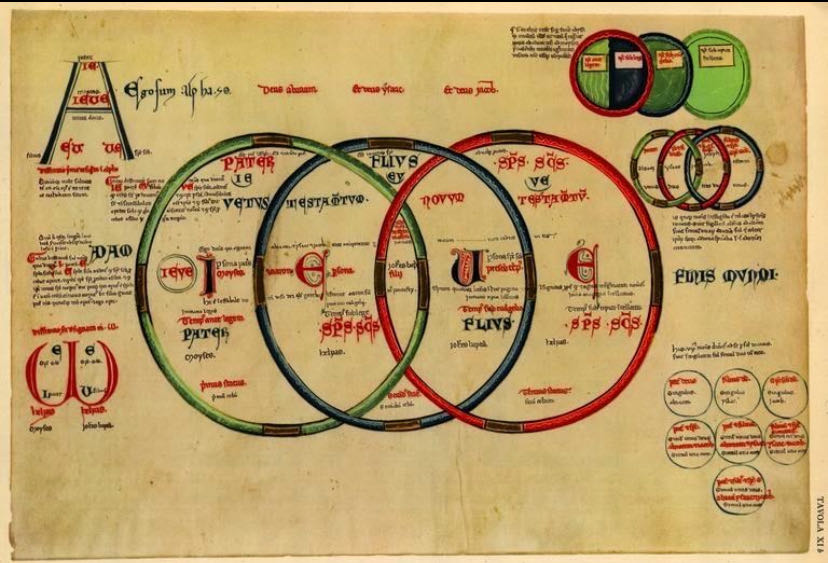
The twelfth-century Italian theologian Joachim of Fiore developed an influential interpretation of history. He proposed that human history unfolds through three great ages, each corresponding to a different relationship between humanity and God.
1. The Age of the Father
This age corresponded to the Old Testament. It was an era of divine law, obedience, and discipline, during which humanity was guided by God’s commandments.
2. The Age of the Son
Beginning with the coming of Jesus Christ, this age emphasized love, compassion, forgiveness, and a deeper spiritual relationship between God and humanity.
3. The Age of the Holy Spirit
Joachim believed that a third age would eventually arrive. In this future era, humanity would experience a more direct relationship with the divine. It would be characterized by peace, knowledge, spiritual freedom, and social harmony.
He envisioned this period as a kind of Novus Ordo—a new order in which humanity would build a more just and spiritually enlightened society.
From Passive Waiting to Active Participation
One of Joachim’s most significant contributions was his belief that human beings should not merely wait for God’s intervention in history. Instead, they should become active participants in shaping the future and constructing a better society.
This perspective encouraged a vision of history as a process of progress and development. Echoes of Joachim’s thought can be found in later utopian movements, religious reforms, and certain strands of modern political philosophy.
The Crusades and Fiore’s Alternative Vision
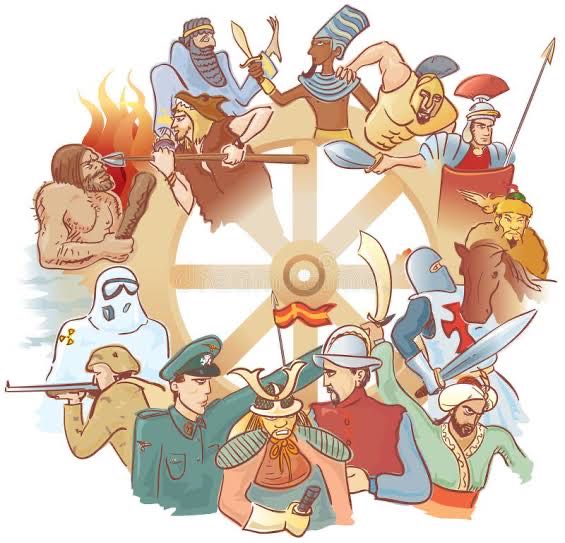
The author contrasts two very different approaches to historical change.
The first is represented by the Crusades, where transformation was pursued through military power, conquest, and conflict. In this model, opponents are portrayed as embodiments of evil and become targets for holy war.
The second is Joachim’s vision, which emphasized education, spirituality, knowledge, and social reform. For him, an ideal society would not be built through force but through the advancement of consciousness and moral development.
The Utopian Project and the Imperial Project
According to the author, two major forces have shaped modern history.
The Utopian Project
The Utopian Project is driven by visions of a better future. It is rooted in morality, spirituality, human flourishing, and social improvement.
The Imperial Project
The Imperial Project is driven by power, wealth, security, territorial expansion, and the control of resources. Its focus is material and political strength.
Throughout history, these two forces have often clashed, but they have also frequently supported one another. Empires have used idealistic visions to legitimize their ambitions, while idealists have sometimes relied on political power to implement their dreams.
America and the ‘New Order’
Some thinkers argue that the Founding Fathers expressed a balance between these two forces in the Great Seal. ‘Out of Many, One” symbolizes national unity, while “A New Order of the Ages’ points toward a broader historical mission.
This interpretation, however, remains controversial. Most historians maintain that Novus Ordo Seclorum refers simply to the new political era inaugurated by American independence, rather than to any secret society, Illuminati agenda, or hidden world plan.
Conclusion
The ideas of Joachim of Fiore helped shape Western conceptions of history, progress, and the possibility of an ideal society. Whether his influence on the American Founders was direct or indirect, it is clear that visions of a ‘new age’and a ‘better world ‘ have played a significant role in Western political and religious thought.
The questions raised by these ideas remain relevant today. Is material prosperity and power alone sufficient for human flourishing, or does society also require a higher moral and spiritual purpose? Perhaps the enduring significance of the Great Seal lies precisely in this tension—captured in the mottos E Pluribus Unum and Novus Ordo Seclorum.
They remind us that every civilization must continually seek a balance between unity and diversity, power and principle, material achievement and spiritual aspiration.


Comments
No comments yet.