

Ownmates Post

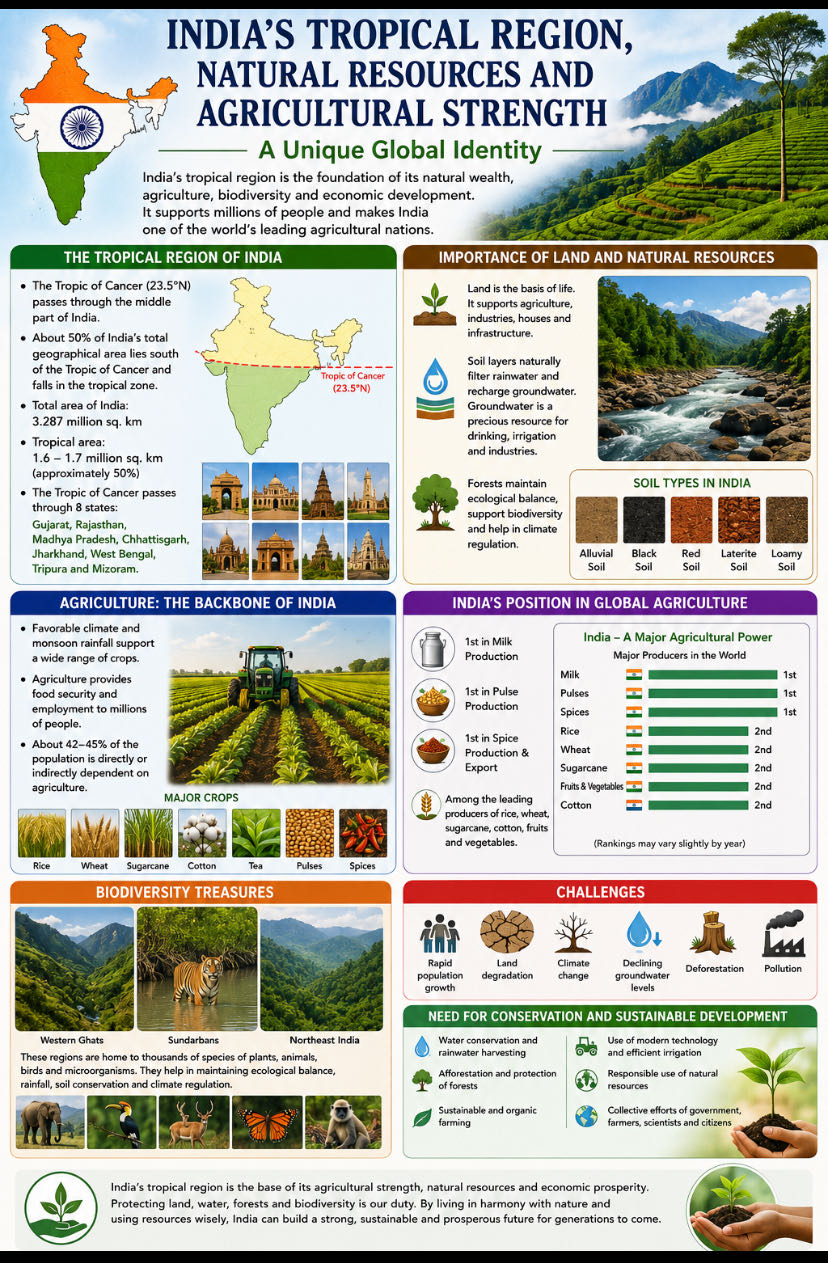
India’s Tropical Region, Natural Resources, and Agricultural Strength: A Unique Global Identity
India has long been recognized worldwide for its natural wealth, agricultural prosperity, and cultural diversity. Stretching from the mighty Himalayas in the north to the vast coastline of the Indian Ocean in the south, India possesses a remarkable variety of climates, fertile lands, and rich biodiversity. Among its many geographical advantages, the tropical region plays a crucial role in shaping the country’s agriculture, economy, environment, and overall development. This tropical advantage has helped India emerge as one of the world’s leading agricultural nations.
The Tropical Region and India’s Geographical Position
The tropical region is the area located between the Equator and the Tropic of Cancer. The Tropic of Cancer lies at approximately 23.5° North latitude and passes through the central part of India. Nearly 50 percent of India’s land area lies south of the Tropic of Cancer and falls within the tropical climatic zone.
India’s total geographical area is about 3.287 million square kilometers, of which approximately 1.6 to 1.7 million square kilometers are situated in the tropical region. The Tropic of Cancer passes through the states of Gujarat, Rajasthan, Madhya Pradesh, Chhattisgarh, Jharkhand, West Bengal, Tripura, and Mizoram. This region experiences relatively warm temperatures throughout the year and receives abundant sunlight, creating ideal conditions for agriculture and natural vegetation.
Importance of Land and Natural Resources
About 29 percent of the Earth’s surface consists of land, while the remaining 71 percent is covered by water. Land is the foundation of human civilization. Agriculture, industries, transportation, housing, and most economic activities depend upon it.
India is blessed with diverse soil types, including alluvial soil, black soil, red soil, laterite soil, and loamy soil. These fertile soils significantly contribute to India’s agricultural productivity. Tropical soils, especially sandy and loamy soils, help recharge groundwater by allowing rainwater to percolate into the earth. Multiple layers of soil naturally filter water, making groundwater one of the most valuable freshwater resources for human use.
Thus, land serves not only as a medium for food production but also as a vital component of water conservation and environmental sustainability.
Agriculture: The Backbone of India
India is often described as an agricultural nation because a large proportion of its population depends on farming and related activities. Approximately 42–45 percent of Indians are directly or indirectly engaged in agriculture.
The tropical climate and monsoon rainfall provide favorable conditions for cultivating a wide variety of crops. Major crops include rice, wheat, sugarcane, cotton, pulses, oilseeds, tea, coffee, coconut, rubber, bananas, and numerous spices.
Agriculture not only ensures food security for the nation but also provides employment to millions of people. It remains the backbone of India’s rural economy and a major contributor to national development.
India’s Position in Global Agriculture
India is among the world’s largest agricultural producers and has achieved remarkable success in several sectors.
India ranks:
* First in milk production globally.
* First in pulse production.
* First in the production and export of spices.
* Among the leading producers of rice, wheat, sugarcane, cotton, fruits, and vegetables.
* Among the countries with the largest area of cultivable land.
Although some developed countries achieve higher productivity per hectare through advanced technologies, India’s strength lies in its vast agricultural area, crop diversity, and total production. As a result, India is widely regarded as an agricultural powerhouse.
Biodiversity and Environmental Significance
India’s tropical region is one of the world’s important biodiversity hotspots. Areas such as the Western Ghats, the Sundarbans, the rainforests of northeastern India, and the forests of southern India are globally recognized for their ecological importance.
These ecosystems support thousands of species of plants, animals, birds, insects, and microorganisms. They play a crucial role in carbon absorption, rainfall regulation, soil conservation, and water resource management. The environmental health of India is closely linked to the preservation of these natural ecosystems.
Current Challenges
Despite its natural advantages, India faces several challenges:
* Rapid population growth
* Land degradation
* Climate change
* Declining groundwater levels
* Deforestation
* Environmental pollution
* Fragmentation of agricultural landholdings
If these challenges are not addressed effectively, they could adversely affect agricultural productivity, biodiversity, and natural resource sustainability.
The Need for Conservation and Sustainable Development
The future prosperity of India depends on the responsible management of its natural resources. Water conservation, rainwater harvesting, afforestation, modern irrigation techniques, sustainable farming practices, and environmentally friendly development policies are essential for long-term growth.
Governments, scientists, farmers, and citizens must work together to protect land, water, forests, and biodiversity. Sustainable resource management is the key to ensuring environmental security and economic prosperity for future generations.


Comments
No comments yet.