

Ownmates Post

Can AI and Robots Build Artificial Gravity Systems on Mars in the Future?
Introduction
Humanity has always dreamed of exploring and colonizing other worlds. After successfully reaching the Moon, scientists and space agencies are now focusing on Mars as the next destination for human settlement. Organizations such as NASA, SpaceX, and the European Space Agency are developing technologies that could one day allow humans to live on the Red Planet. However, one of the greatest challenges to long-term life on Mars is its weak gravity. This raises an intriguing question: Could artificial intelligence (AI) and robots one day build systems on Mars that create Earth-like gravity?
The Gravity Challenge on Mars
Mars has only about 38% of Earth’s gravity. A person weighing 100 kilograms on Earth would effectively weigh only 38 kilograms on Mars. While this may sound appealing, prolonged exposure to low gravity can have serious effects on the human body. Bones lose density, muscles weaken, and various bodily systems can be affected over time. For a permanent Martian civilization, addressing the gravity problem is essential.
The Role of AI and Robotics
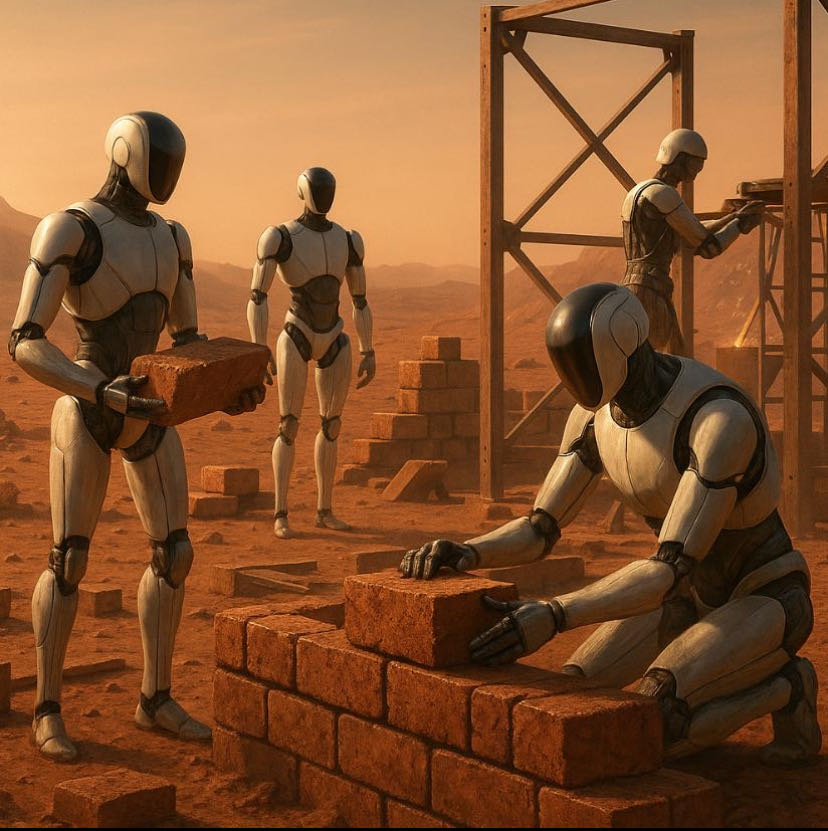
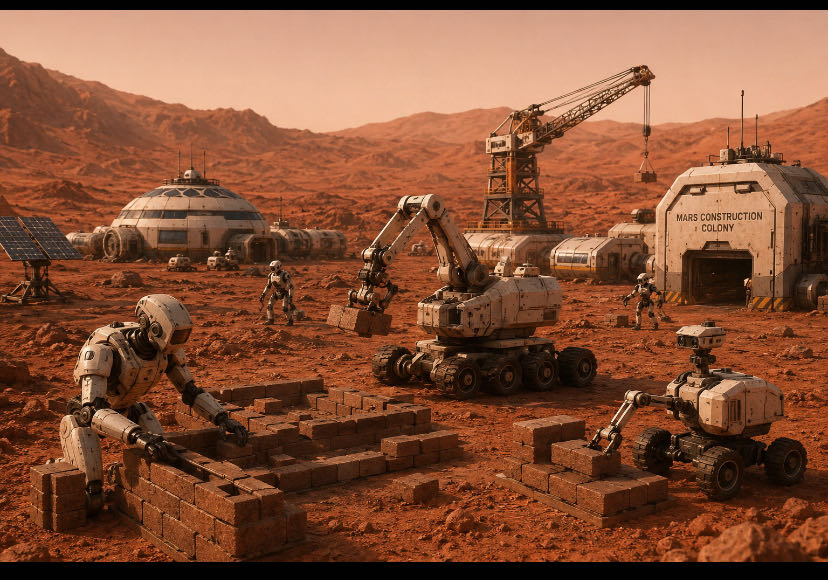
Future AI-powered robots could become the primary builders of Martian infrastructure. Before humans even arrive, autonomous machines may construct habitats, energy systems, research facilities, and transportation networks using local Martian resources.
Advanced AI would enable these robots to:
* Make independent decisions in harsh environments.
* Repair and maintain equipment.
* Optimize construction processes.
* Adapt to unexpected challenges without constant human supervision.
As AI technology improves, robots may be capable of carrying out large-scale engineering projects that would be difficult or dangerous for human workers.
Can We Build a Gravity Machine?
According to our current understanding of physics, there is no known machine that can directly generate gravity. Einstein’s theory of General Relativity explains gravity as the curvature of space-time caused by mass and energy. Creating Earth-like gravity would require enormous amounts of mass or energy, far beyond today’s technological capabilities.
Therefore, scientists are exploring alternative methods to simulate gravity rather than create it directly.
Possible Solutions for Artificial Gravity
1. Rotating Habitats
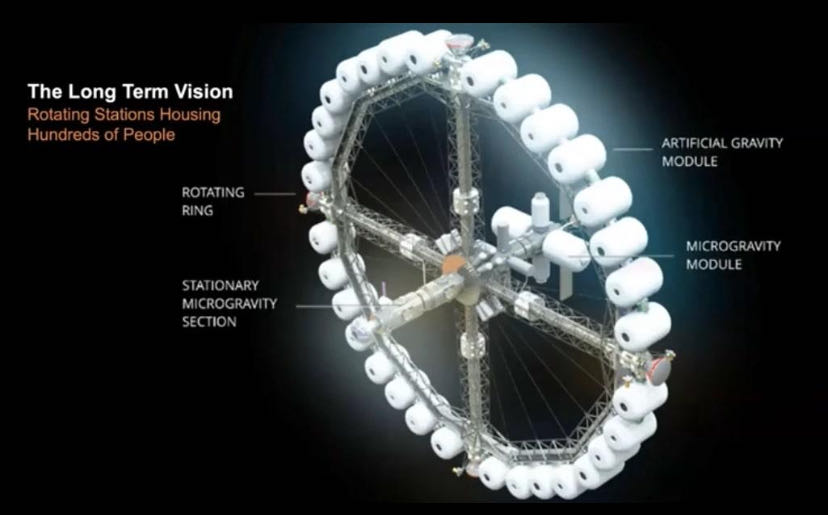
The most promising solution is the construction of rotating habitats. As a large circular structure spins, occupants experience a force pushing them outward, creating an effect similar to gravity. AI-controlled robots could assemble such structures on or above the Martian surface.
2. Large Orbital Stations
Future space stations orbiting Mars could use rotational motion to provide Earth-like gravity for residents. People might live and work in these stations while traveling to and from the Martian surface.
3. Future Scientific Breakthroughs
Science continues to uncover new mysteries about the universe. It is possible that future discoveries in physics could reveal ways to manipulate gravity more directly. While such technologies remain speculative today, history shows that many once-impossible ideas eventually became reality.
A Vision of Mars in the Next Century
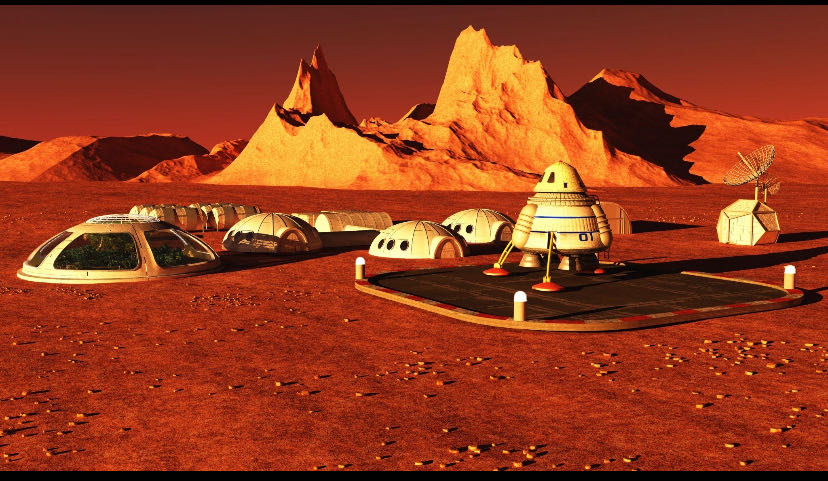
Imagine the year 2100. Thousands of AI-driven robots are working across Mars, constructing cities, mining resources, producing energy, and building enormous rotating habitats. Human settlers live in comfortable environments with artificial gravity, protected from radiation and extreme temperatures. AI systems manage transportation, agriculture, healthcare, and infrastructure, creating a thriving Martian civilization.
Although this vision may seem futuristic, many of its foundational technologies are already being developed today.


Comments
No comments yet.