

Ownmates Post
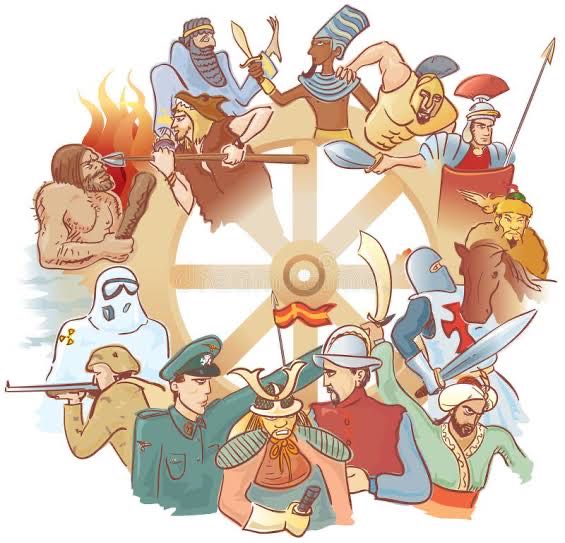
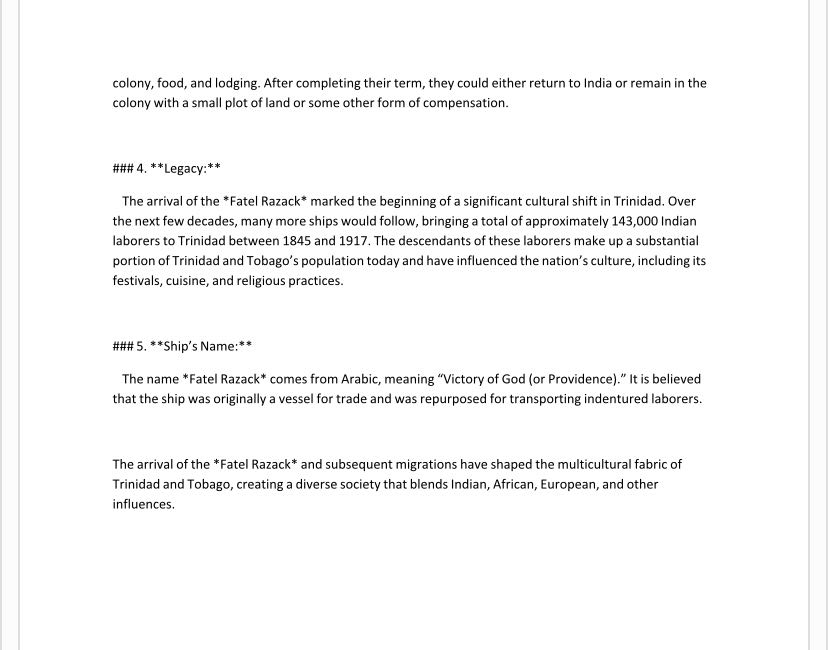
The history of Trinidad and Tobago is shaped by Indigenous cultures, European colonization, slavery, migration, and independence.
Early history
* Before Europeans arrived, the islands were inhabited by Indigenous peoples, including the Arawak and Carib communities.
* These groups lived by farming, fishing, and trade across the Caribbean.
European colonization
* In 1498, Christopher Columbus reached Trinidad during his third voyage.
* Spain claimed Trinidad, while Tobago changed hands several times among European powers because of its strategic location and resources.
* Large plantations developed, relying heavily on enslaved Africans.
Slavery and migration
* African slaves were brought to work on sugar and cocoa plantations.
* Slavery was abolished in the British Empire in 1834.
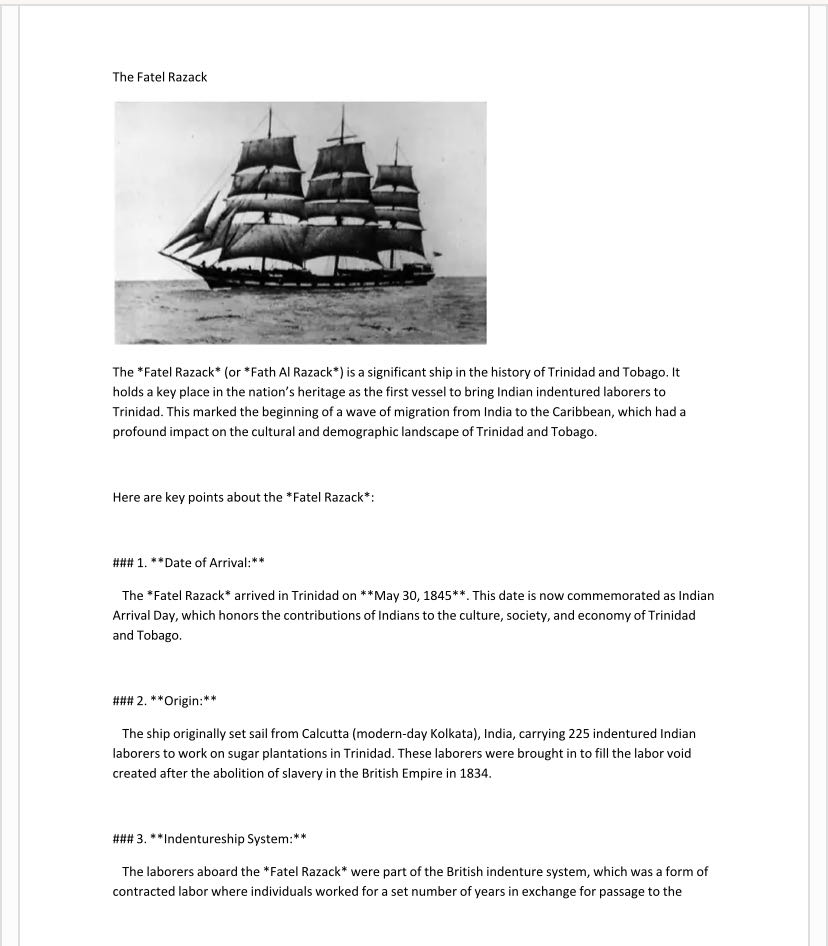
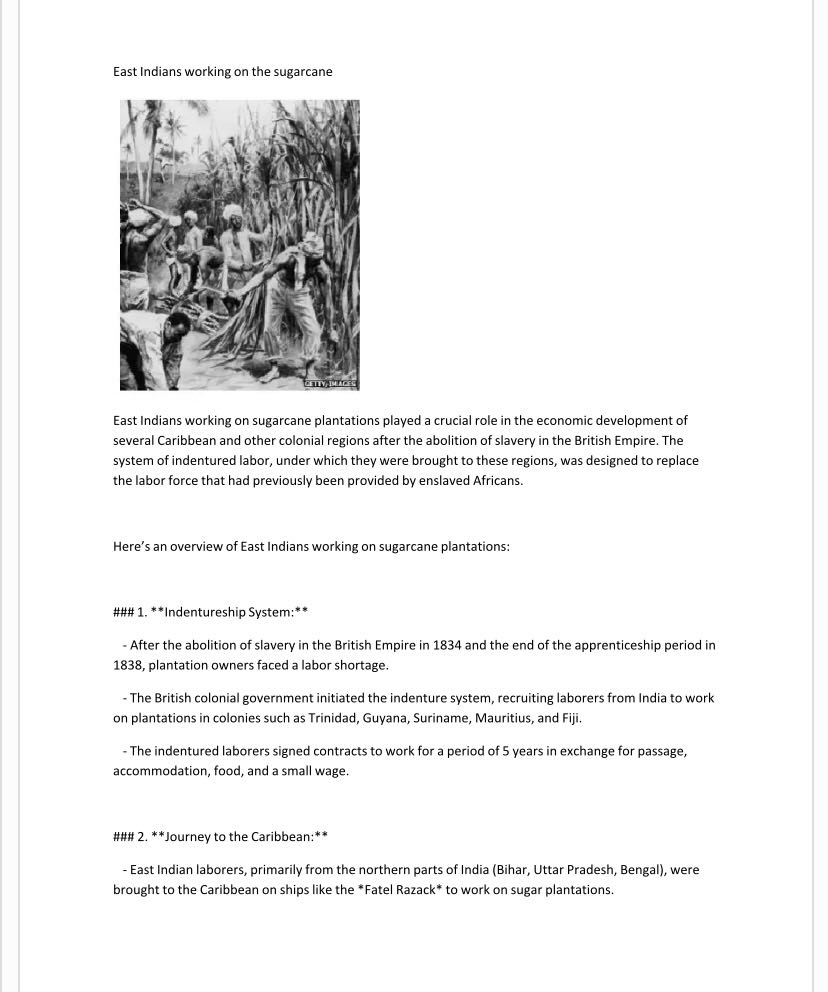
* After emancipation, many indentured laborers arrived from India starting in 1845 to work on plantations. Their descendants form a significant part of today’s population and culture.
* Migrants also arrived from places such as China, Portugal, and the Middle East.
British rule and independence
* Britain took control of Trinidad in 1797; Tobago later became linked administratively with Trinidad.
* The islands became the colony of Trinidad and Tobago in 1889.
* The country gained independence on August 31, 1962.
* It became a republic in 1976.
Modern era
* Oil and natural gas transformed the economy in the 20th century.
* Today, the country is known for its multicultural society, energy sector, and cultural exports like Carnival, steelpan music, and calypso.
Quick timeline
* 1498: Columbus arrives
* 1797: British capture Trinidad
* 1834: Slavery abolished
* 1845: Arrival of Indian indentured workers
* 1962: Independence
* 1976: Republic established
Its history is especially notable because African, Indian, European, Indigenous, and other influences combined to create one of the Caribbean’s most diverse societies.


Comments
No comments yet.