

Ownmates Post

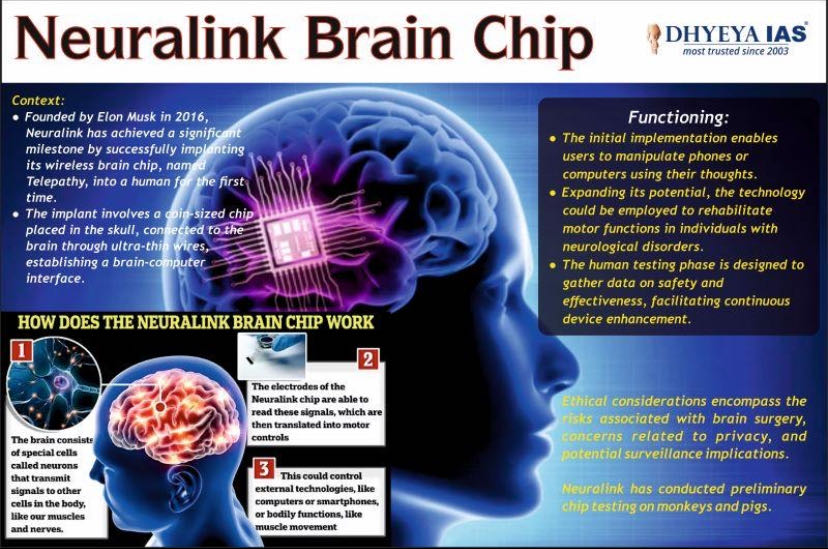
Neuralink envisions medical technologies that could help:
* restore vision,
* improve motor control,
* and assist speech abilities.
In the long term, the company aims to create a direct interface between humans and AI that may enable:
* data transfer,
* memory enhancement,
* and deeper interaction with artificial intelligence.
Although these ideas are still largely experimental and speculative, Neuralink is considered one of the leading projects in neuroprosthetic innovation.
Ethical and regulatory concerns
Neuralink’s work has also raised several ethical and safety concerns, including:
* animal testing,
* data privacy,
* and the implications of enhancing the human brain with technology.
Because of this, regulators, scientists, and bioethicists closely monitor its research and clinical trials to ensure:
* compliance with medical standards,
* patient safety,
* and responsible use of the technology.
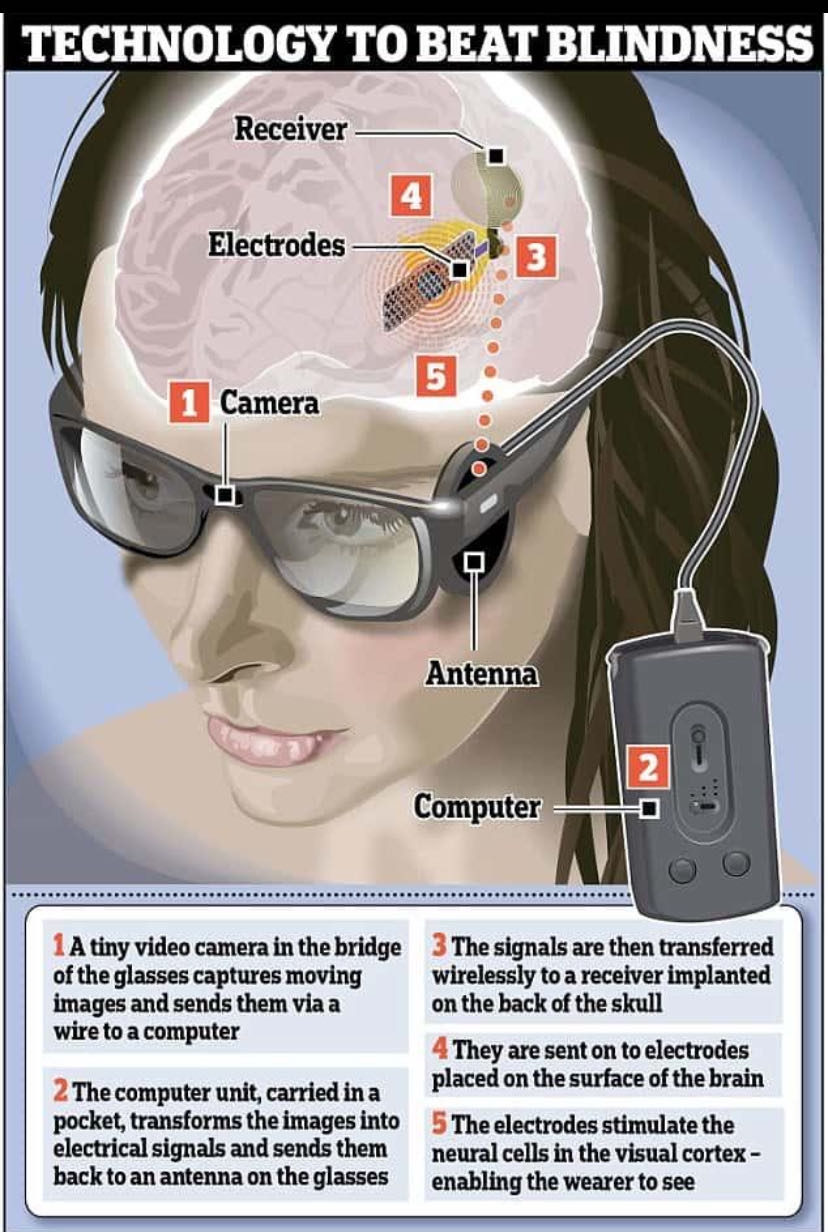
Bionic Eye is also a technology that uses electronics, sensors, and implants to help restore vision, especially for people with severe vision loss or blindness.
It may include:
* 📷 a tiny camera
* 🧠 a signal processor
* 👁️ a retinal implant or brain interface
How it works
1. The camera captures images from the surroundings
2. A processor converts the images into electrical signals
3. The implant sends those signals to the retina or brain
4. The person may perceive visual patterns or basic shapes
Current limitations
* Vision is still limited
* It does not yet match normal human eyesight
* Surgery and training may be required
Companies and projects associated with this field include:
* Second Sight Medical Products
* Neuralink.


Comments
No comments yet.