

Ownmates Post

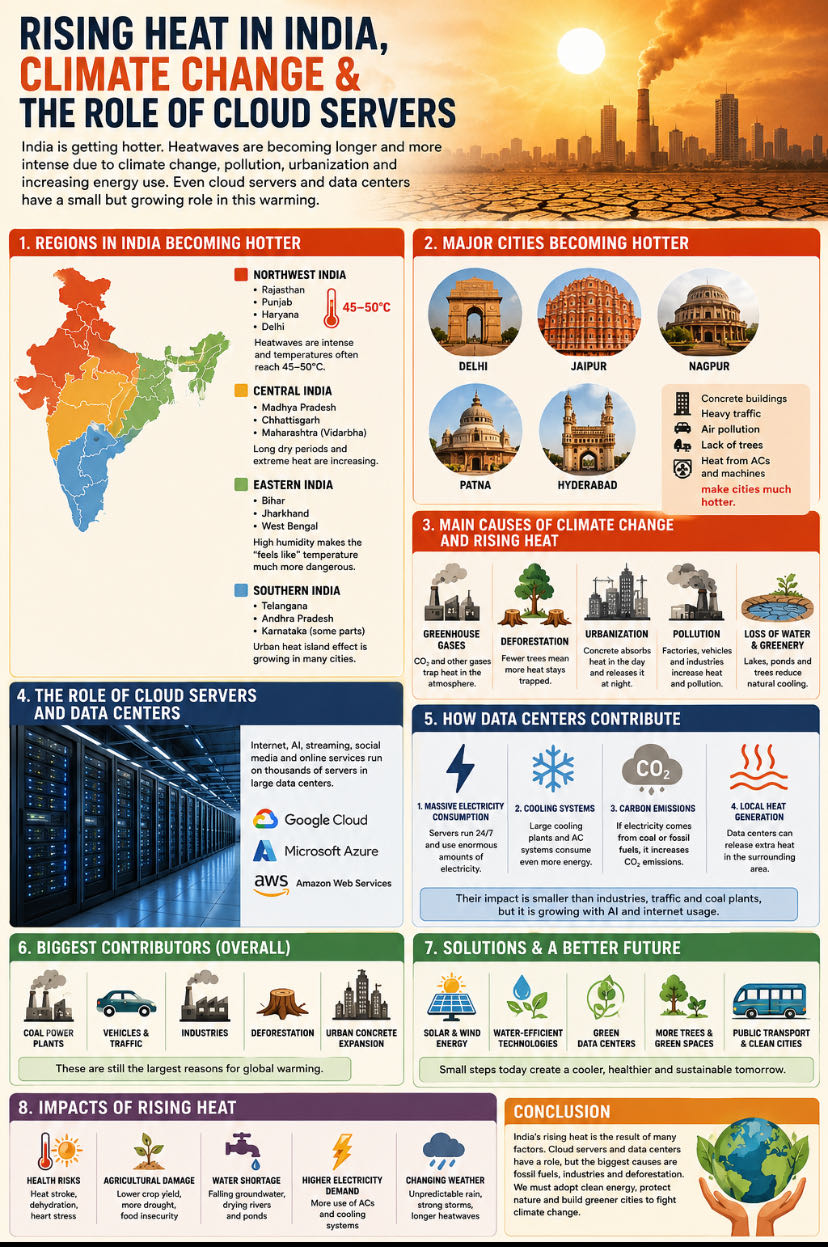
Rising Heat in India, Climate Change, and the Role of Cloud Servers
India has been experiencing rapidly increasing temperatures, stronger heatwaves, and changing weather patterns over the past few years. Many regions are recording new temperature highs, and summers are becoming longer and more intense. Several factors are responsible for this situation, including climate change, urbanization, pollution, and rising energy consumption.
⸻
🔥 Regions in India Becoming Hotter
1. Northwestern India
The most heatwave-prone regions include:
* Rajasthan
* Punjab
* Haryana
* Delhi
During summer, temperatures in these areas often reach 45–50°C. Desert winds, low greenery, and rapid urban expansion worsen the heat.
⸻
2. Central India
* Madhya Pradesh
* Chhattisgarh
* Maharashtra (Vidarbha region)
These regions are experiencing more extreme heat and longer drought periods, affecting agriculture and water resources.
⸻
3. Eastern India
* Bihar
* Jharkhand
* West Bengal
In these states, rising humidity combined with high temperatures creates dangerous “feels-like” temperatures.
⸻
4. Southern India
* Telangana
* Andhra Pradesh
* Karnataka (some regions)
Rapid urban growth and concrete infrastructure are increasing the urban heat island effect.
⸻
🌆 Major Indian Cities Becoming Hotter
Several large cities are experiencing increasing heat stress:
* Delhi
* Jaipur
* Nagpur
* Patna
* Hyderabad
Factors such as:
* concrete buildings
* heavy traffic
* air pollution
* lack of trees
* heat from air conditioners and machines
make these cities significantly hotter.
⸻
🌍 Main Causes of Climate Change and Rising Heat
1. Greenhouse Gases
Burning coal, petrol, and diesel releases CO₂ and other greenhouse gases that trap heat in Earth’s atmosphere.
2. Deforestation
Trees absorb carbon dioxide. Cutting forests accelerates warming.
3. Urbanization
Concrete roads and buildings absorb heat during the day and release it at night.
4. Pollution
Factories, vehicles, and industries increase both pollution and heat.
5. Loss of Water Bodies and Greenery
The disappearance of lakes, ponds, and trees reduces natural cooling.
⸻
☁️ The Role of Cloud Servers and Data Centers
The modern digital world depends heavily on large data centers. Internet services, AI systems, video streaming, online gaming, and social media all rely on thousands of servers operating continuously.
Examples include:
* Google Cloud
* Microsoft Azure
* Amazon Web Services (AWS)
⸻
🔥 How Data Centers Contribute
1. Massive Electricity Consumption
Servers operate 24/7 and require enormous amounts of electricity.
2. Cooling Systems
Large cooling plants and air-conditioning systems are needed to prevent overheating.
3. Carbon Emissions
If electricity comes from coal or fossil fuels, data centers indirectly increase CO₂ emissions.
4. Local Heat Generation
Large data centers can produce additional heat in nearby areas.
However, their overall impact is generally smaller compared to industries, traffic, and coal-based power plants.
⸻
📊 The Biggest Contributors Still Are
The largest drivers of global warming remain:
* Coal power plants
* Vehicles and traffic
* Heavy industries
* Deforestation
* Rapid urban concrete expansion
Cloud computing contributes comparatively less, although its energy demand is growing rapidly because of AI, streaming, and internet usage.
⸻
🌱 Solutions and Future Efforts
Many technology companies are investing in greener solutions:
* Solar energy
* Wind power
* Water-efficient cooling systems
* Green data centers
* Carbon-neutral operations
Cities are also focusing on:
* planting more trees
* water conservation
* public transportation
* eco-friendly buildings
to reduce rising temperatures.
⸻
⚠️ Effects of Rising Heat
Health Impacts
* Heat stroke
* Dehydration
* Heart stress
Agricultural Damage
* Reduced crop yields
* Increased drought risk
Water Shortages
* Falling groundwater levels
* Drying rivers and ponds
Increased Electricity Demand
* Greater use of air conditioners and cooling systems
Weather Changes
* Irregular rainfall
* Stronger storms
* Longer heatwaves


Comments
very true information