

Ownmates Post

What Is a Light Sail? 🚀☀️
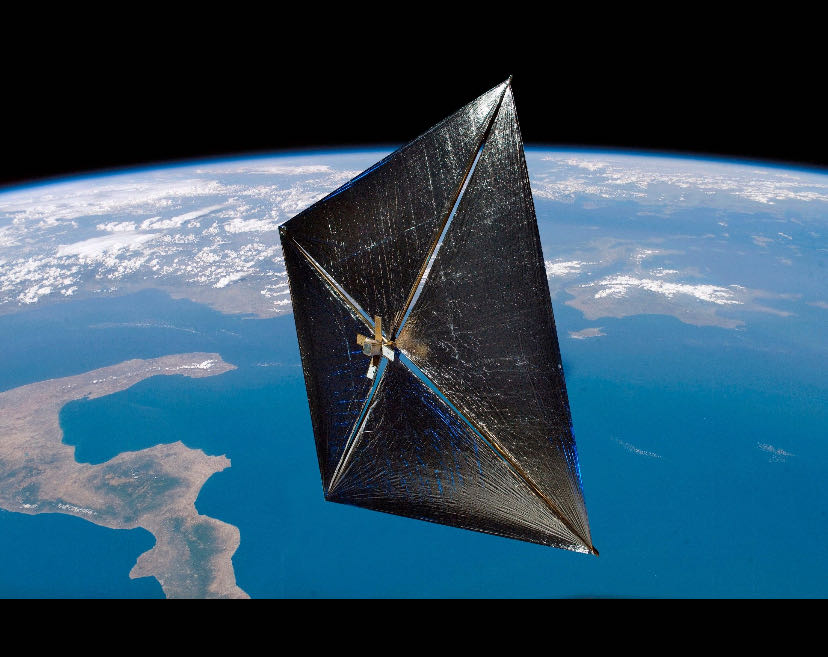
A light sail (or solar sail) is a spacecraft technology that uses a very large, ultra-light reflective sail to move through space.
Instead of using traditional fuel, the sail is pushed forward by the pressure of light itself.
⸻
How Does It Work?
Although photons (particles of light) have no mass, they still carry momentum.
When photons strike the reflective sail, they transfer a tiny push to it.
Over time, billions of these tiny pushes gradually accelerate the spacecraft.
In physics, photon momentum can be written as:
p = \frac{E}{c}
Where:
* p = momentum
* E = photon energy
* c = speed of light
⸻
Solar Sail vs Laser Light Sail
1. Solar Sail ☀️
A solar sail uses sunlight directly for propulsion.
Features:
* Powered by the Sun’s light
* Requires very little fuel
* Acceleration is slow but continuous
Example spacecraft:
IKAROS
⸻
2. Laser Light Sail 🔴
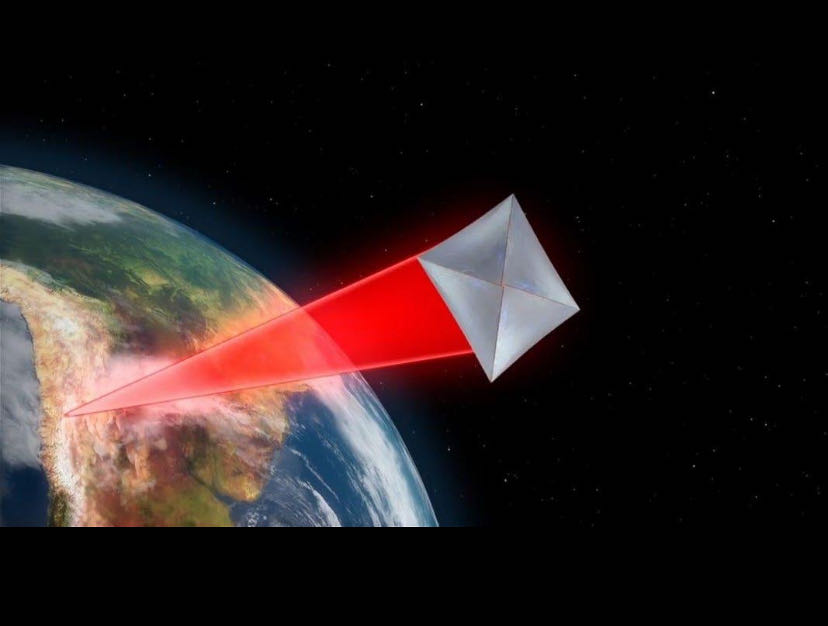
A laser light sail uses giant lasers from Earth or the Moon to push the spacecraft.
This could provide much stronger acceleration than ordinary sunlight.
One famous project exploring this idea is:
Breakthrough Starshot
Its goal is to send tiny probes at:
0.2c
— about 20% of the speed of light.
⸻
Advantages 🌌
* Requires little or no onboard fuel
* Suitable for long-duration missions
* Could theoretically reach extremely high speeds
* Promising for interstellar exploration
⸻
Challenges ⚠️
* Requires extremely powerful lasers
* The sail must be ultra-thin yet very strong
* Tiny dust particles in space can cause damage
* Spacecraft control and navigation are difficult
⸻
Can Humans Travel in One?
Not yet.
Current concepts are mainly designed for:
* tiny robotic probes
* gram-scale spacecraft
* AI chips and miniature cameras
A human-carrying light sail spacecraft is still considered closer to science fiction than practical engineering today.


Comments
🙀