

Ownmates Post

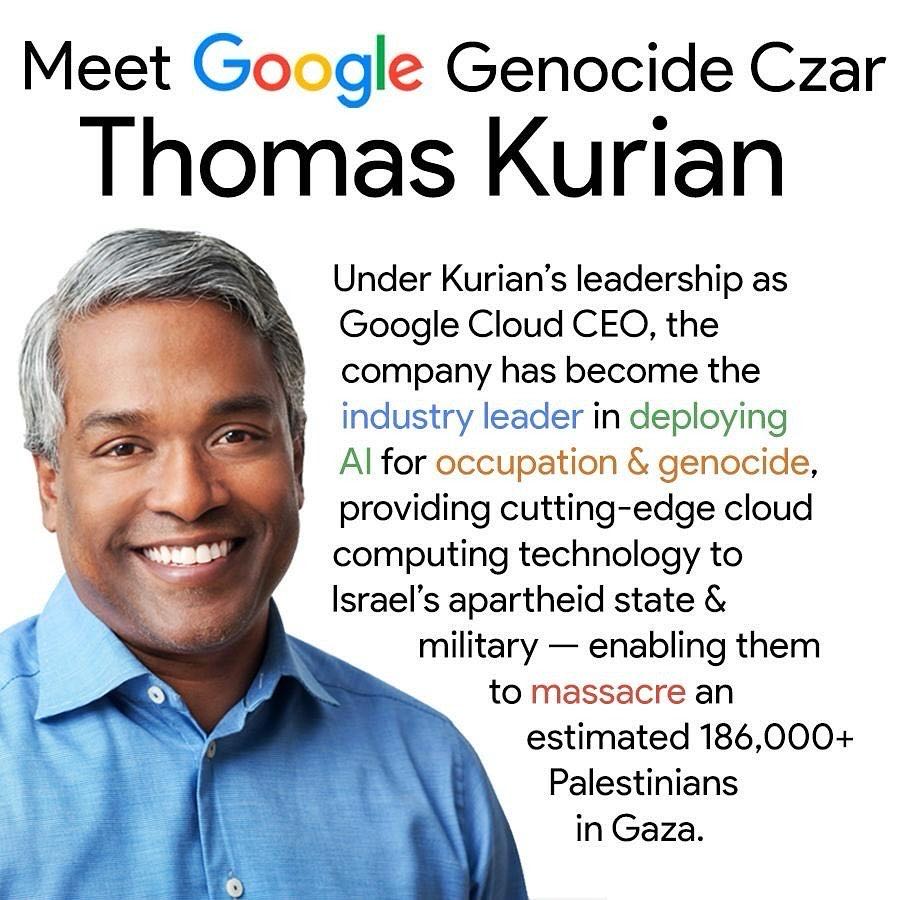
Thomas Kurian, Google Cloud, and the Gaza War: Technology, Ethics, and Global Debate
The world is rapidly entering an era dominated by artificial intelligence (AI) and cloud computing. Today, technology companies are no longer limited to providing software or internet services; they are becoming strategic infrastructure providers for governments, militaries, and global institutions. In this context, Thomas Kurian and Google Cloud have become central figures in an intense international debate.
Across social media and within various human rights campaigns, accusations have emerged claiming that Google Cloud technology is being used to support Israeli military and surveillance systems. These allegations have sparked serious discussions about the relationship between technology, warfare, and corporate responsibility.
Who Is Thomas Kurian?
Thomas Kurian is an Indian-American business executive who became CEO of Google Cloud in 2019. Under his leadership, Google Cloud expanded aggressively and strengthened its position in sectors such as government services, healthcare, finance, and defense.
Kurian is widely recognized for transforming Google Cloud into a stronger competitor against Amazon Web Services and Microsoft Azure. However, as the company deepened partnerships with governments and defense-related institutions, criticism also intensified.
Project Nimbus and the Controversy
One of the most debated issues surrounding Google Cloud is “Project Nimbus,” a joint cloud-computing contract involving Google and Amazon with the Israeli government.
Human rights activists and some Google employees have argued that cloud and AI technologies provided through such projects could potentially support surveillance systems, military analysis, and operational infrastructure. Employee protests and public campaigns against the project have drawn global attention.
Google, however, has repeatedly stated that its technologies are intended for general governmental and digital infrastructure purposes, not for direct military targeting or offensive operations.
AI and the New Age of Warfare
Artificial intelligence is no longer limited to chatbots and search engines. Modern militaries increasingly use AI for:
* Data analysis
* Surveillance and identification
* Cybersecurity
* Predictive intelligence
* Operational logistics
As a result, the role of major technology companies has become far more sensitive and politically significant. Whenever advanced technology is used in conflict zones, difficult ethical questions emerge about accountability and responsibility.
Should tech companies be responsible for how governments use their platforms? Or does responsibility rest entirely with state authorities?
These questions remain deeply contested.
Gaza Conflict and Global Reaction
The war in Gaza has generated intense international polarization. Israel argues that its military actions are tied to national security and counterterrorism objectives, while many humanitarian organizations and activists have raised concerns about civilian casualties and the humanitarian crisis.
Within this environment, companies such as Google, Amazon, and other tech giants have come under scrutiny. Online campaigns and protest movements have accused major technology firms of indirectly enabling military operations through AI and cloud infrastructure.
At the same time, many of these allegations remain subjects of ongoing political and legal debate, and not all claims circulating online have been independently verified.
Corporate Ethics and Responsibility
The broader issue extends beyond one company or executive. It raises fundamental questions about the ethical responsibilities of technology corporations in the AI era.
Critics argue that:
* Tech companies should ensure compliance with human rights standards.
* AI systems used in conflict zones require stronger oversight.
* Governments and corporations must be transparent about military-related technology partnerships.
Others argue that:
* Technology providers cannot fully control how governments use their services.
* Cloud infrastructure is often general-purpose technology.
* Restricting one company may simply shift contracts to another provider.
This tension between innovation, profit, national security, and ethics is likely to shape the future of the global technology industry.


Comments
genocide 🙂↕️
Behind the gaza war indirectly in the AI technology of google cloud.
I don't think they were involved anyway in the war or technology
Thomas Kurian is an Indian-American business executive and the CEO of Google Cloud since 2019. Born in Kerala, India, he previously spent over 20 years at Oracle, where he led major product development teams. Under his leadership, Google Cloud expanded strongly in enterprise AI, cloud computing, and business services, competing closely with Amazon AWS and Microsoft Azure.
Google has partiality with American, American companies for American people!