

Ownmates Post

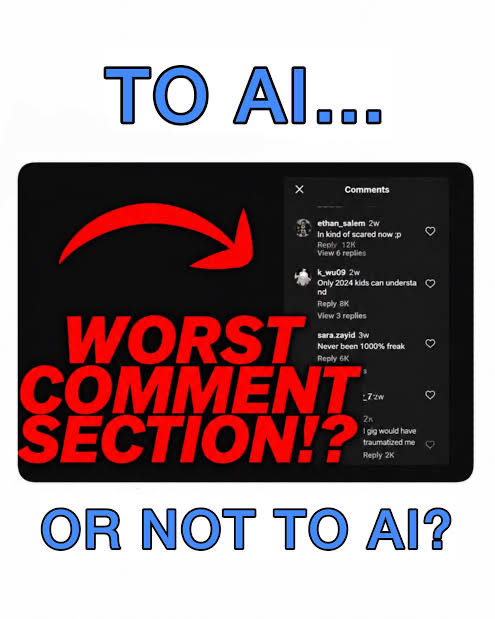
When AI Turns Social Media Into a Culture of Negativity
Artificial intelligence is rapidly changing social media. It can help people communicate, create content, translate languages, and access information faster than ever before. But when AI is used to generate endless negative, insulting, or abusive comments, it can create a serious social problem.
Social media already has a tendency to amplify anger and controversy. AI can make this problem much larger by producing huge numbers of comments in a very short time. A single person or organization can potentially use automated systems to create thousands of messages designed to provoke arguments, attack individuals, or manipulate public conversations.
The danger is not simply that people may encounter rude comments. Repeated exposure to hostility can gradually change the character of online communities. Constructive disagreement can be replaced by personal attacks. People may become afraid to express different opinions, while others may begin to believe that aggressive behavior is normal.
This can also affect younger generations. If children and young adults constantly see insults, humiliation, and online harassment presented as entertainment, they may become less sensitive to the consequences of such behavior. The boundary between disagreement and abuse can become increasingly blurred.
Another problem is trust. When people cannot easily distinguish between genuine human opinions and AI-generated comments, the apparent level of public anger or support may be misleading. A discussion may look like a large social movement when much of the activity is actually automated.
The long-term challenge is therefore not simply about controlling AI. It is about protecting the quality of human communication. Technology should help people communicate more intelligently, not encourage society to become more hostile.
Social media platforms, AI developers, governments, educators, and users all have a role to play. Better detection of automated abuse, transparent AI policies, responsible platform design, and stronger digital literacy can help reduce the problem.
AI itself is neither inherently positive nor negative. Its social impact depends greatly on how it is designed, deployed, and used. The real challenge for modern civilization is ensuring that powerful technology strengthens human communication rather than turning public conversation into a continuous cycle of anger, humiliation, and abuse.


Comments
No comments yet.