

Ownmates Post

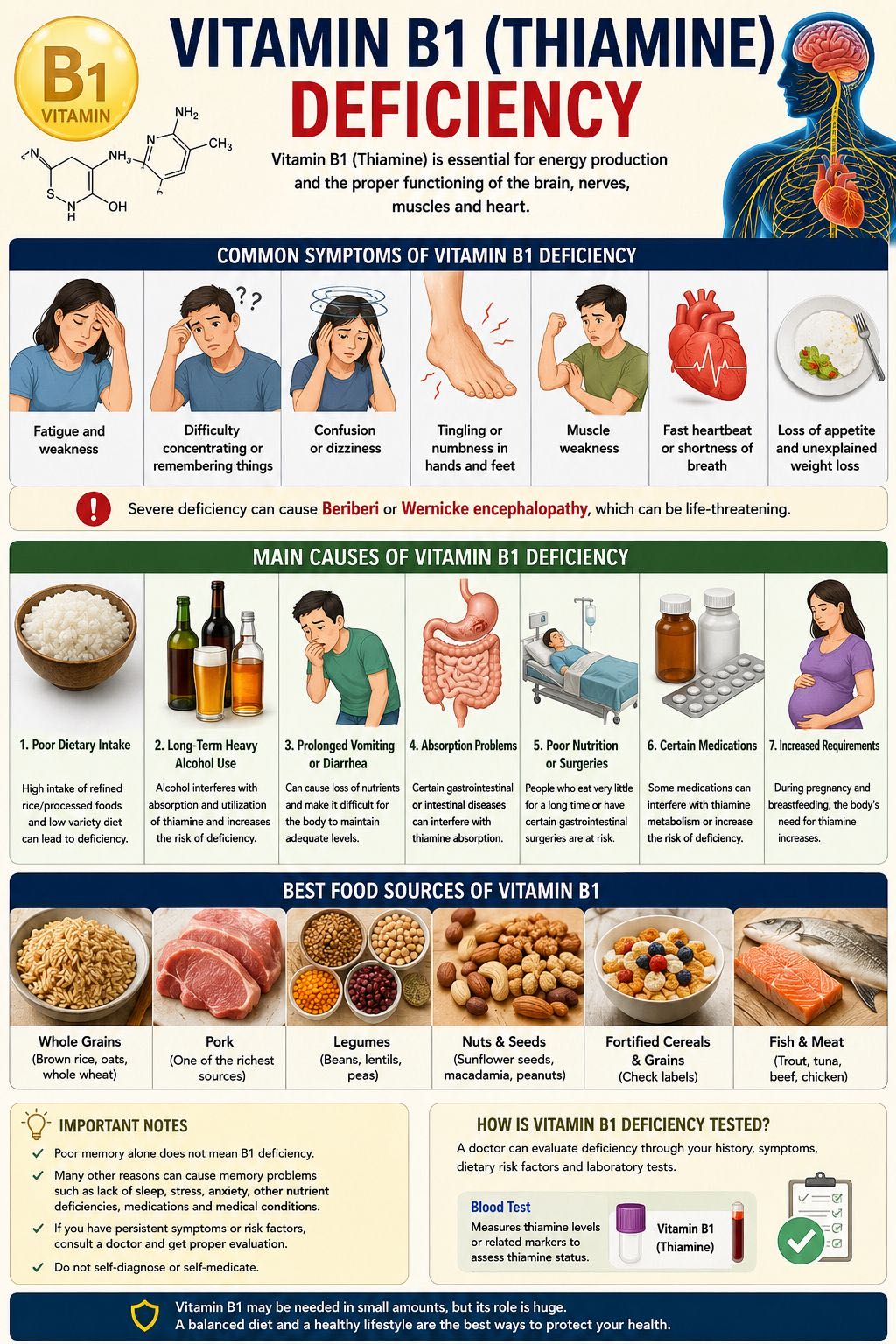
🧠 Vitamin B1 (Thiamine) Deficiency: Causes, Symptoms and Why It Matters
Vitamin B1, also known as Thiamine, is an essential vitamin that plays a major role in producing energy and maintaining the normal function of the brain, nervous system, muscles, and heart.
When the body doesn’t get enough thiamine, several systems can begin to suffer.
⚠️ Common Symptoms of Vitamin B1 Deficiency
A deficiency may cause:
* 😴 Fatigue and weakness
* 🧠 Difficulty concentrating or remembering things
* 😵 Confusion or dizziness
* 🦵 Tingling or numbness in the hands and feet
* 💪 Muscle weakness
* ❤️ Fast heartbeat or shortness of breath
* 🍽️ Loss of appetite and unexplained weight loss
In severe cases, thiamine deficiency can lead to serious conditions such as Beriberi or Wernicke encephalopathy, which require prompt medical attention.
🔍 Why Does Vitamin B1 Deficiency Happen?
Thiamine deficiency can develop for several reasons:
🍚 1. Poor Dietary Intake
A diet heavily based on refined or highly processed foods, with little nutritional variety, may provide insufficient thiamine.
🍺 2. Long-Term Heavy Alcohol Use
Chronic heavy alcohol consumption is an important risk factor because it can reduce dietary intake, interfere with thiamine absorption and utilization, and increase the risk of deficiency.
🤢 3. Prolonged Vomiting or Diarrhea
Repeated vomiting or prolonged diarrhea can make it difficult for the body to maintain adequate nutrient levels.
🩺 4. Problems With Absorption
Certain gastrointestinal or intestinal disorders can interfere with the absorption of thiamine and other nutrients.
🏥 5. Prolonged Poor Nutrition or Certain Surgeries
People who eat very little for extended periods, or those who have undergone certain gastrointestinal surgeries, may be at increased risk.
💊 6. Certain Medications
Some medications can interfere with thiamine metabolism or increase the risk of deficiency in particular circumstances.
🤰 7. Increased Requirements
The body’s nutritional requirements can increase during periods such as pregnancy and breastfeeding, making adequate dietary intake especially important.
🧠 Is Poor Memory Always a Sign of Vitamin B1 Deficiency?
No.
Difficulty remembering things can have many causes, including poor sleep, stress, anxiety, nutritional deficiencies, medications, aging, and other medical conditions.
Therefore, memory problems alone are not enough to diagnose Vitamin B1 deficiency.
🧪 Can Vitamin B1 Deficiency Be Tested?
Yes. A healthcare professional can assess the possibility of thiamine deficiency using clinical history, symptoms, dietary risk factors, and appropriate laboratory testing.
Testing may involve measuring thiamine status in blood, although the choice and interpretation of the test depend on the clinical situation.
🥜 Foods That Provide Vitamin B1
Good dietary sources include:
* Whole grains
* Pork
* Legumes such as beans and lentils
* Nuts and seeds
* Fortified cereals and grains
* Some fish and meat products
A varied, balanced diet generally helps provide adequate thiamine.
🚨 Don’t Ignore Severe Symptoms
Severe confusion, difficulty walking, abnormal eye movements, extreme weakness, or rapidly worsening neurological symptoms can be signs of a serious condition and require urgent medical evaluation.
🌱 The Bottom Line
Vitamin B1 may be needed in only a small amount, but its role is enormous.
It helps the body convert food into energy and supports the normal functioning of the brain, nerves, muscles, and heart.
If you experience persistent fatigue, weakness, numbness, unexplained weight loss, or cognitive changes—especially if you have risk factors for thiamine deficiency—don’t simply assume it’s a vitamin deficiency.
Find the cause. Get evaluated. And treat the underlying problem.


Comments
Thank you 🙏🏻