

Ownmates Post
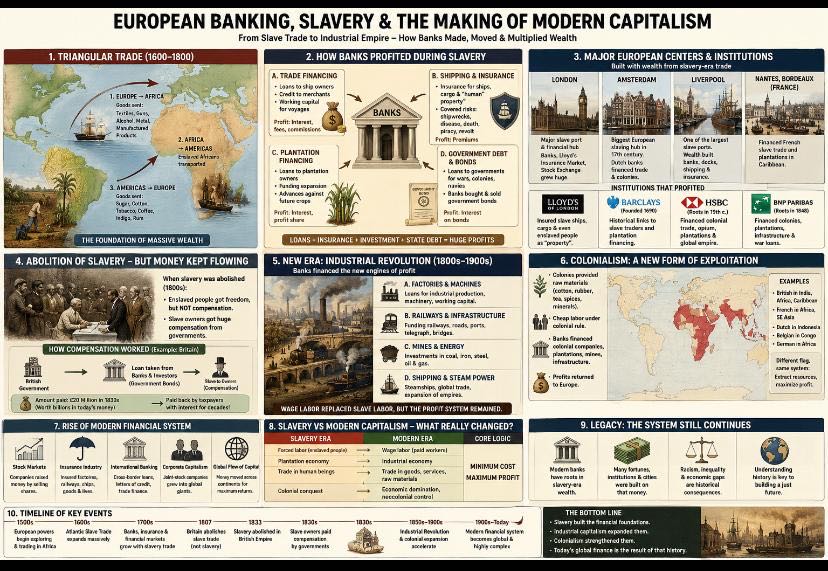
The Transatlantic Slave Trade — In Easy Words The Transatlantic Slave Trade was one of the largest and most cruel systems of slavery in human history. From about the 1500s to the 1800s, millions of African people were captured, bought, or forced into slavery. They were taken across the Atlantic Ocean to the Americas and forced to work without freedom or proper payment. How did the trade work? It is often called the “Triangular Trade” because it connected three main areas: Europe, Africa, and the Americas. 1. Europe → Africa European traders took goods such as: * Cloth * Weapons * Alcohol * Metal goods * Other products These goods were traded in Africa through different trading networks. 2. Africa → Americas African people were forced onto ships and taken across the Atlantic. This journey was called the Middle Passage. The ships were overcrowded. People faced hunger, disease, violence, and terrible living conditions. Many people died during the journey. 3. Americas → Europe Enslaved workers were forced to work on plantations. They produced: * Sugar * Cotton * Tobacco * Coffee * Other crops These products were shipped to Europe and sold for money. How many people were taken? Historians estimate that about 12–12.5 million Africans were transported across the Atlantic. Many more people died before reaching the ships because of violence, disease, hunger, forced marches, and other conditions. Many also died during the sea journey. Which countries were involved? The main European countries involved included: * 🇵🇹 Portugal * 🇬🇧 Britain * 🇪🇸 Spain * 🇫🇷 France * 🇳🇱 Netherlands Portugal was one of the earliest major participants. Britain later became one of the largest participants. France and the Netherlands also had important slave-trading and plantation networks. Spain used enslaved labor in many of its American colonies. Who made money from slavery? It was not only plantation owners who made money. Different people and businesses could benefit, including: * Plantation owners * Slave traders * Shipowners * Merchants * Banks * Insurance companies * Investors * Manufacturers * Colonial governments For example, ships needed insurance, plantations needed money, and products such as sugar and cotton needed merchants to sell them. So slavery became part of a large international business system. Britain Britain was one of the biggest powers involved in the Atlantic slave trade. Some British families became wealthy through Caribbean plantations. Examples include: * Lascelles family — connected to plantations in Jamaica * Beckford family — connected to Jamaica * Codrington family — connected to plantations in Barbados * Gladstone family — John Gladstone owned Caribbean plantations where enslaved people worked British shipping, banking, insurance, and trading networks also benefited from colonial trade. Historical records also show that Lloyd’s provided insurance connected to slave-trading voyages. France French slave trading was strongly connected to ports such as: * Nantes * Bordeaux * Saint-Malo French merchants made money from Atlantic trade and plantation products such as sugar and coffee. Netherlands Dutch merchants and investors were involved in Atlantic trade. The Dutch West India Company (WIC) was an important organization. Dutch colonies such as Suriname developed plantation economies that depended heavily on enslaved labor. Spain Spain controlled large areas of the Americas. Enslaved labor was used in many Spanish colonies, especially in the Caribbean. Cuba later became an important plantation economy based heavily on enslaved labor. Portugal and Brazil Portugal had a very strong connection to the Atlantic slave trade. Brazil became one of the largest destinations for enslaved Africans. Sugar plantations and later coffee plantations depended heavily on enslaved labor. What about Germany and the Rothschild family? Germany was not one of the biggest Atlantic slave-trading powers. Some German merchants were involved in international trade and finance. The Rothschild family is sometimes mentioned in discussions about slavery, but they should not simply be called a major slave-owning family. Their main wealth came from banking, government bonds, and international finance. There were connections between European finance and colonial trade, but indirect financial connections are not the same as directly owning enslaved people. Direct and indirect involvement This is very important. Direct involvement Someone was directly involved if they: * Owned plantations * Owned enslaved people * Bought or sold enslaved people * Operated slave ships * Directly financed slave-trading voyages Indirect involvement Someone could be indirectly involved by: * Providing insurance * Giving loans * Financing merchants * Trading plantation products * Investing in companies * Making goods for colonial trade So, saying that someone was “connected to slavery” does not always mean that they personally owned enslaved people. Did the money become today’s company money? Sometimes there are historical connections between old businesses and modern institutions. But it is usually impossible to say: “This exact slave-trade money became this exact modern company’s money.” The reason is simple: hundreds of years have passed. During that time: * Companies changed their names. * Banks merged. * Businesses were sold. * Families divided their wealth. * Money was reinvested. * Companies closed. * New companies were created. Therefore, historians usually talk about historical links, not a simple direct line from slavery to a modern company. Effects on Africa The slave trade caused enormous suffering in many African societies. It contributed to: * Loss of population * Violence * Wars and raids * Kidnapping * Family separation * Social and political problems However, Africa’s modern situation cannot be explained only by the slave trade. Later European colonialism, wars, politics, and economic problems also played major roles. Effects on the Americas The Americas developed large plantation economies using enslaved labor. Enslaved Africans produced huge amounts of sugar, cotton, tobacco, coffee, and other products. This created great wealth for plantation owners and other businesses. But the people doing the work were denied freedom and basic human rights. The effects continued even after slavery ended. Many societies continued to experience racial discrimination and unequal wealth. Effects on Europe European countries also benefited economically. The slave economy helped businesses connected to: * Shipping * Banking * Insurance * Manufacturing * Ports * International trade But slavery was only one part of Europe’s larger economic development. African Diaspora Millions of Africans were taken to the Americas. Their descendants formed large African diaspora communities in places such as: * Brazil * The Caribbean * The United States * Other parts of the Americas African cultures greatly influenced modern: * Music * Food * Language * Art * Literature * Religion * Politics Why was this slave trade so important in history? Slavery existed in many parts of the world before the Atlantic slave trade. But the Transatlantic Slave Trade was different because it was extremely large and connected many countries and economies. It connected: Africa → Europe → Americas It involved millions of people and linked slavery with plantations, ships, banks, insurance, trade, and colonial governments. It also became strongly connected with race, with African people and their descendants being treated as an enslaved population through racial laws and systems. Simple Conclusion The Transatlantic Slave Trade was a huge system in which millions of African people were forcibly taken to the Americas and made to work without freedom. Many people, businesses, and governments made money from this system. At the same time, millions of African people suffered from violence, forced labor, family separation, and loss of freedom. The slave trade changed Africa, Europe, and the Americas. Its effects can still be seen today in culture, population, wealth, racial inequality, and African diaspora communities. In simple words: It was a large international system of forced labor that created wealth for some people while causing enormous suffering to millions of Africans.


Comments
No comments yet.