

Ownmates Post

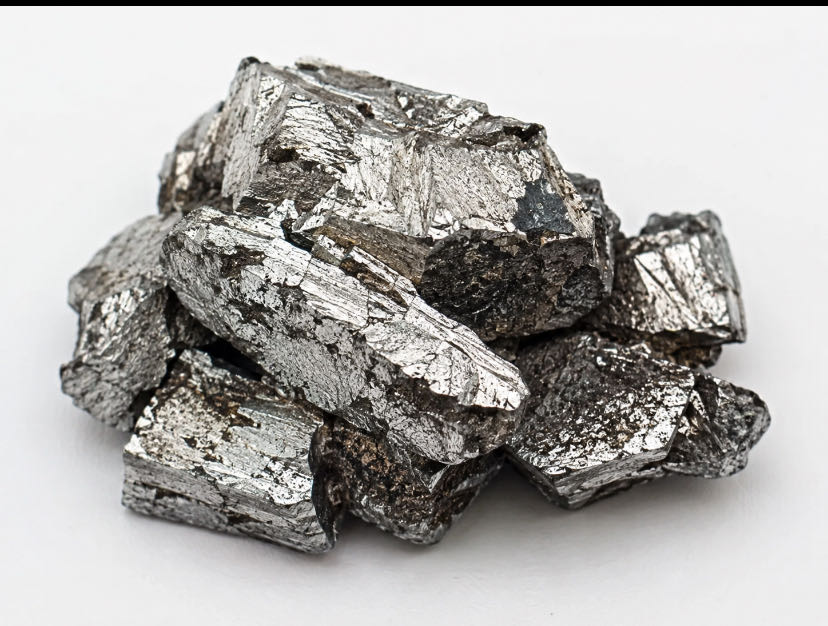
Zirconium: An Important and Valuable Metal
Zirconium (Zr) is a very important metal because it has excellent heat resistance, corrosion resistance, and a very low ability to absorb neutrons.
Why Is Zirconium Important?
⚛️ Use in Nuclear Energy
Zirconium is used to make the outer cladding of nuclear fuel rods in nuclear reactors. It absorbs very few neutrons, allowing the nuclear chain reaction to continue efficiently.
🛡️ Excellent Corrosion Resistance
Zirconium is highly resistant to corrosion. It can withstand water, many chemicals, and harsh high-temperature environments without corroding easily.
🔥 High Heat Resistance
Zirconium has a melting point of approximately 1855°C, making it useful in high-temperature industrial applications.
🧪 Chemical Industry
It is used to manufacture pipes, valves, heat exchangers, and other equipment that come into contact with strong acids and corrosive chemicals.
🦷 Dentistry and Medical Applications
Zirconium oxide (Zirconia, ZrO₂) is strong, durable, and biocompatible. It is widely used in dental crowns, implants, and certain medical devices.
✈️ Aerospace Industry
Some zirconium alloys are used in aircraft, spacecraft, and advanced aerospace technologies because of their strength and resistance to heat and corrosion.
💎 Jewelry and Ceramics
Zirconium compounds are used to produce high-quality ceramics, heat-resistant materials, and cubic zirconia, a gemstone that resembles a diamond.
Basic Information About Zirconium
* Name: Zirconium
* Chemical Symbol: Zr
* Atomic Number: 40
* Category: Transition Metal
* Color: Silvery-gray
* Melting Point: Approximately 1855°C
* Main Uses: Nuclear reactors, chemical equipment, ceramics, dental crowns, medical applications, and aerospace technology
Zirconium is naturally found in Earth’s crust mainly in the mineral zircon (ZrSiO₄).
Where Is Zirconium Found?
Zirconium is generally not found in nature as a pure metal. It is mainly obtained from the mineral zircon (ZrSiO₄).
It is commonly found in:
🏖️ Heavy Mineral Sands
Zircon is often concentrated in heavy mineral sands along coastlines. Ocean waves, rivers, and natural geological processes help separate and accumulate heavy minerals in these deposits. Much of the world’s commercial zircon production comes from such mineral sands.
🪨 Igneous Rocks
Zircon is also found in igneous rocks, which form when molten magma cools and solidifies beneath or on Earth’s surface.
⛏️ Placer Deposits
Zircon may occur in placer deposits, where flowing water and natural processes concentrate heavy minerals in particular areas.
Major Zirconium-Producing and Resource-Holding Countries
🇦🇺 Australia
🇿🇦 South Africa
🇨🇳 China
🇮🇳 India
🇲🇿 Mozambique
🇧🇷 Brazil
🇺🇸 United States
In India, zircon-bearing heavy mineral sands are mainly found along the coastal regions of Kerala, Tamil Nadu, Odisha, and Andhra Pradesh.
In Simple Words
Zirconium is mainly found in mineral-rich coastal sands and certain types of rocks. After mining, zircon-containing minerals are processed to extract and refine zirconium.
In summary, zirconium is important because it is strong, heat-resistant, corrosion-resistant, and especially valuable for nuclear reactors, advanced industries, medical applications, and high-performance materials.


Comments
No comments yet.