

Ownmates Post

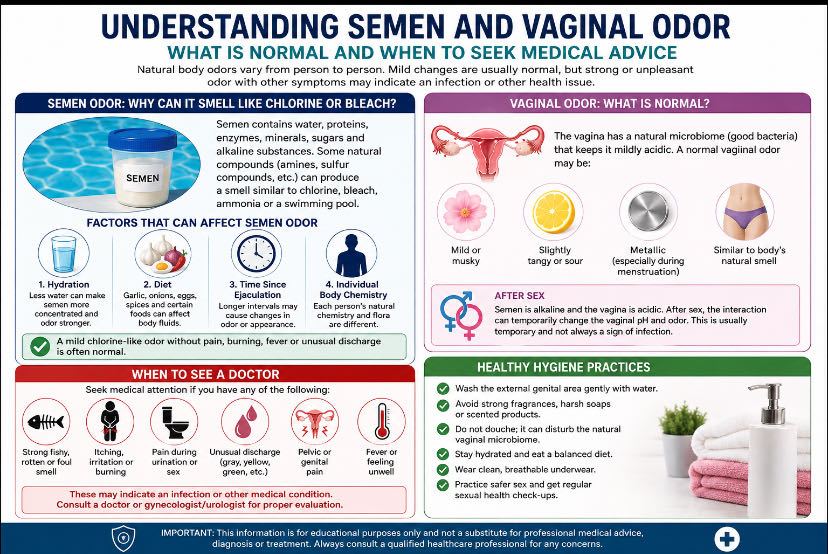
Here is a polished, professional health article:
Understanding Semen and Vaginal Odor: What Is Normal and When to Seek Medical Advice
Natural body odors vary from person to person, including the scent of semen and the vaginal area. Changes in odor can be influenced by normal body chemistry, hydration, diet, sexual activity, and the balance of microorganisms. While a mild or temporary change is often harmless, a strong or unpleasant odor accompanied by other symptoms may require medical evaluation.
Why Can Semen Smell Like Chlorine or Bleach?
Semen has a naturally distinctive odor because it contains a mixture of water, proteins, enzymes, minerals, sugars, and alkaline substances. Some naturally occurring compounds may produce a smell that certain people describe as similar to chlorine, bleach, ammonia, or a swimming pool.
The odor of semen may also vary due to several factors:
1. Hydration
Drinking too little water may make body fluids more concentrated, which can cause the odor to seem stronger. Maintaining adequate hydration may help keep body fluids less concentrated.
2. Diet
Foods such as garlic, onions, eggs, strong spices, and certain vegetables may affect the odor of sweat, urine, and other body fluids. The effect varies between individuals.
3. Time Since Ejaculation
A longer interval between ejaculations may sometimes be associated with a noticeable change in the appearance or odor of semen. This can vary naturally and is not necessarily a sign of a health problem.
4. Individual Body Chemistry
Each person has a unique body chemistry. Differences in metabolism, natural microorganisms, and the composition of body fluids can influence how semen smells.
A mild chlorine- or bleach-like odor without symptoms such as pain, burning, fever, swelling, or unusual discharge is often not a cause for concern.
What Is Normal Vaginal Odor?
The vagina has a natural ecosystem known as the vaginal microbiome, which includes beneficial bacteria. These bacteria help maintain a healthy environment that is usually mildly acidic.
A normal vaginal odor may be described as:
* Mild or musky
* Slightly tangy or sour
* Metallic, especially during or around menstruation
* Similar to a person’s natural body scent
Vaginal odor can change during the menstrual cycle, after exercise, with sweating, or after sexual activity.
Why Can Vaginal Odor Change After Sex?
Semen is generally alkaline, while the vaginal environment is normally acidic. When semen enters the vagina, the temporary interaction between these different environments may alter the vaginal pH and cause a short-term change in odor.
This change may be temporary and does not automatically indicate an infection. However, persistent or worsening odor should be assessed, especially if other symptoms are present.
When Should You Seek Medical Advice?
A healthcare professional should be consulted if there is a strong, persistent, or unusual odor accompanied by symptoms such as:
* A strong fishy, rotten, or foul smell
* Itching, irritation, or burning
* Pain during urination or sexual activity
* Pelvic or genital pain
* Swelling, redness, or sores
* Unusual vaginal discharge, especially if it is gray, yellow, green, or accompanied by discomfort
* Unusual penile discharge
* Fever or feeling unwell
These symptoms may be associated with an infection or another medical condition. A healthcare professional can determine the cause through an examination and, if needed, laboratory testing.
Healthy Hygiene Practices
Good genital hygiene can help maintain comfort and reduce irritation:
* Wash the external genital area gently with water.
* Avoid strong fragrances, harsh soaps, or scented products on the genital area.
* Do not douche, as douching may disturb the natural vaginal microbiome.
* Stay adequately hydrated.
* Wear clean, breathable underwear.
* Practice safer sex and consider regular sexual health testing when appropriate.


Comments
No comments yet.