

Ownmates Post

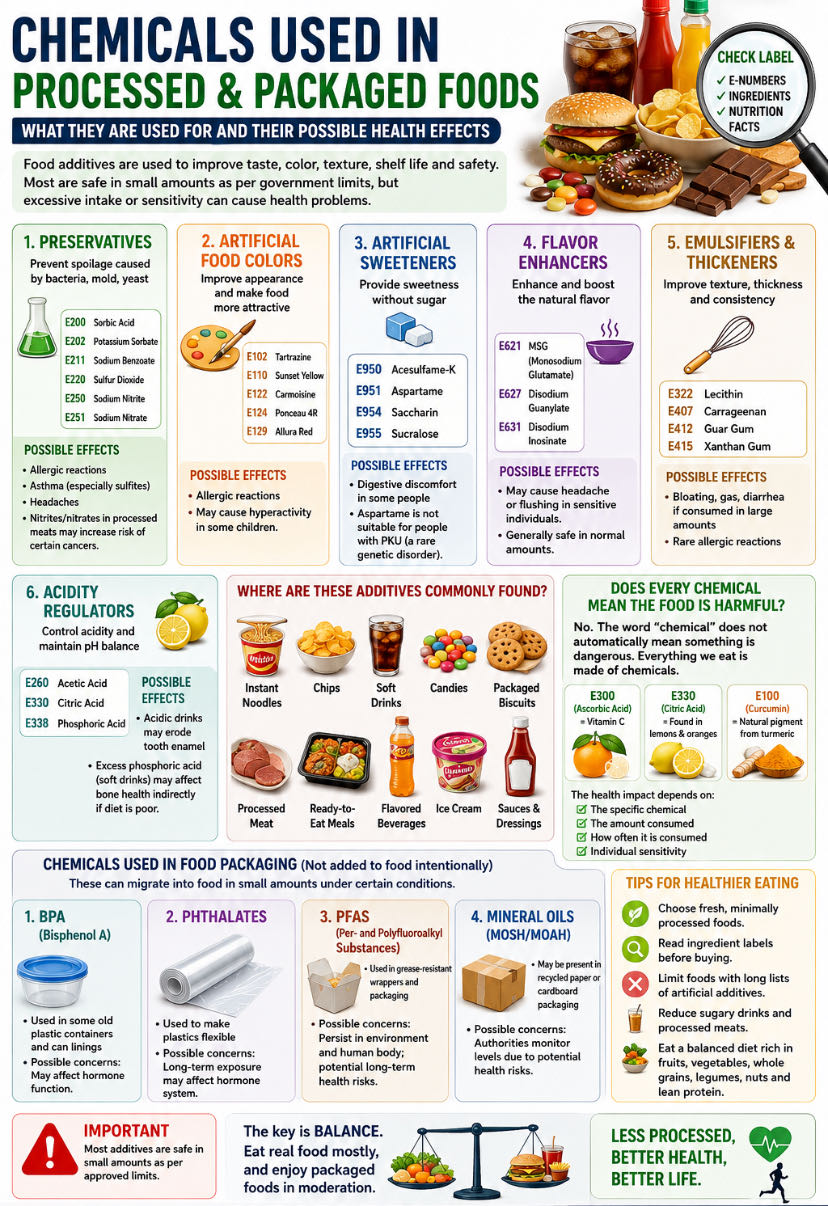
Chemicals Commonly Used in Processed and Packaged Foods and Their Possible Health Effects
Food manufacturers use a variety of additives and processing aids to improve shelf life, taste, color, texture, and safety. Most approved additives are considered safe when used within regulatory limits, but some people may be sensitive to certain ingredients, and excessive consumption of highly processed foods is generally not recommended.
1. Preservatives
These help prevent spoilage caused by bacteria, molds, and yeast.
Examples:
* E200 – Sorbic Acid
* E202 – Potassium Sorbate
* E211 – Sodium Benzoate
* E220 – Sulfur Dioxide
* E250 – Sodium Nitrite
* E251 – Sodium Nitrate
Possible health effects:
* Allergic reactions in sensitive individuals
* Asthma symptoms (especially sulfites)
* Headaches in some people
* Frequent consumption of processed meats containing nitrites/nitrates has been associated with an increased risk of certain cancers.
2. Artificial Food Colors
Examples:
* E102 – Tartrazine
* E110 – Sunset Yellow
* E122 – Carmoisine
* E124 – Ponceau 4R
* E129 – Allura Red
Possible health effects:
* Allergic reactions in sensitive individuals
* Some studies suggest certain artificial colors may contribute to hyperactivity in some children.
3. Artificial Sweeteners
Examples:
* E950 – Acesulfame-K
* E951 – Aspartame
* E954 – Saccharin
* E955 – Sucralose
Possible health effects:
* Digestive discomfort in some people
* Aspartame should not be consumed by people with Phenylketonuria (PKU), a rare genetic disorder.
4. Flavor Enhancers
Examples:
* E621 – Monosodium Glutamate (MSG)
* E627 – Disodium Guanylate
* E631 – Disodium Inosinate
Possible health effects:
* Some sensitive individuals may experience headaches or flushing after consuming large amounts.
* For most people, MSG is considered safe at normal dietary levels.
5. Emulsifiers and Thickeners
Examples:
* E322 – Lecithin
* E407 – Carrageenan
* E412 – Guar Gum
* E415 – Xanthan Gum
Possible health effects:
* Bloating
* Gas
* Diarrhea when consumed in large amounts
* Rare allergic reactions
6. Acidity Regulators
Examples:
* E260 – Acetic Acid
* E330 – Citric Acid
* E338 – Phosphoric Acid
Possible health effects:
* Frequent consumption of acidic soft drinks can contribute to tooth enamel erosion.
* High intake of phosphoric acid-containing soft drinks may affect bone health indirectly if the overall diet is poor.
Chemicals Used in Food Packaging
These chemicals are generally part of the packaging material, not intentionally added to the food. Under certain conditions, small amounts may migrate into food.
1. BPA (Bisphenol A)
Used in some older plastic containers and can linings.
Possible concerns:
* Potential effects on hormone (endocrine) function.
* Many manufacturers now produce BPA-free packaging.
2. Phthalates
Used to make some plastics flexible.
Possible concerns:
* Long-term exposure has raised concerns about hormone-related effects.
3. PFAS (Per- and Polyfluoroalkyl Substances)
Used in grease-resistant food wrappers and packaging.
Possible concerns:
* These chemicals can persist in the environment and the human body.
* Long-term exposure is an active area of health research.
4. Mineral Oils (MOSH/MOAH)
May be present in some recycled paper or cardboard packaging.
Possible concerns:
* Food safety authorities monitor and regulate their levels because of potential health concerns.
Foods That Commonly Contain Many Additives
* Instant noodles
* Potato chips
* Soft drinks
* Candies
* Packaged biscuits and cookies
* Processed meats (sausages, hot dogs, salami)
* Ready-to-eat meals
* Flavored beverages
* Ice cream
* Ketchup, sauces, and salad dressings
Does Every Chemical Mean the Food Is Harmful?
No.
The word “chemical” does not automatically mean something is dangerous. Everything we eat is made of chemicals, including natural foods.
Examples:
* E300 (Ascorbic Acid) = Vitamin C
* E330 (Citric Acid) = Naturally found in lemons and oranges
* E100 (Curcumin) = Natural pigment from turmeric
The health impact depends on:
* The specific chemical
* The amount consumed
* How often it is consumed
* Individual sensitivity
Tips for Healthier Eating
* Choose fresh, minimally processed foods whenever possible.
* Read ingredient labels before buying packaged foods.
* Limit foods with long lists of artificial additives.
* Reduce intake of sugary drinks and processed meats.
* Eat a balanced diet rich in fruits, vegetables, whole grains, legumes, nuts, and lean protein.
A balanced diet with mostly whole foods and only occasional consumption of processed foods is generally the best approach for long-term health.


Comments
fasai छापा मार रही है।