

Ownmates Post
History of Mount Nemrut
Mount Nemrut is a 2,134-meter (7,001-foot) mountain in southeastern Türkiye. It is one of the world’s most remarkable archaeological sites and is famous for its giant stone statues and royal tomb.
The Kingdom of Commagene
Around the 1st century BCE, Mount Nemrut was part of the Kingdom of Commagene, a small but wealthy kingdom located between the Roman and Parthian Empires. Its culture blended Greek and Persian traditions.
King Antiochus I
Antiochus I Theos of Commagene ruled Commagene from approximately 70–38 BCE. Around 62 BCE, he ordered the construction of a monumental sanctuary and his own royal tomb on the mountain’s summit.
Antiochus believed he was descended from both Greek and Persian royal families. He also claimed a divine status and wanted to be honored alongside the gods after his death.
The Giant Statues
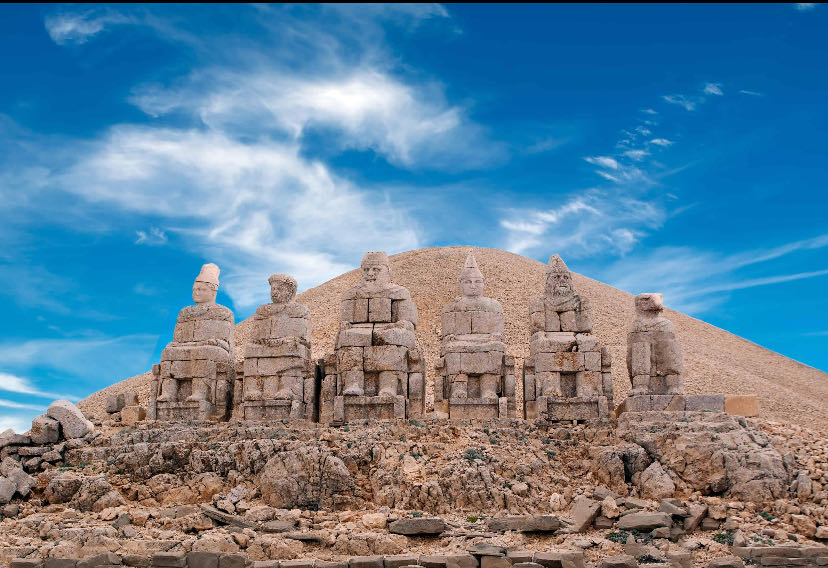
The summit features 8–10-meter (26–33-foot) limestone statues representing:
* King Antiochus I
* Zeus
* Apollo
* Heracles
* The goddess Commagene (Tyche)
* Eagles and lions
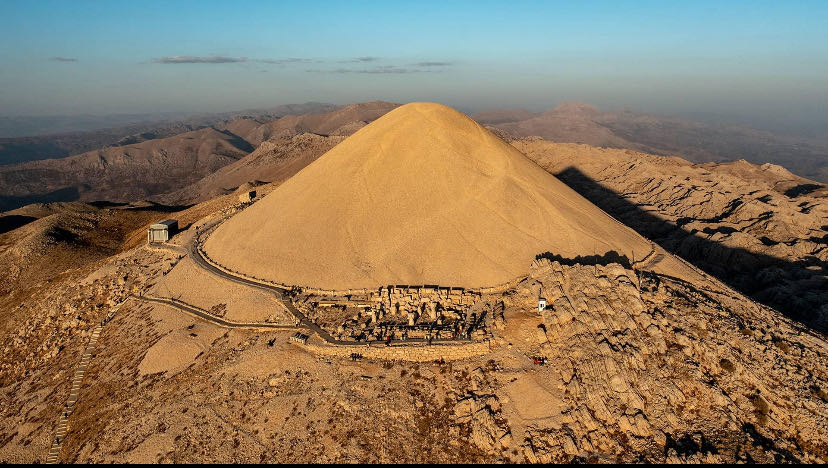
Behind the statues lies a massive artificial stone mound (tumulus), believed to conceal the king’s burial chamber.
Why Are the Heads Separated?
Over the centuries, earthquakes, harsh weather, and natural erosion caused the statues’ heads to fall from their bodies. Today, these detached heads are the site’s most iconic feature.
Rediscovery
The site was rediscovered in 1881 by German engineer Karl Sester while surveying roads in the region. Archaeological excavations and research followed.
UNESCO World Heritage Site
In 1987, UNESCO World Heritage Site designated Mount Nemrut as a World Heritage Site because of its outstanding archaeological and cultural significance.
An Unsolved Mystery
Although researchers believe King Antiochus I’s tomb lies beneath the enormous stone mound, the actual burial chamber has never been found. This remains one of archaeology’s enduring mysteries.
Today, Mount Nemrut is one of Türkiye’s most famous historical landmarks, attracting visitors from around the world—especially at sunrise and sunset, when the giant statues are illuminated by golden light.


Comments
No comments yet.