

Ownmates Post

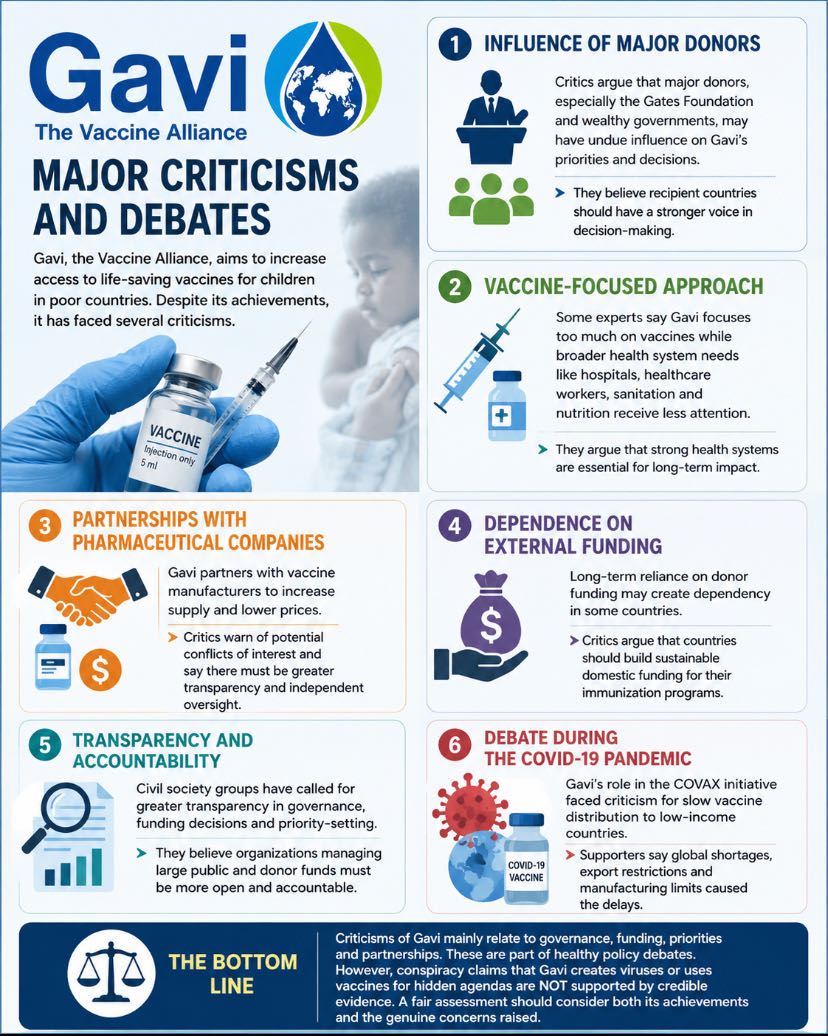
Gavi (The Vaccine Alliance): Major Criticisms and Ongoing Debates
Gavi, the Vaccine Alliance, was established in 2000 to improve access to life-saving vaccines in low- and middle-income countries. The organization is widely recognized for helping expand immunization programs around the world. However, over the years, Gavi has also faced criticism from some researchers, public health experts, civil society organizations, and policy analysts regarding its governance, funding, and strategic priorities.
1. Influence of Major Donors
One of the most common criticisms is that large donors, including the Gates Foundation and wealthy governments, may have significant influence over Gavi’s priorities and decision-making. Critics argue that recipient countries should have a stronger voice in determining global health priorities.
2. Vaccine-Focused Approach
Some public health experts believe that Gavi places too much emphasis on vaccination while broader health system needs—such as hospitals, healthcare workers, sanitation, and primary care infrastructure—also require substantial investment. They argue that strong health systems are essential for long-term public health improvements.
3. Partnerships with Pharmaceutical Companies
Gavi works closely with vaccine manufacturers to increase vaccine availability and negotiate lower prices. Some critics raise concerns about potential conflicts of interest, arguing that partnerships with pharmaceutical companies require strong transparency and independent oversight to maintain public trust.
4. Dependence on External Funding
Another criticism is that countries receiving long-term international support may become dependent on external financing. Critics argue that governments should gradually build sustainable domestic funding to ensure immunization programs remain effective after donor support decreases.
5. Transparency and Accountability
Some civil society organizations have called for greater transparency in Gavi’s governance, funding decisions, and priority-setting processes. They argue that organizations managing large amounts of public and donor funding should maintain high standards of accountability and openness.
6. Debate During the COVID-19 Pandemic
During the COVID-19 pandemic, Gavi’s role in supporting the COVAX initiative was also debated. Some critics argued that vaccine distribution to lower-income countries was slower than expected, while supporters pointed to global supply shortages, manufacturing limitations, export restrictions, and unprecedented logistical challenges.
Conclusion
Most criticisms of Gavi focus on its governance, funding model, strategic priorities, and operational approach rather than its overall mission of improving vaccine access. These debates are part of broader discussions about global health policy and international development. At the same time, numerous sensational claims circulating online—such as allegations that Gavi created viruses or uses vaccines for hidden purposes—have not been supported by credible scientific evidence. Therefore, a balanced assessment should consider both Gavi’s achievements and the legitimate policy debates surrounding its work.


Comments
No comments yet.