

Ownmates Post
Here’s the same explanation rewritten in simple, easy-to-understand English.
Can a Dead Person’s DNA Be Saved, Used to Make a Human Clone, and Would the Clone Have the Same Memories?
This question is about DNA, cloning, the brain, and future science. To understand the answer, we first need to know the difference between DNA and memory.
1. What is DNA?
DNA (Deoxyribonucleic Acid) is the instruction book for your body.
It tells your body how to grow and work.
DNA helps decide things like:
* Eye color
* Hair color and texture
* Blood type
* Height
* How your body develops
* Which proteins your body makes
* How your cells work
However, DNA does not store:
* Childhood memories
* School knowledge
* Languages you learned
* Personal experiences
* Friends and family memories
* Your life story
So, DNA is the blueprint of your body, not the story of your life.
⸻
2. What Happens to DNA After Death?
After a person dies:
* Body cells begin to break down.
* Natural enzymes damage the DNA.
* Bacteria begin to decompose the body.
* Heat speeds up this process.
If the body stays at room temperature, the DNA slowly becomes damaged.
If the body or tissue is cooled quickly and stored correctly, the DNA can stay usable for a very long time.
⸻
3. How Long Can DNA Be Preserved?
4°C (Refrigerator)
* DNA can stay in good condition for a few days to about 1–2 weeks.
−20°C (Freezer)
* DNA may stay usable for many years.
−80°C (Ultra-Low Freezer)
* DNA can remain in excellent condition for 20–50 years or even longer.
−196°C (Liquid Nitrogen)
At this temperature:
* Almost all chemical reactions stop.
* DNA changes very little.
Scientists believe DNA could stay preserved for decades or even centuries if stored properly. However, because this technology is still relatively new, there is no direct proof that DNA can be preserved for thousands of years.
⸻
4. Can a Human Be Made from Preserved DNA?
In theory, yes.
The basic steps are:
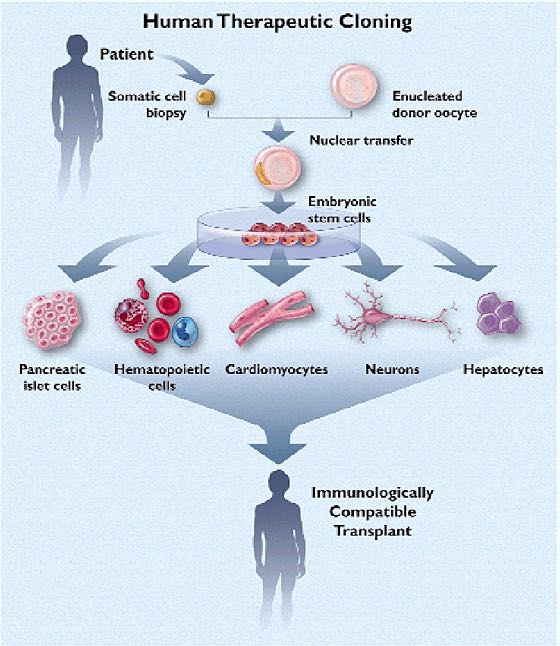
1. Take DNA from one of the person’s body cells.
2. Remove the DNA from an egg cell.
3. Put the person’s DNA into the egg.
4. Let the egg begin developing.
5. Allow it to grow into an embryo.
6. Place the embryo into a uterus.
If everything worked, the baby would be a genetic clone of that person.
This method is called Somatic Cell Nuclear Transfer (SCNT).
⸻
5. Has This Been Done?
Yes, but only with animals.
The most famous example is:
* Dolly the Sheep (1996)
Scientists have also cloned:
* Cows
* Goats
* Mice
* Cats
* Dogs
* Horses
* Camels
* Monkeys
There is no publicly confirmed evidence that a human clone has ever been successfully created.
Many countries ban or strictly limit human cloning because of safety, ethical, and legal concerns.
⸻
6. Would the Clone Be the Same Person?
No.
The clone would have almost the same DNA.
But it would be a new person with:
* A new brain
* New experiences
* New memories
* A different personality shaped by its own life
A good example is identical twins.
They have almost the same DNA, but they become different people because they have different life experiences.
⸻
7. Where Are Memories Stored?
Memories are not stored in DNA.
They are stored in the brain.
The human brain has about 86 billion neurons connected by about 100 trillion synapses.
These connections change as we learn and experience life, creating our memories.
⸻
8. What Happens to Memories After Death?
When the brain dies:
* Brain cells stop working.
* Electrical activity stops.
* Connections between brain cells break down.
* Memories are lost because the brain structure is destroyed.
The DNA may still exist, but the memories do not.
⸻
9. What If the Clone Sees Photos or Videos?
The clone could learn about the original person’s life.
It could know:
* Who the family members were
* What happened in childhood
* Important life events
But these would be new facts, not real memories.
The clone would think:
“This happened to the person whose DNA I have.”
It would not think:
“I remember living through this.”
⸻
10. Can Memories Be Transferred in the Future?
Scientists are studying:
* Brain mapping
* Connectomics
* Brain–Computer Interfaces (BCIs)
* Whole Brain Emulation
* Memory research
The goal is to understand how memories are stored.
Today, no technology can copy or transfer a person’s complete memories into another brain.
⸻
11. What If Future Technology Could Copy the Whole Brain?
This is still an idea for future research and science fiction.
If scientists could perfectly copy:
* Every brain cell
* Every connection
* Every important chemical detail
then some memories or parts of a person’s identity might be copied.
But there is no scientific proof today that this is possible.
⸻
Conclusion
According to current science:
* A dead person’s DNA can be preserved for a very long time, especially at −80°C or −196°C.
* In theory, preserved DNA could be used to create a clone, but human cloning has not been publicly proven and is restricted in many countries.
* A clone would have nearly the same DNA, but would not have the original person’s memories, experiences, or consciousness.
* Memories are stored in the brain, not in DNA.
* Future science may learn more about memory, but copying a complete human mind is not possible with today’s technology.
If you want, I can also make this explanation suitable for school students (very simple English) or college-level readers (more scientific detail).


Comments
No comments yet.