

Ownmates Post

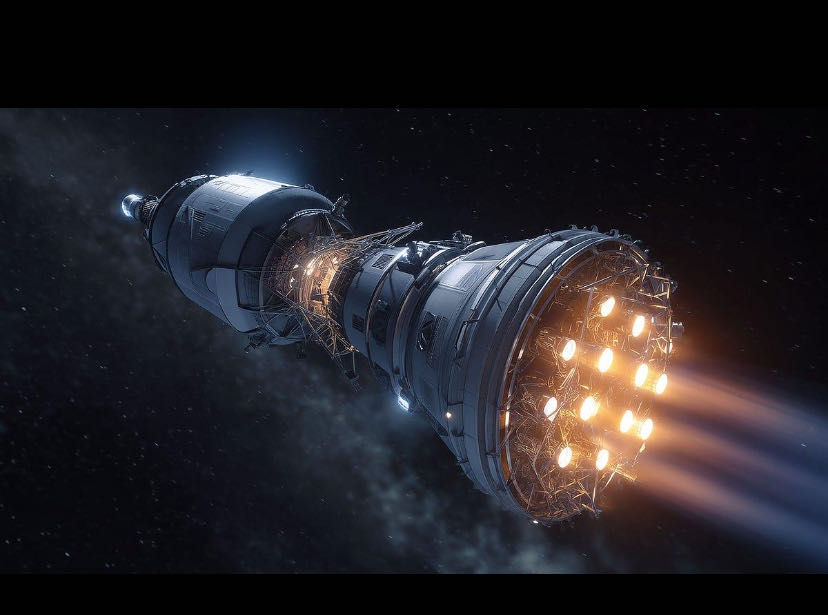
🚀 Fusion Engine Near the Speed of Light: A New Golden Age of Space Travel
One of humanity’s greatest questions has always been — can we go beyond Earth’s limits and cross the enormous distances of the universe?
Today, humans have stepped on the Moon, sent robotic missions to Mars, and achieved remarkable progress in space science. However, the vast distances of space still remain one of our biggest challenges.
In the future, if an engine could be developed that allows a spacecraft to travel close to the speed of light, it could become one of the greatest scientific and technological achievements in human history.
⸻
🚀 The Dream of Reaching Mars in Minutes
Today, modern spacecraft take around 6 to 9 months to travel from Earth to Mars. This is because current rocket speeds are extremely slow compared with the speed of light.
However, if a near-light-speed engine could be developed in the future:
* 🌍 Travel between Earth and Mars could become extremely fast.
* 👨🚀 Human missions could become safer and more efficient.
* 🏠 The possibility of permanent human settlements on Mars could increase.
Such technology could become a major step toward making space travel as common as air travel is today.
Just as a feather and an iron ball fall at the same speed in a vacuum because there is no air resistance, a spacecraft moving through the vacuum of space faces very little resistance. With advanced technology, scientists imagine using powerful fusion energy systems to achieve extremely high speeds.
⸻
⚛️ Fusion Engine: A Future Technology Inspired by the Power of the Sun
For such a powerful engine, scientists are researching nuclear fusion technology.
In the fusion process:
* Hydrogen isotopes such as deuterium and tritium are combined under extremely high temperatures and controlled conditions.
* This process creates helium and releases a tremendous amount of energy.
* This energy could be converted into powerful thrust to propel a spacecraft forward.
This is the same fundamental process that has been powering the Sun for billions of years.
⸻
🌌 Potential Benefits of Fusion Engines
If fusion engines become successful in the future, they could bring many advantages:
🚀 1. Faster Space Travel
* Travel time between planets could be greatly reduced.
* Long-duration space missions could become easier and more practical.
🌍 2. Expansion of Human Civilization
* Scientific bases could be established on the Moon and Mars.
* Humanity could eventually live permanently beyond Earth.
🔭 3. Deeper Exploration of the Universe
* The study of distant planets and stars could become faster.
* It could help us understand the mysteries of the universe.
⚡ 4. A New Era of Energy
* Fusion technology could become a clean and powerful energy source for future generations.
⸻
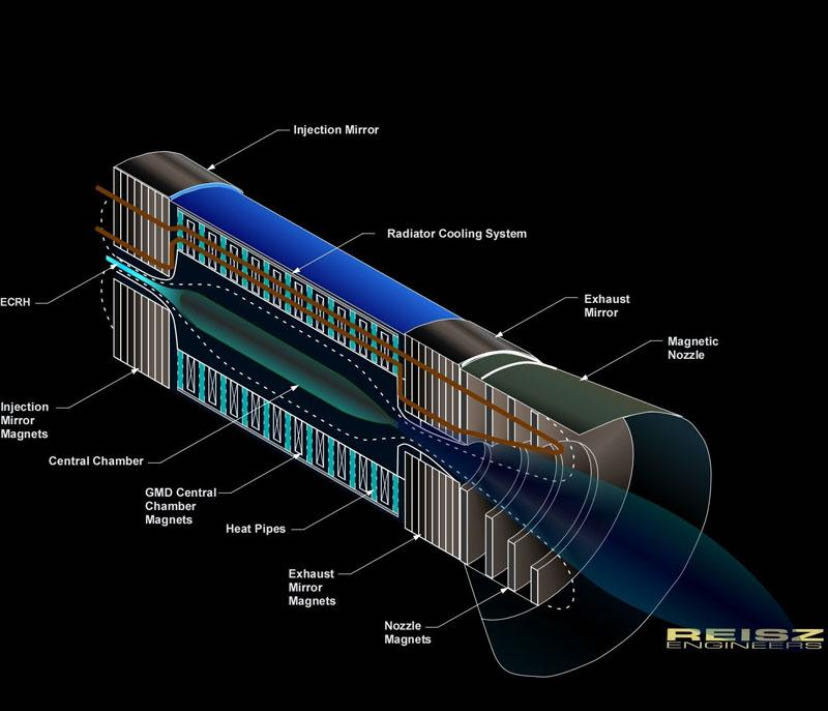
🧲 The Scientific Achievement of Controlling Million-Degree Plasma
One of the biggest challenges of fusion technology is controlling plasma at temperatures of millions of degrees Celsius.
Scientists have developed technologies such as tokamaks to overcome this challenge.
These systems use:
* 🔬 A specially designed vacuum chamber to create a controlled environment.
* 🧲 Powerful magnetic fields to hold the plasma in place.
* 🛡️ Strong materials like tungsten that can withstand extreme heat and particle impacts.
* ❄️ Advanced cooling systems to protect the equipment.
The most important achievement is that although the plasma is extremely hot, it does not directly touch the metal walls. Scientists use magnetic forces to control and suspend the plasma.
⸻
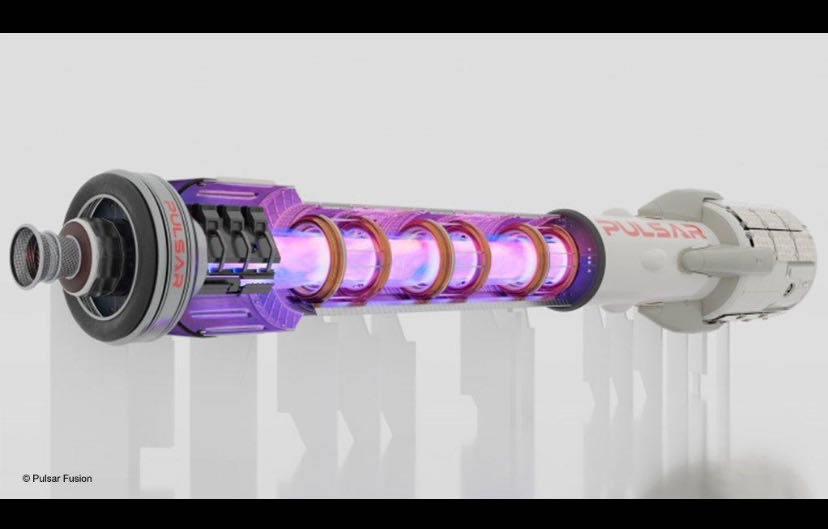
🚀 Fusion Rocket: The Powerful Space Engine of the Future
A future fusion rocket could work on this principle:
* ⚛️ Hydrogen fusion generates enormous energy.
* 🔥 High-speed plasma or particles are directed outward in a controlled direction.
* 🚀 The reaction force pushes the spacecraft forward.
This technology could be far more efficient than today’s chemical rockets.
⸻
🌠 Humanity’s Next Great Leap
Throughout human history, every great discovery has expanded our possibilities:
* We learned to cross oceans.
* We learned to fly through the skies.
* Now we are preparing to cross the vast distances of space.
Near-light-speed engines and advanced fusion technology could help humanity move toward becoming an interplanetary civilization.
Although this idea may sound like science fiction today, history has shown that dreams once considered impossible can become reality through continuous research and innovation.
In the future, space travel may no longer be limited only to scientists and astronauts. It could become the next great chapter in the development of human civilization. 🚀🌌


Comments
Yeh to science hai.