

Ownmates Post

China–Europe Railway Express: The Modern Version of the Silk Road
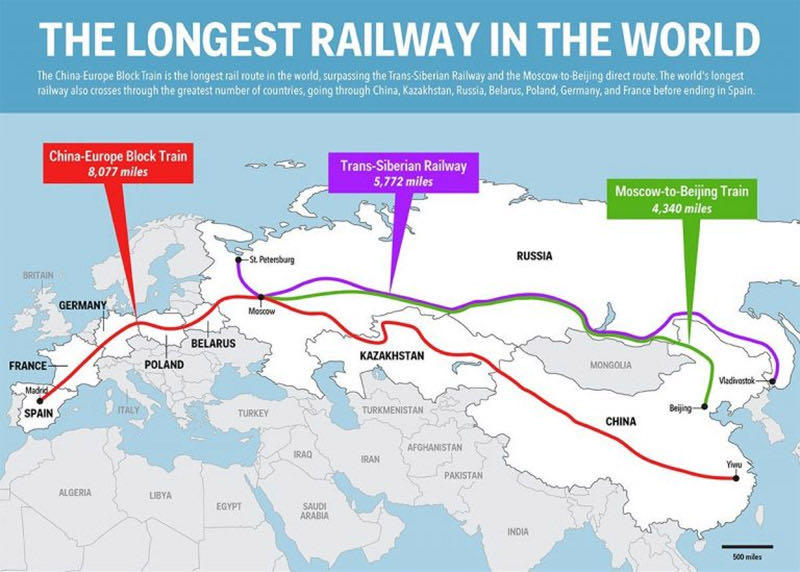
In ancient times, the Silk Road was the most important trade network connecting China with Central Asia, the Middle East, and Europe. Today, the China–Europe Railway Express represents a modern version of that connection. It is not a single railway line but a large network of railway routes connecting China and Europe through several countries.
Beginning and Development
The China–Europe Railway Express started in 2011. One of the first major services ran from Chongqing, China, to Duisburg, Germany.
After China launched the Belt and Road Initiative (BRI) in 2013, this railway network expanded rapidly. Today, many Chinese cities are connected by rail with major European destinations.
Main Routes
There is no single railway route between China and Europe. Several major corridors are used.
1. Northern Corridor
This is one of the most widely used routes:
China → Kazakhstan → Russia → Belarus → Poland → Germany → Western Europe
Important locations include:
* Xi’an, Chongqing, Chengdu (China)
* Kazakhstan border railway hubs
* Russian railway centers
* Brest (Belarus)
* Małaszewicze (Poland)
* Duisburg (Germany)
2. Middle Corridor (Trans-Caspian Route)
This route avoids Russia:
China → Kazakhstan → Caspian Sea → Azerbaijan → Georgia → Türkiye → Europe
It has become more important as an alternative connection between Asia and Europe.
3. Southern Corridor
This route passes through:
China → Central Asia → Iran → Türkiye → Europe
It is used less frequently compared with the northern and middle routes.
Distance Covered
The distance depends on the route:
* Xi’an (China) to Duisburg (Germany): about 10,000–11,000 km
* Chongqing to Duisburg: about 11,000 km
* Yiwu (China) to Madrid (Spain): about 13,000 km
Some of these are among the longest regular freight railway routes in the world.
How Many Railway Tracks Are There?
There is no single railway track from China to Europe. The China–Europe Railway Express uses thousands of kilometers of existing railway networks belonging to different countries.
It connects:
* China’s railway network
* Kazakhstan’s railway system
* Russian and Belarusian railways
* European railway networks
Different Track Gauges
One major challenge is that countries use different railway track widths:
* China and most European countries: 1,435 mm (Standard Gauge)
* Russia, Belarus, and some Central Asian countries: 1,520 mm (Broad Gauge)
Because of this difference, at some borders:
* Containers are transferred to another train, or
* Railway wheel systems (bogies) are changed.
What Goods Are Transported?
These trains mainly carry freight, not passengers.
From China to Europe:
* Mobile phones and electronics
* Computers
* Automobile parts
* Solar panels
* Clothing and footwear
* Industrial machinery
* Medical equipment
* E-commerce products
From Europe to China:
* Cars and automobile components
* Industrial machines
* Medicines
* High-tech equipment
* Food and agricultural products (with proper arrangements)
Do Passengers Travel on These Trains?
The China–Europe Railway Express is mainly a freight service. Regular passenger trains do not operate on this entire route.
Passengers can travel between China and Europe by rail, but they usually need to use different international passenger trains and change routes.
Importance of the Modern Silk Road
The railway provides:
* Faster transport compared with sea routes
* Stronger trade links between Asia and Europe
* New economic opportunities for Central Asian countries
* A modern land connection between two continents
However, sea transport remains dominant for global trade because it is usually cheaper for large volumes of goods.
Conclusion
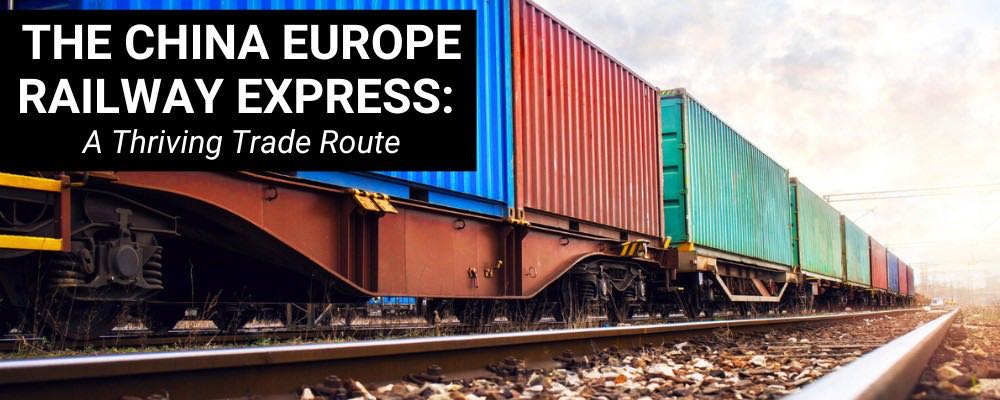
The China–Europe Railway Express is a modern transportation network inspired by the ancient Silk Road. Instead of camel caravans carrying silk and spices, today thousands of containers carrying electronics, machinery, and industrial goods travel between China and Europe by rail. It has become one of the most important trade bridges connecting Asia and Europe in the 21st century.


Comments
No comments yet.