

Ownmates Post

From Pangaea to the Present: Antarctica, Plate Tectonics, Oceans, Ice, and the Changing Earth
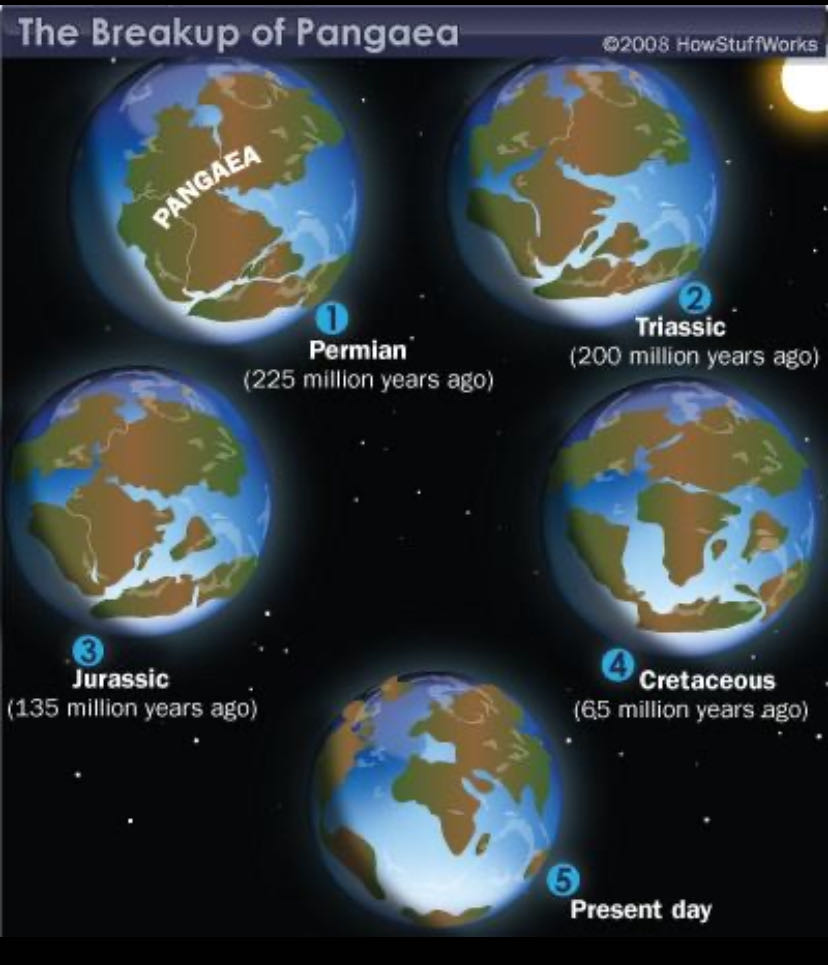
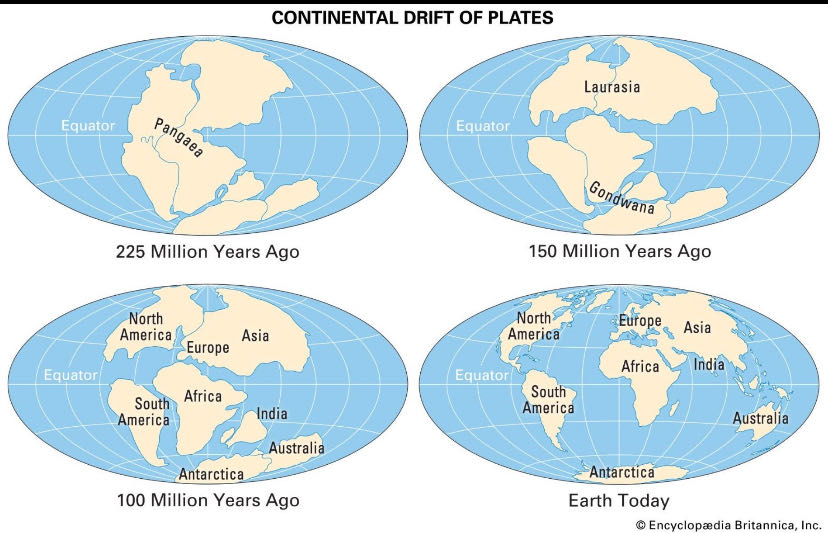
Earth is not a static planet. Although it appears stable from the surface, its interior is constantly active. This internal activity has caused continents to move over millions of years. The world we know today is very different from the Earth of the distant past. Long ago, all major landmasses were joined together in a single supercontinent called Pangaea. Over time, this supercontinent broke apart, the continents drifted away from one another, and the modern arrangement of Earth gradually formed.
What Was Pangaea?
Around 335 to 200 million years ago, nearly all of Earth’s land was connected in one enormous supercontinent known as Pangaea. It was surrounded by a vast global ocean called Panthalassa.
About 200 million years ago, Pangaea split into two major landmasses:
* Laurasia in the north, which later became North America, Europe, and much of Asia.
* Gondwana in the south, which included present-day Africa, South America, India, Australia, Antarctica, and Madagascar.
Eventually, Gondwana also broke apart, and its continents slowly drifted toward their present positions.
How Did Antarctica Reach the South Pole?
Today, Antarctica is located at the South Pole and is almost completely covered by ice. However, millions of years ago, it was very different. Antarctica once had a much warmer climate, with forests, rivers, and diverse wildlife, including dinosaurs.
As tectonic plates slowly moved, Antarctica gradually drifted southward. When it reached the polar region, it received much less solar energy throughout the year. Later, powerful ocean currents formed around the continent, isolating it from warmer waters. As temperatures dropped, snow accumulated year after year, eventually forming the massive Antarctic Ice Sheet that covers the continent today.
Why Do Continents Move?
The movement of continents is explained by the theory of Plate Tectonics.
Earth’s outer rigid shell, called the lithosphere, is divided into several large and small tectonic plates rather than being one continuous layer.
Beneath the lithosphere lies the mantle, which consists of hot, slowly flowing rock. This movement, known as mantle convection, transfers heat from Earth’s interior toward the surface.
The slow flow of the mantle causes tectonic plates to move by only a few millimeters to a few centimeters each year. Although this movement is extremely slow, over millions of years it is enough to reshape the entire planet.
The Forces That Move Tectonic Plates
Several forces work together to drive plate motion:
* Mantle Convection – Slow circulation of hot material within Earth’s mantle.
* Ridge Push – Newly formed oceanic crust at mid-ocean ridges pushes plates outward.
* Slab Pull – Dense oceanic plates sink into the mantle at subduction zones, pulling the rest of the plate along.
Together, these processes continuously reshape Earth’s surface.
Do the Oceans’ Mass and Density Affect Plate Movement?
Yes—but only to a limited extent.
The weight of the oceans places pressure on Earth’s crust. Likewise, massive ice sheets also add enormous weight. When large amounts of ice melt, the crust beneath slowly rises again, a process known as isostatic adjustment.
However, the mass and density of the oceans are not the primary forces responsible for moving continents. Their effects are mostly local, whereas the long-term movement of continents is driven by tectonic processes deep inside Earth.
What Would Happen If All Antarctic and Greenland Ice Melted?
Scientists estimate that if all land ice on Earth melted, global sea level could rise by approximately 70 meters (230 feet).
The consequences would include:
* Flooding of many coastal cities and low-lying regions.
* Severe coastal erosion.
* Collapse of some sea cliffs and coastal rock formations.
* Loss of many small islands.
* Major impacts on ecosystems and human populations.
However, this would not break continents apart. The forces capable of splitting continents come from tectonic plate movement, not from rising seawater or ocean waves.
What Is Happening in Africa Today?
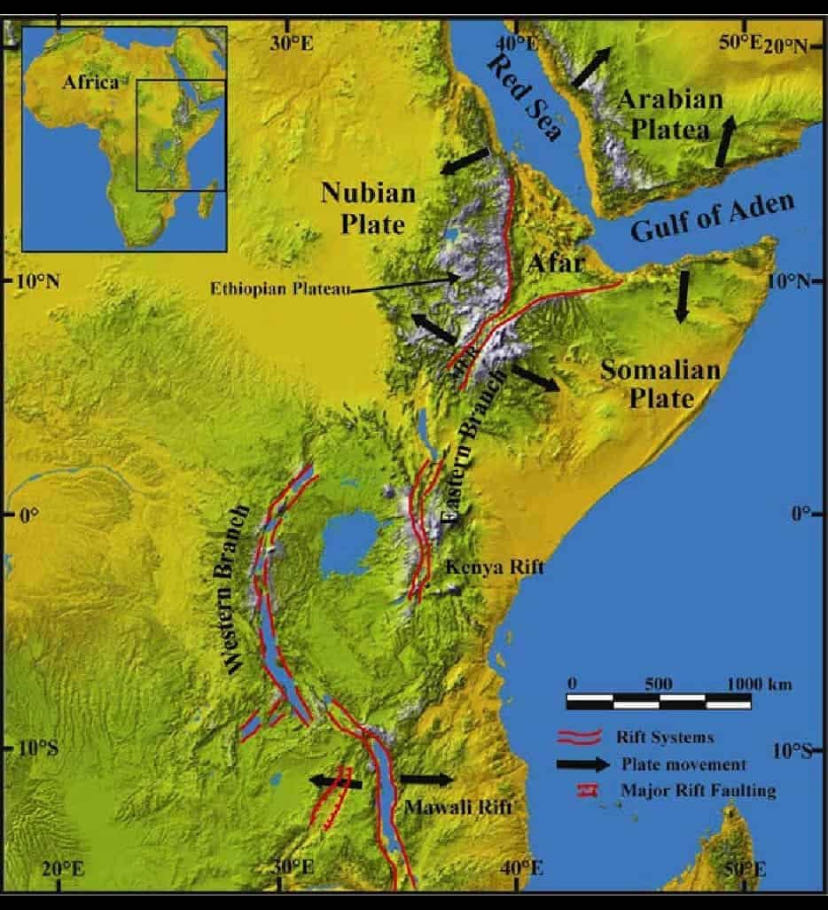
One of the most remarkable geological events occurring today is the development of the East African Rift System.
In this region, the African continent is gradually splitting into two tectonic plates:
* The Nubian Plate
* The Somali Plate
These plates are slowly moving away from each other at a rate of a few millimeters to a few centimeters per year.
This ongoing process causes:
* Frequent earthquakes.
* Active volcanoes.
* Long surface fractures and rift valleys.
* The formation of lakes and new landscapes.
If this process continues for millions of years, eastern Africa may eventually separate from the rest of the continent, creating a new ocean basin.
Is Earth Still Changing Today?
Yes. Earth continues to evolve.
* India is still moving northward.
* The Himalayas continue to rise slowly.
* The Atlantic Ocean is gradually widening.
* Parts of the Pacific Ocean are shrinking.
* Africa is slowly splitting apart.
* Antarctica and other tectonic plates continue to move.
Although these changes are almost impossible to notice during a human lifetime, they become dramatic over millions of years.
Conclusion
Earth is a dynamic planet that has been changing for billions of years. The breakup of Pangaea, the movement of Antarctica to the South Pole, the formation of mountain ranges, the splitting of Africa, and the drifting of continents are all consequences of plate tectonics.
Oceans, ice sheets, and climate influence Earth’s surface and local geology, but the primary force driving continental movement comes from Earth’s interior. As tectonic plates continue to move, the geography of our planet will keep evolving, creating new oceans, mountain ranges, and continental arrangements over millions of years.


Comments
No comments yet.