

Ownmates Post

Antarctic Treaty System: Protecting Antarctica and Its Hidden Mineral Wealth
Antarctica — A Continent Preserved for Science
Antarctica is the coldest, driest, and windiest continent on Earth. Beneath its massive ice sheets lie many natural resources, including possible mineral deposits. However, countries around the world created a special international framework to protect Antarctica from conflict and uncontrolled exploitation. This framework is known as the Antarctic Treaty System (ATS).
What is the Antarctic Treaty System (ATS)?
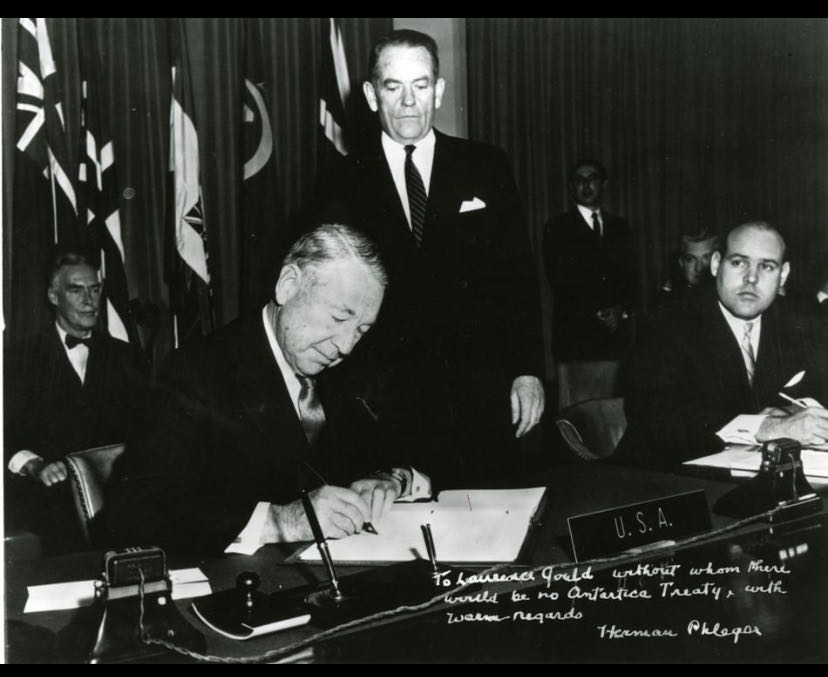
The Antarctic Treaty System is an international agreement and set of rules that regulate how Antarctica is used and protected.
* 📅 1959: The Antarctic Treaty was signed.
* 🌍 1961: The treaty officially came into force.
* 🎯 Main goal: To ensure Antarctica is used only for peaceful purposes and scientific research.
Main Objectives of the Antarctic Treaty System
1. Maintaining Peace
Antarctica is reserved for peaceful activities.
* 🚫 Military bases and military activities are prohibited.
* 🚫 Weapons testing is not allowed.
2. Promoting Scientific Research
The treaty encourages international cooperation in scientific studies.
Researchers from different countries study:
* Climate change
* Ice sheets and glaciers
* Ocean systems
* Antarctic wildlife
* Earth’s geological history
3. Protecting the Environment
Antarctica has one of the most fragile ecosystems on Earth, so strict environmental rules are applied.
* 🚫 Nuclear explosions are prohibited.
* 🚫 Disposal of radioactive waste is banned.
* 🌱 Activities that can seriously harm the environment are restricted.
Why Is There No Commercial Mining in Antarctica?
Although Antarctica contains signs of valuable mineral resources, commercial mining is currently not taking place.
The main reason is the Protocol on Environmental Protection to the Antarctic Treaty (Madrid Protocol).
This agreement places strong restrictions on mineral resource exploitation to protect Antarctica’s unique environment.
Possible Mineral Resources in Antarctica
Scientific studies have found evidence of various mineral resources, including:
* ⛏️ Iron ore
* 🪨 Coal
* 🔩 Copper
* ⚙️ Nickel
* 🟡 Gold
* ☢️ Uranium
* Chromium and manganese deposits
However, none of these resources are being commercially extracted on a large scale.
What Activities Are Currently Happening in Antarctica?
Today, Antarctica is mainly used for scientific and environmental research.
🔬 Geological Surveys
Scientists study the continent’s rock formations and investigate possible mineral deposits.
🧊 Climate Research
Researchers analyze ice cores and glaciers to understand Earth’s past climate and predict future climate changes.
🌊 Ocean Research
Scientists study Antarctic waters, marine ecosystems, and the impact of climate change on oceans.
🛰️ Satellite and Earth Science Studies
Satellites monitor:
* Ice loss
* Weather patterns
* Sea-level changes
* Environmental changes
Research Stations in Antarctica
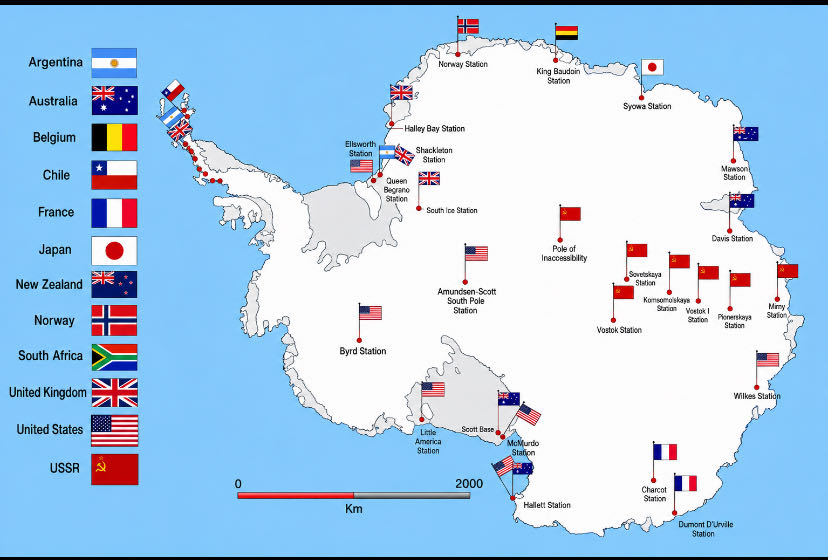
Many countries operate scientific research stations in Antarctica.
🇺🇸 United States
* Amundsen–Scott South Pole Station
* McMurdo Station
🇮🇳 India
* Maitri Station
* Bharati Station
🇨🇳 China
* Great Wall Station
* Zhongshan Station
* Kunlun Station
The Future of Antarctic Mining
Antarctica’s mineral resources could become economically important in the future, but mining would raise major concerns about:
* Environmental damage
* Climate impacts
* Protection of wildlife
* International disputes
Antarctica is not only a land of resources; it plays a critical role in regulating Earth’s climate. Its ice sheets influence global sea levels and temperatures.
In short:
The Antarctic Treaty System has protected Antarctica from war and uncontrolled exploitation, keeping it dedicated to science, cooperation, and environmental protection.
Today, Antarctica remains one of the last great wilderness areas on Earth — a continent preserved not for profit, but for understanding our planet’s past, present, and future.


Comments
No comments yet.