

Ownmates Post

1. Why do the Sun’s rays not fall vertically on the Himalayas?
The Himalayas are located in the Northern Hemisphere, between 27°N and 37°N latitude. Because of this, the Sun’s rays usually strike the region at an angle (obliquely) rather than vertically.
Reasons
(a) Latitude
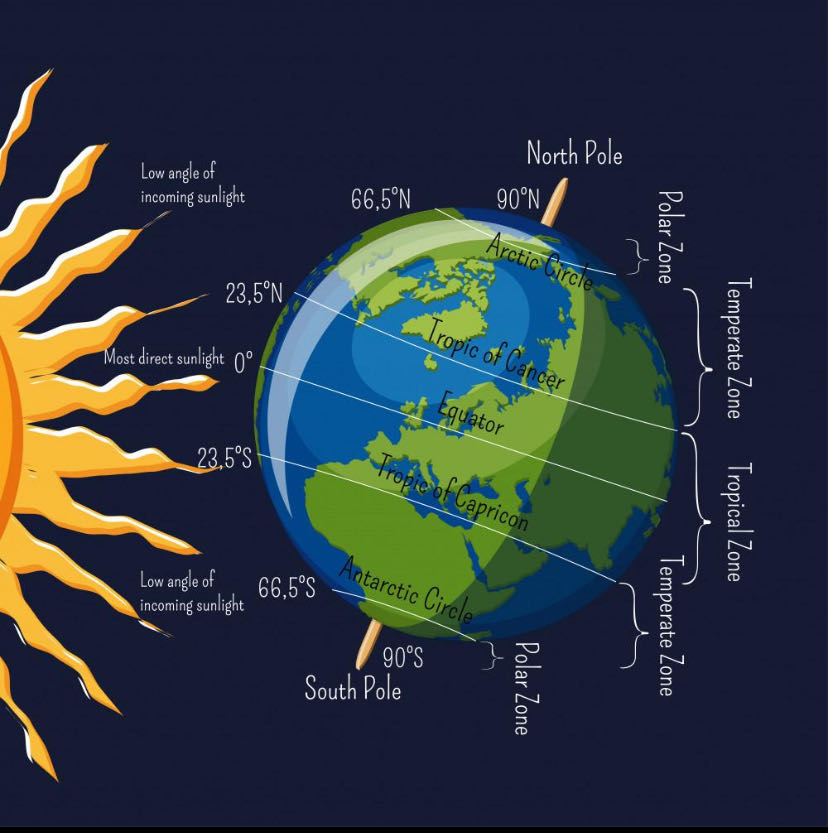
* The Sun’s vertical rays fall only between the Tropic of Cancer (23.5°N) and the Tropic of Capricorn (23.5°S).
* Most of the Himalayas lie north of the Tropic of Cancer.
* Therefore, the Sun’s rays reach the Himalayas at an angle.
(b) Shape of the Earth
* The Earth is spherical.
* Near the Equator, sunlight is more direct.
* As we move toward the poles, the Sun’s rays become increasingly slanted.
(c) Earth’s Axial Tilt
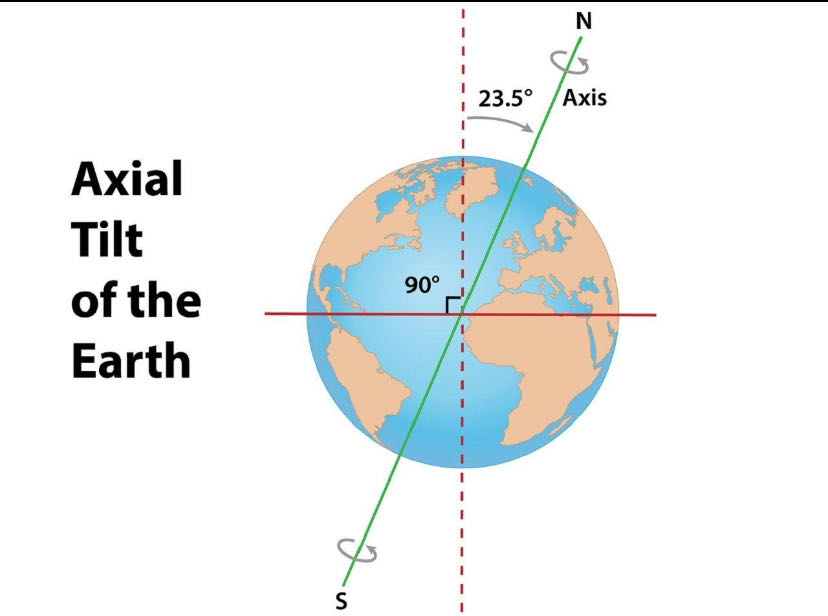
* The Earth’s axis is tilted by 23.5°.
* This causes the position of the Sun’s vertical rays to change throughout the year.
* However, the Himalayas generally remain outside the zone of direct overhead sunlight.
Result
* Less solar energy is received.
* Therefore, high-altitude Himalayan regions remain cold and snow-covered for much of the year.
Exam Answer:
The Himalayas lie north of the Tropic of Cancer, so the Sun’s rays fall obliquely rather than vertically.
⸻
2. When do the Sun’s vertical rays fall on Earth?
Around 21 March
* March Equinox
* The Sun’s vertical rays fall on the Equator.
* Day and night are nearly equal worldwide.
Around 21 June
* The Sun’s vertical rays fall on the Tropic of Cancer (23.5°N).
* This is the longest day in the Northern Hemisphere.
Around 23 September
* September Equinox
* The Sun’s vertical rays again fall on the Equator.
* Day and night are nearly equal.
Around 22 December
* The Sun’s vertical rays fall on the Tropic of Capricorn (23.5°S).
* This is the longest day in the Southern Hemisphere.
Easy to Remember
* 21 March → Equator
* 21 June → Tropic of Cancer
* 23 September → Equator
* 22 December → Tropic of Capricorn
⸻
3. How long does sunlight take to reach Earth?
* Average distance between the Sun and Earth: 150 million km
* Speed of light: 300,000 km/s
Time = Distance ÷ Speed
= 150,000,000 ÷ 300,000
≈ 500 seconds
= 8 minutes 20 seconds
Answer: Sunlight takes approximately 8 minutes 20 seconds to reach Earth.
⸻
4. Does sunlight take the same time to reach the North Pole and South Pole?
Yes.
Reason
* Earth’s diameter is about 12,742 km.
* Compared with the Sun–Earth distance (150 million km), this difference is extremely small.
* Therefore, the travel-time difference is only about 0.04 seconds (40 milliseconds).
So:
* Equator → 8 minutes 20 seconds
* North Pole → 8 minutes 20 seconds
* South Pole → 8 minutes 20 seconds
⸻
5. Why don’t the North Pole and South Pole completely melt during summer?
(1) The Sun’s rays are slanting
The rays strike the poles at a very low angle.
As a result:
* Solar energy spreads over a larger area.
* Less heat is received per unit area.
(2) Ice reflects most sunlight
Snow and ice reflect about 80–90% of incoming sunlight.
This property is called Albedo.
(3) Long winters
Polar regions experience:
* About 6 months of daylight
* About 6 months of darkness
During the long winter, extremely low temperatures allow large amounts of ice to accumulate.
(4) Very low temperatures
Even in summer, temperatures in many polar areas remain around or below 0°C, preventing complete melting.
(5) Thick ice sheets
In Antarctica, ice is 2–4 km thick in many places, so it cannot melt completely in one summer.
⸻
6. Why is polar ice melting due to global warming?
Because the Earth’s average temperature is increasing:
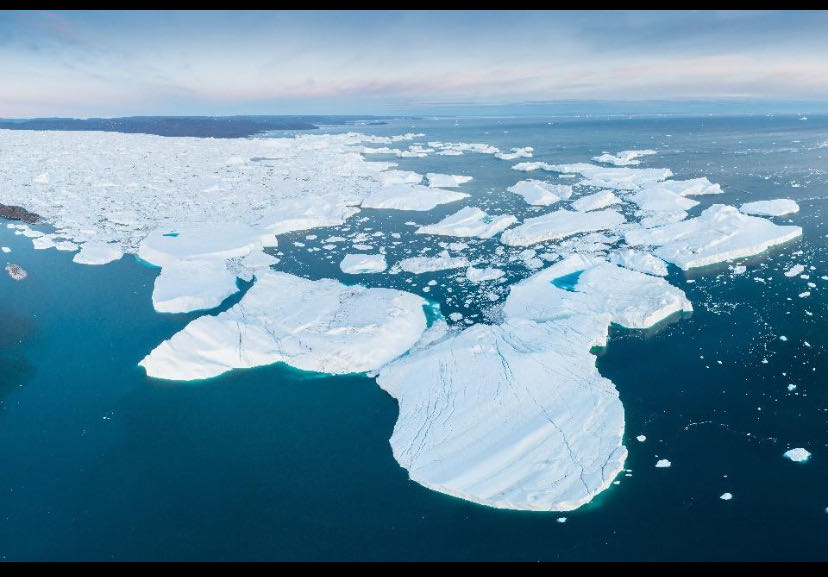
* Sea ice in the Arctic is shrinking rapidly.
* Parts of Antarctica are also losing ice.
* This contributes to rising sea levels worldwide.


Comments
No comments yet.