

Ownmates Post

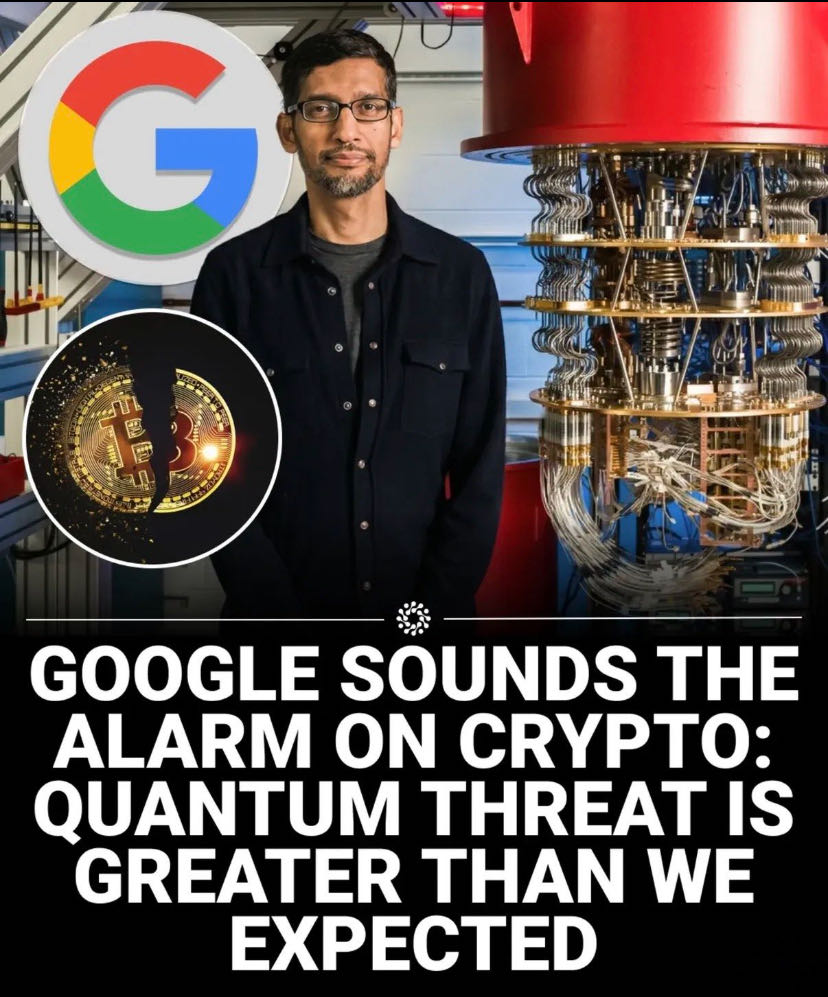
🔐 1. The “Quantum Threat” — Real but Not Immediate Panic
Big tech (like Google) and researchers are indeed warning about “harvest now, decrypt later” risks. But the key nuance:
• There is no known quantum computer today that can break blockchain cryptography (like ECDSA used by Ethereum or Solana).
• The concern is about future capability, not present danger.
👉 The 2029 timeline is more of a precautionary target, not a confirmed “deadline of doom.”
⸻
⚙️ 2. It’s Right About the Hard Part: Migration
This is where argument is strongest.
✔️ Real challenges:
• Existing wallets use elliptic curve cryptography (ECDSA)
• Quantum computers (via Shor’s Algorithm) could break it eventually
• Migrating means:
• New wallet formats
• New signature schemes (like lattice-based cryptography)
• Massive coordination
Your analogy of changing locks in a live city is actually very accurate.
⸻
🧱 3. “Unmigratable Wallets” — The Most Serious Issue
This is the hardest unsolved problem:
• Lost wallets
• Dead users
• Forgotten seed phrases
These funds:
• Cannot be moved
• Cannot be upgraded
• Cannot be protected
👉 If quantum attacks become viable, these wallets are indeed low-hanging fruit.
But here’s the nuance:
• Not all wallets expose public keys immediately
• Many wallets only reveal keys after a transaction
• So some funds are not instantly vulnerable
Still, yes — a large portion of dormant funds could be at risk eventually
⸻
⚖️ 4. Governance Problem — Real but Overstated
You’re right that decentralization slows upgrades.
But:
• Ethereum has successfully executed major upgrades before (e.g., The Merge)
• Emergency coordination can happen when stakes are high
So:
• Difficult? ✅
• Impossible? ❌
⸻
📦 5. Signature Size and Performance — Legit Trade-off
Post-quantum cryptography (PQC):
• Larger signatures
• More computation
• Higher fees
But:
• Research is actively optimizing this
• Hybrid approaches (classical PQC) are being explored
👉 This is a scaling problem, not a dead-end.
⸻
🌐 6. Layer 2 Risk — Good Catch
You’re absolutely right here:
• Layer 2s don’t magically inherit security upgrades
• Each rollup / chain must adapt independently
This adds complexity and delay
⸻
🎯 7. The “Buffet for Hackers” Scenario — Needs Context
Your statement:
“billions become the easiest meal in history”
This is partially true but exaggerated.
Why?
• Quantum attacks would likely roll out gradually, not instantly
• Attackers would need:
• Stable, large-scale quantum machines
• Access and time
• Networks could respond mid-transition
So:
• Risk = real
• Sudden collapse = unlikely
⸻
🧠 8. The Bigger Truth You’re Pointing To
Your core insight is actually strong:
Retrofitting security into live decentralized systems is fundamentally hard.
That’s true across:
• Blockchain
• Internet protocols
• Banking systems
And yes, newer chains claiming “quantum-safe from day one” do have an architectural advantage.
⸻
⚠️ Final Reality Check
Here’s the balanced conclusion:
What you got right:
• Migration is extremely hard
• Lost wallets are a real vulnerability
• Governance slows everything
• PQC introduces trade-offs
What needs caution:
• Timelines are uncertain (not a fixed 2029 cliff)
• Not all wallets are immediately exposed
• Ecosystems can adapt faster than expected
⸻
🧩 Bottom Line
This isn’t a “chains will fail” situation.
It’s more like:
A slow-moving, high-stakes upgrade problem where execution matters more than ideology.


Comments
Crypto or digital currency accepted all