

Ownmates Post
🏛️ Byblos: One of the Oldest Cities in the World
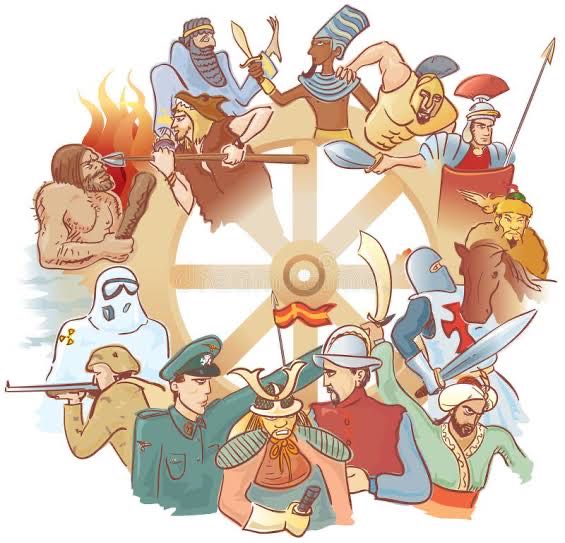
Byblos (Arabic: Jubayl) is one of the oldest continuously inhabited cities on Earth. Located on the Mediterranean coast of Lebanon, its history stretches back over 7,000 years, making it a living archive of human civilization. Byblos witnessed the rise and fall of many great cultures — including the Phoenicians, Egyptians, Greeks, Romans, Byzantines, and Arabs.
⸻
📜 Brief Timeline of Byblos History
🏺 1. Prehistoric Period (~5000 BCE)
• Originated as a small fishing village.
• Archaeological evidence suggests settlement as early as 5000 BCE.
⸻
🛶 2. Phoenician Era (~3000 BCE – 800 BCE)
• Byblos became a major center of Phoenician civilization — known for maritime trade, shipbuilding, and creating one of the world’s first alphabets.
• Strong trade ties with Ancient Egypt, especially in cedar wood, ivory, and precious goods.
• The name “Byblos” comes from the Greek word for papyrus, which was exported through the city — and later gave us the word “Bible”.
⸻
🏛️ 3. Egyptian Influence (~2600–1200 BCE)
• Byblos had close diplomatic and religious ties with Ancient Egypt.
• Temples, obelisks, and inscriptions in Egyptian hieroglyphs have been found in the city.
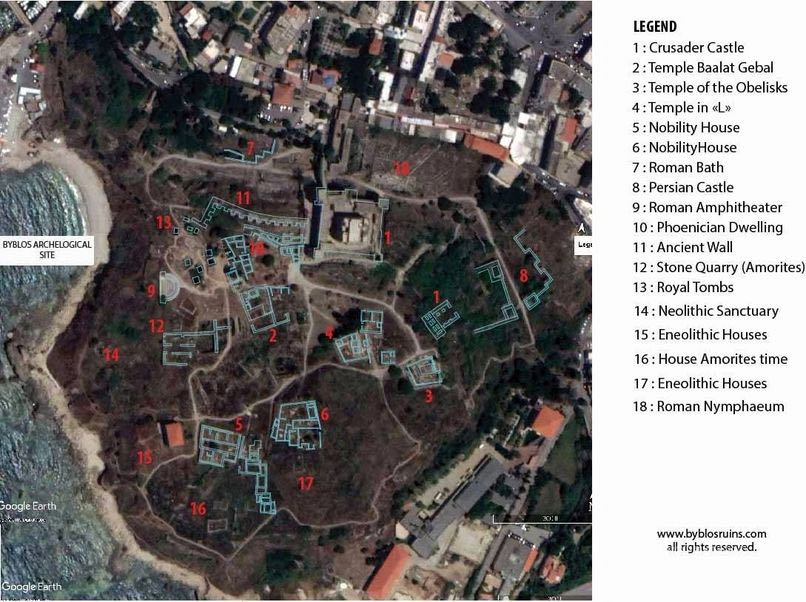
• The Temple of the Obelisks is a key archaeological site from this era.
⸻
⚔️ 4. Greek, Roman and Byzantine Periods (330 BCE – 636 CE)
• Came under the influence of Alexander the Great and the Hellenistic world.
• Flourished under Roman rule — with the construction of a theater, columns, roads, and baths.
• The Byzantines introduced Christianity and built churches.
⸻
☪️ 5. Islamic Period (7th Century – 12th Century CE)
• Arab Muslim armies took control in the 7th century.
• Continued as a modest commercial town with local importance.
⸻
🏰 6. Crusader Period (~1100–1300 CE)
• Crusaders built the impressive Byblos Castle, which still stands today.
• The city served as a strategic port and military post during the Crusades.
⸻
🕊️ 7. Modern Era
• Today, Byblos is a UNESCO World Heritage Site.
• It is a major center of tourism, archaeology, and Lebanese cultural heritage.
⸻
🌍 Why Byblos Matters Globally
Feature Importance
Cultural Legacy Cradle of the Phoenician alphabet, ancestor of Greek and Latin scripts.
Religious History Hosts temples and relics from Phoenician, Egyptian, Greek, and Christian faiths.
Etymological Impact The word “Bible” comes from “Byblos” (Greek for papyrus).
Archaeological Riches Temples, tombs, fortresses, and inscriptions spanning 7,000 years.
⸻
🖼️ Want More?
I can provide:
• Images of ancient ruins
• 3D models or virtual tours
• A PowerPoint or PDF version
• Deeper info on specific topics like the Obelisk Temple or the Crusader Castle.


Comments
No comments yet.