

Ownmates Post

🧪 What is Cupronickel?
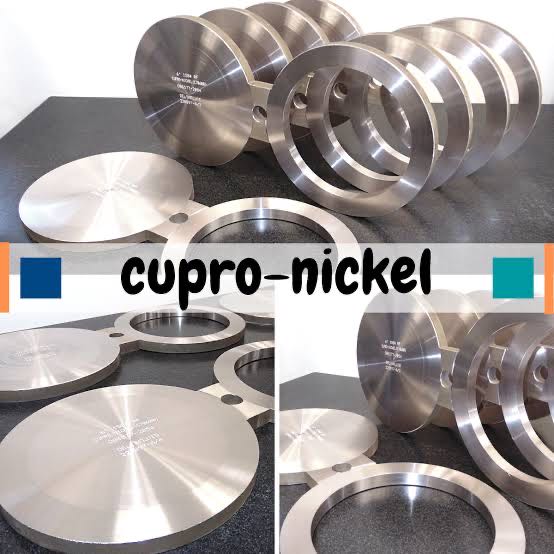
Cupronickel (CuNi) is a copper‑based alloy containing nickel (usually between about 1percent and 49percent), with the copper content generally ranging from 60percent to 90percent. Despite its high copper content, it often appears silver‑colored thanks to nickel’s influence on the alloy’s color and oxidation behavior
⚙️ Common Grades and Composition
• 90/10 cupronickel: ~90percent Cu, ~10percent Ni, plus small amounts of iron (~1–1.8percent) and manganese (~1percent) — widely used in marine systems (UNS C70600, CW352H) .
• 70/30 cupronickel: ~70 percent Cu, ~30percent Ni, plus iron and manganese — higher strength and corrosion resistance (UNS C71500, C71640) .
• Other grades like CuNi25, CuNi16‑19, and CuNiMnFe alloys (e.g. CuNi30Mn1Fe) are also used depending on application
🧬 Key Properties
• Excellent corrosion resistance, particularly in seawater—resists biofouling, pitting, crevice corrosion, and stress cracking .
• Very good fabricability: ductile, weldable, and suitable for both hot and cold working .
• Strong mechanical strength: tensile values range roughly from 270 MPa up to 400–600 MPa depending on alloy and cold work .
• Non‑magnetic (in many grades), good thermal and electrical properties, and high malleability .
• Maintains ductility even at cryogenic temperatures; used in freezing environments
🌍 Applications
• Marine Engineering: piping, hull fittings, condenser tubes, heat exchangers in ships/offshore platforms and desalination plants .
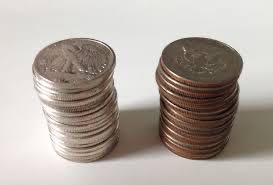
• Coinage: widely used for “silver‑colored” coins (e.g. U.S. dimes, quarters, UK silver coins until 2012, Euro “white” cores) — typical ratio ~75percent Cu / 25 percent Ni plus traces of Fe/Mn .
• Automotive and E‑mobility: brake lines, hydraulic/pneumatic fittings, battery connectors, connectors, and resistors .
• Cryogenic systems, medical and chemical instruments, decorative items, jewelry, musical instruments, lock cores, and electrical components
🔬 Additional Notes
• CuNi alloys are fully miscible in molten state, so melting results in a homogeneous alloy — patterns like mokume-gane (copper-nickel layered aesthetic) require forging and welding, not melting .
• Some cupronickel alloys (e.g. CuNi10Fe1Mn and CuNi30Mn1Fe) are preferred in highly corrosive or erosive environments thanks to added strength and resistance .
🧭 Summary Table
Feature Cupronickel Highlights
Composition 60–90percent Cu, 1–49 percent Ni, Fe, Mn traces
Color/look Silver‑colored, corrosion‑tarnish resistant
Strength Strong; tensile 270–600 MPa
Corrosion Excellent in seawater and saline environments
Applications Marine, coins, electronics, automotives, decorative
Workability Ductile, weldable, usable at low temperatures


Comments
No comments yet.