

Ownmates Post
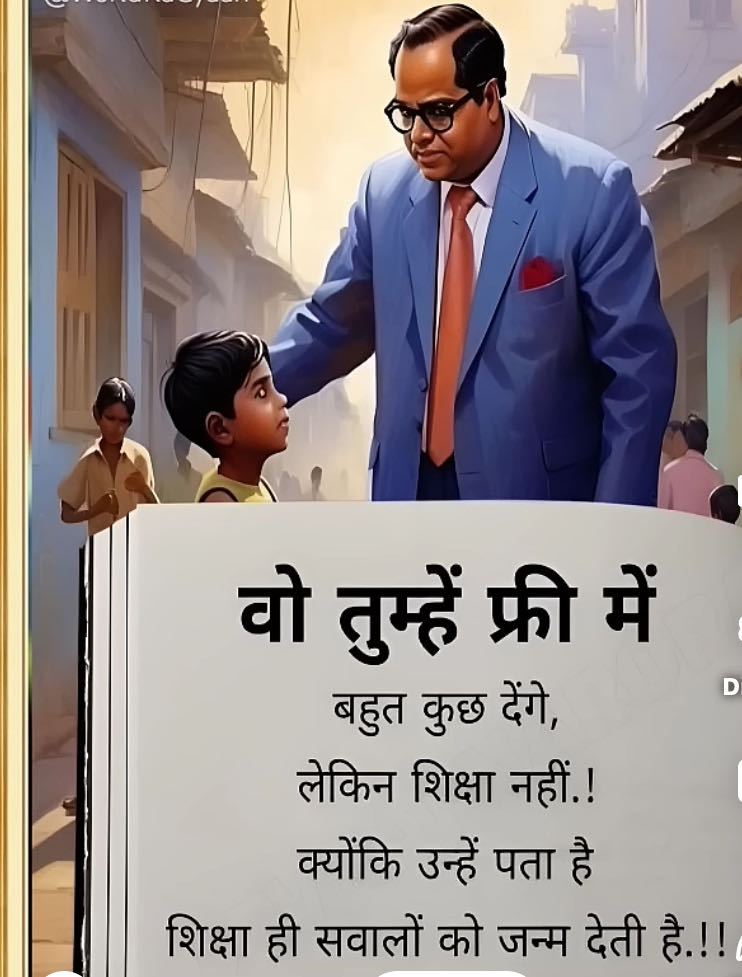
Evaluation of Key Points
1. Social Status and Untouchability
✅ Truth: The varna system, codified in texts like the Manusmriti, placed Shudras at the lowest rung of the four varnas, while Dalits (often referred to as “Avarna” or “untouchables”) were outside this system entirely, facing severe social exclusion. Historical records, including those from the British period, confirm that Dalits and Shudras were considered “untouchable” by upper castes, barred from entering villages, temples, wells, or public spaces, and forced to live on the outskirts. This discrimination was socially and religiously entrenched, with practices like untouchability widely documented.
2. Religious Discrimination
✅ Truth: Dalits and Shudras were denied access to temples and religious texts. The Manusmriti and other texts explicitly restricted Shudras from Vedic study, with punishments prescribed for violations. Dalits faced even harsher exclusion, barred from participating in religious rituals or ceremonies. These practices are corroborated by historical accounts, including those from British and Christian missionary records.
3. Deprivation of Education
✅ Truth: Education was largely reserved for upper castes, particularly Brahmins, in the pre-colonial period. Gurukuls and traditional learning systems excluded Shudras and Dalits. While the British introduced some educational reforms, social opposition and discrimination persisted, limiting access for these communities. This is supported by 19th-century British surveys and reports on education in India.
4. Economic Exploitation
✅ Truth: Most Dalits and Shudras were landless laborers, working in agriculture or performing tasks deemed “impure” (e.g., scavenging, leatherwork, or sanitation). They were often paid meager wages or none at all, trapped in exploitative systems like bonded labor. British colonial records, such as those from the 19th century, and Ambedkar’s writings confirm this economic marginalization.
5. Lack of Political Rights
✅ Truth: Prior to British rule, Dalits and Shudras had no political representation in traditional power structures. During British rule, their political participation remained limited, though reforms like the Government of India Act 1919 introduced some representation. The Poona Pact (1932), negotiated between Ambedkar and Gandhi, secured reserved seats for Dalits in legislatures, marking a significant step toward political inclusion, though full rights were only realized post-independence.
Efforts to Improve
✅ Truth: Social reformers like Jyotiba Phule, Savitribai Phule, Dr. B.R. Ambedkar, and Sree Narayana Guru played pivotal roles in challenging caste oppression. Phule’s schools for Dalits and women, Ambedkar’s advocacy for legal and constitutional rights, and Narayana Guru’s temple entry movements were instrumental. Ambedkar’s efforts culminated in provisions like reserved seats and anti-discrimination laws in the Indian Constitution (1950).
Historical Sources and Scholarly Consensus
• Dr. B.R. Ambedkar’s Works: In Who Were the Shudras? (1946) and Annihilation of Caste (1936), Ambedkar provides a detailed historical and sociological analysis of the Shudras’ degradation from Kshatriya status and the systemic oppression of Dalits. His arguments are grounded in textual evidence and historical context.
• British and Missionary Records: 19th-century colonial reports, such as those by the East India Company, document the social and economic marginalization of Dalits and Shudras, often describing their “degraded” status.
• Modern Historians: Scholars like Ramachandra Guha, Gail Omvedt, and Sekhar Bandyopadhyay affirm the systemic discrimination faced by these communities, drawing on textual, archival, and oral histories.
• Poona Pact (1932): This agreement is a well-documented milestone in Dalit political empowerment, reflecting their prior exclusion from political processes.
Nuances and Additional Context
• Regional Variations: The intensity of caste oppression varied across regions. For instance, in parts of South India, temple entry movements by reformers like Narayana Guru gained traction earlier than in the North.
• British Role: While the British introduced some reforms (e.g., education access and legal measures), their policies often reinforced caste divisions to maintain control, such as through census classifications that rigidified caste identities.
• Post-Independence Progress: The Indian Constitution, influenced by Ambedkar, abolished untouchability (Article 17) and introduced reservations for Scheduled Castes (SCs) and Other Backward Classes (OBCs). However, social discrimination persists in varying degrees today.


Comments
No comments yet.