

Ownmates Post
Ondine’s curse, medically known as Congenital Central Hypoventilation Syndrome (CCHS), is an extremely rare and serious condition where automatic breathing stops during sleep. Here’s a detailed overview:
🧬 What Is It?
• In CCHS, the brainstem fails to regulate breathing in response to carbon dioxide and oxygen levels during sleep. Patients may breathe normally while awake but can stop breathing when asleep .
• The term “Ondine’s curse” has mythological origins—from a tale of a water nymph who cursed her sleeping husband so he would stop breathing—though it’s technically a misnomer .
🧠 Causes
• Congenital (CCHS): Caused primarily by mutations in the PHOX2B gene, discovered in 2003. Severity often correlates with the type of mutation .
• Acquired: Rare cases may follow brainstem injury, tumors, or stroke impacting respiratory centers .
🔬 Symptoms
• Main issue: Sleep apnea → shallow breathing or apnea during sleep, leading to low oxygen and high carbon dioxide levels ().
• Other symptoms: Cyanosis, heart rhythm issues, gastrointestinal issues like Hirschsprung’s disease, seizures, and developmental delays .
🧪 Diagnosis
• Confirmed via sleep studies (to monitor breathing) and genetic testing for PHOX2B mutations .
🏥 Treatment and Management
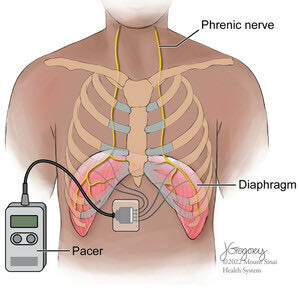
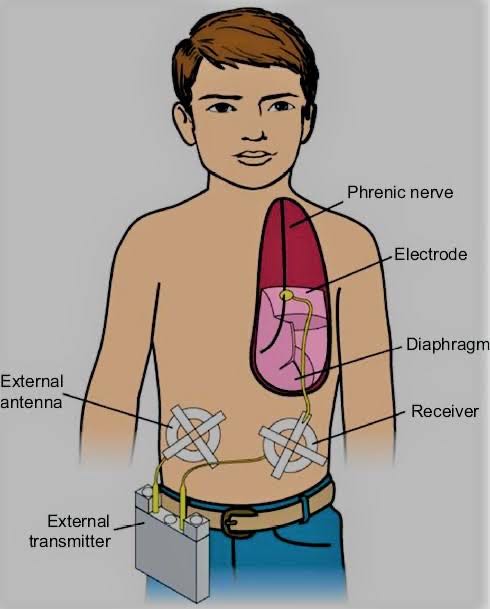
• Mainstay: Mechanical ventilation, often via tracheostomy during sleep; in some cases, diaphragm pacing is used .
• Research into pharmacological aids exists; one documented case showed improved CO₂ sensitivity with a progestin contraceptive (desogestrel) .
• Management requires ongoing specialist care, family training, and monitoring for complications (infections, cardiovascular issues).
📈 Prognosis
• Without ventilatory support, congenital CCHS is often fatal in infancy .
• With appropriate treatment, many can survive into adulthood, though lifelong respiratory assistance is usually needed .
🌍 Prevalence and Background
• Exceptionally rare: estimated 200–500 congenital cases known worldwide; possibly 300 globally ().
• Acquired forms are even less common, often linked to structural injury to the brainstem .
💬 Heard Around the Web
On Reddit, users describe living with ventilator dependence and the intense psychological aspect:
“Some patients are absolutely fine during the day, then have to be put on a ventilator at bedtime … Some require tracheostomy placement.” 
🔍 Summary Table
Aspect Details
Definition Central hypoventilation during sleep due to brainstem failure
Cause Mostly PHOX2B gene mutations (congenital); also acquired
Diagnosis Genetic testing sleep studies
Treatment Mechanical ventilation, diaphragm pacing, occasional meds
Prognosis Poor without support; possible normal life with ventilator
Prevalence ~300–500 congenital global cases
👣 If You Suspect Ondine’s Curse…
• Consult a pediatric pulmonologist or neurologist for genetic testing and breathing studies.
• Begin lifelong ventilatory support, ideally before or immediately after birth.
• Seek support from CCHS organizations for guidance and resources.


Comments
No comments yet.