

Ownmates Post

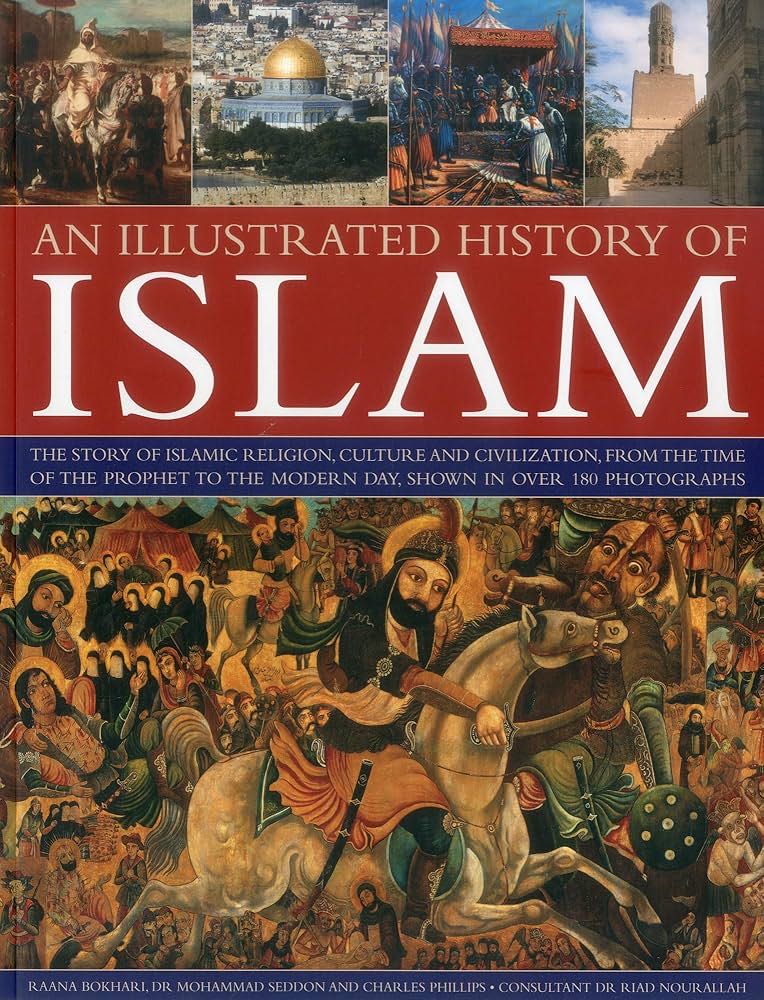
The story of Prophet Muhammad (peace be upon him), told like an engaging narrative, in English — a tale of a man from the harsh deserts of Arabia who rose to change the world forever.
In the year 570 CE, in the bustling trading city of Mecca, nestled among rocky hills and the ancient Kaaba shrine, a boy named Muhammad was born into the respected but not wealthy Banu Hashim clan of the Quraysh tribe. His father, Abdullah, had died before he was even born, and his mother, Amina, passed away when he was just six. Orphaned early, he was raised first by his grandfather, Abd al-Muttalib, and then by his uncle, Abu Talib.
As a young man, Muhammad worked as a shepherd and later joined the caravan trade, traveling across scorching deserts to Syria and beyond. He earned a reputation for unmatched honesty and trustworthiness — people called him Al-Amin, the Trustworthy One. At age 25, he married Khadijah, a wealthy widow and successful merchant who was 15 years his senior. She proposed to him after seeing his character, and their marriage was filled with love, support, and four daughters (and two sons who died young).
Life was comfortable, but Muhammad’s heart was restless. Mecca was a city of idols — 360 statues lined the Kaaba, and people worshipped many gods, buried daughters alive in shame, oppressed the poor, and lived by tribal feuds and raids. He often retreated to a cave on Mount Hira for solitude and reflection.
One night in 610 CE, when he was 40, everything changed. The angel Gabriel appeared and commanded: “Read! In the name of your Lord who created…” Muhammad, illiterate and terrified, replied, “I cannot read.” The angel embraced him tightly until he recited the first verses of what would become the Quran. This was the beginning of divine revelation — messages from one God (Allah), calling for justice, mercy, monotheism, and moral living.
Khadijah believed him instantly and became the first Muslim. Soon, his young cousin Ali, his friend Abu Bakr, and a freed slave named Bilal joined. Muhammad preached quietly at first, then openly: Worship only one God, treat orphans and the poor kindly, stop idol worship, end female infanticide, and live with honesty.
The powerful Quraysh leaders saw this as a threat to their trade, prestige, and traditions. They persecuted the early Muslims — torture, boycotts, mockery. Some fled to Abyssinia for safety. Muhammad lost his wife Khadijah and protector uncle Abu Talib in the “Year of Sorrow” (619 CE). Heartbroken and vulnerable, he even traveled to Ta’if to seek allies, but was stoned and chased out.
In 622 CE came the turning point: the Hijrah (migration). Invited by people from Yathrib (later Medina), Muhammad and his followers escaped Mecca at night. This marks year 1 of the Islamic calendar. In Medina, he built a community — the first mosque, a constitution uniting Muslims, Jews, and others, and bonds between the Meccan migrants (Muhajirun) and local helpers (Ansar).
Battles followed as Mecca’s forces attacked: victory at Badr (624 CE), setback at Uhud (625 CE), and a miraculous defense at the Trench (627 CE). Through it all, Muhammad emphasized rules of war — no harming women, children, trees, or non-combatants; treat prisoners kindly; free slaves as an act of piety.
In 628 CE, a truce was signed at Hudaybiyyah. Then, in 630 CE, Muhammad returned to Mecca with 10,000 followers. The city surrendered peacefully. He forgave his former enemies, declaring: “Go, you are free.” The idols were removed from the Kaaba, and most people embraced Islam.
In his final years, he unified Arabia under one faith. In 632 CE, during his Farewell Pilgrimage, he delivered a powerful sermon on equality: “All mankind is from Adam and Eve… An Arab has no superiority over a non-Arab… except by piety and good action.”
Shortly after, at age 63, he fell ill and passed away in Medina, in the arms of his wife Aisha. His last words were a whisper: “O Allah, with the highest companion…”
From a orphaned trader in a tribal desert society, he became the founder of a faith that spread justice, knowledge, and brotherhood. Today, over 1.8 billion people follow his teachings, seeing him not as divine, but as the final messenger of God — a man whose life transformed empires, ended many injustices, and left a timeless example of compassion, courage, and faith.
This is the story that continues to inspire — not of conquest alone, but of a heart changed by divine guidance, and a world slowly changed by it.


Comments
Well said!
Nice post!
Awesome content!
Very inspiring!